How a script weakness in Mail.com’s password reset page cost Partap Davis $3000

5 03 2015

The Verge has posted an article of Partap Davis who lost his money being hacked overnight.

While he slept, an attacker undid every online security protection he set up. By the time he woke up, most of his online life had been compromised: two email accounts, his phone, his Twitter, his two-factor authenticator, and most importantly, his bitcoin wallets.

All of those accounts got hacked primarily because his main email address in mail.com was taken by the online perpetrator.

For simplicity’s sake, we’ll call her Eve.

How did Eve get in? We can’t say for sure, but it’s likely that she used a script to target a weakness in Mail.com’s password reset page. We know such a script existed. For months, users on the site Hackforum had been selling access to a script that reset specific account passwords on Mail.com. It was an old exploit by the time Davis was targeted, and the going rate was $5 per account. It’s unclear how the exploit worked and whether it has been closed in the months since, but it did exactly what Eve needed. Without any authentication, she was able to reset Davis’ password to a string of characters that only she knew.

Read the full article here:
http://www.theverge.com/a/anatomy-of-a-hack


iOS7 Lockscreen Bypass

20 09 2013

Forbes’ Andy Greenberg wrote an article on the way someone bypass iPhone’s Lockscreen. Here’s the excerpt :


As the video shows, anyone can exploit the bug by swiping up on the lockscreen to access the phone’s “control center,” and then opening the alarm clock. Holding the phone’s sleep button brings up the option to power it off with a swipe. Instead, the intruder can tap “cancel” and double click the home button to enter the phone’s multitasking screen. That offers access to its camera and stored photos, along with the ability to share those photos from the user’s accounts, essentially allowing anyone who grabs the phone to hijack the user’s email, Twitter, Facebook, or Flickr account.

Read more :
http://www.forbes.com/sites/andygreenberg/2013/09/19/ios-7-bug-lets-anyone-bypass-iphones-lockscreen-to-hijack-photos-email-or-twitter/


The Subway $3mio Hack

23 12 2011

Quote:

some of the franchisees “directly and blatantly disregarded” Subway’s security and POS configuration standards. “It’s not like they had to install something and they didn’t,” Schuman told Ars. “They did it proactively,” he said, downloading low-cost remote desktop software from the Internet and refusing to use point-to-point encryption as Subway dictated.

Read the full article here:
How hackers gave Subway a $3 million lesson in point-of-sale security


A disection of an HTTPS connection

12 06 2009

Jeff Moser wrote a very interesting blog post on how the HTTPS connection works.

Excerpts:

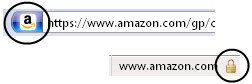
In the 220 milliseconds that flew by, a lot of interesting stuff happened to make Firefox change the address bar color and put a lock in the lower right corner. With the help of Wireshark, my favorite network tool, and a slightly modified debug build of Firefox, we can see exactly what’s going on.

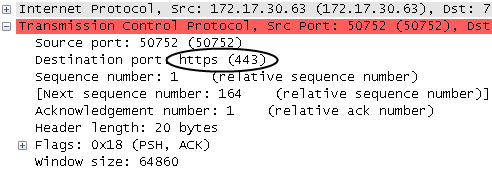
By agreement of RFC 2818, Firefox knew that “https” meant it should connect to port 443 at Amazon.com:

Most people associate HTTPS with SSL (Secure Sockets Layer) which was created by Netscape in the mid 90’s. This is becoming less true over time. As Netscape lost market share, SSL’s maintenance moved to the Internet Engineering Task Force (IETF). The first post-Netscape version was re-branded as Transport Layer Security (TLS) 1.0 which was released in January 1999. It’s rare to see true “SSL” traffic given that TLS has been around for 10 years.

Here’s the link to the full article:
The First Few Milliseconds of an HTTPS Connection


Design a site like this with WordPress.com
Get started