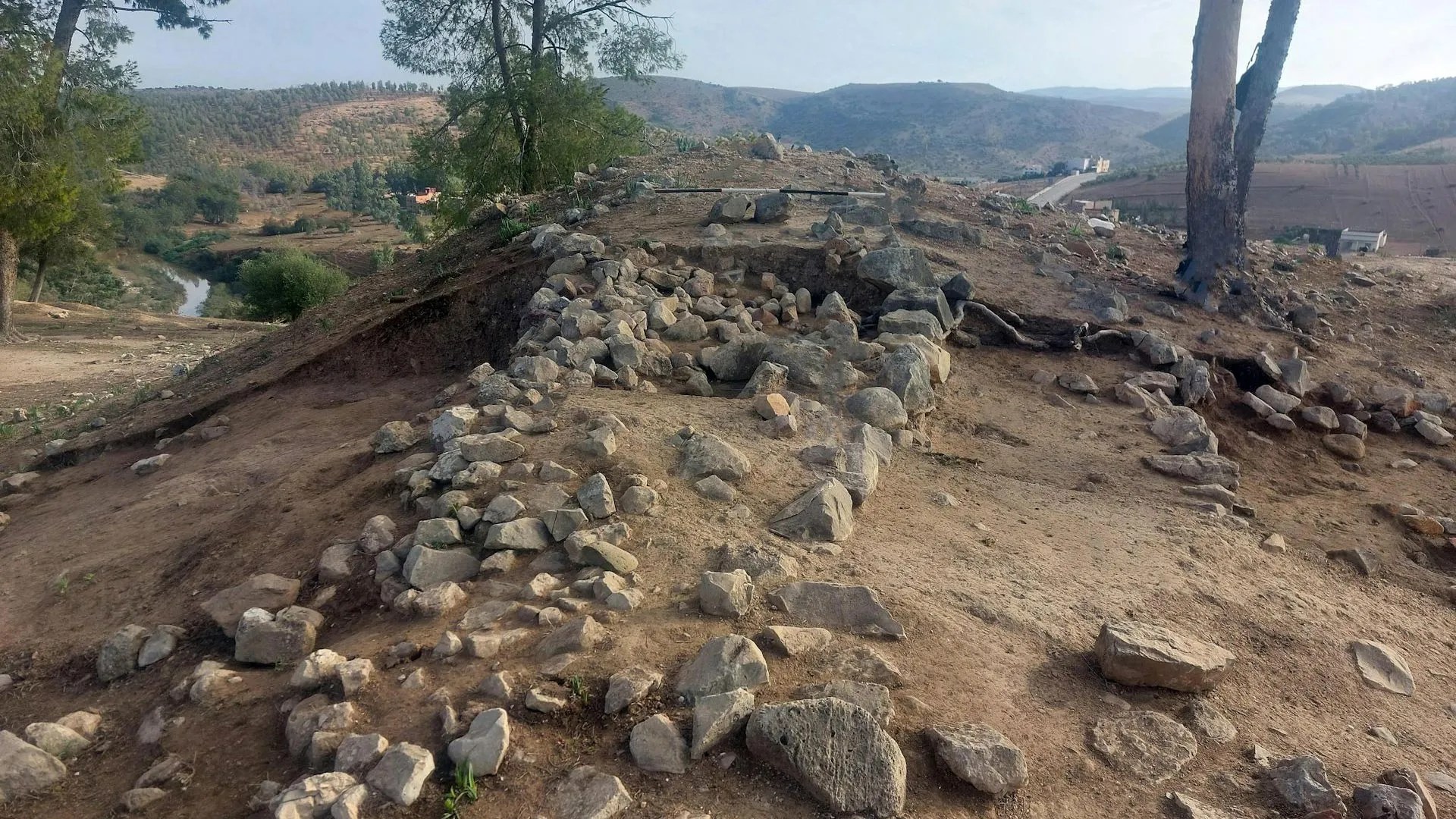
Excavations at Oued Beht reveal early fortifications in Morocco

1 11 2026
Excavations at Oued Beht reveal early fortifications in Morocco

New excavations at Oued Beht in north-west Morocco have dated a large-scale defensive wall to between 4,000 and 3,500 years ago. The structure, consisting of a multi-phase ditch, rampart, and wall, is now the earliest confirmed defensive architecture found in North Africa outside the Nile Valley. This follows earlier discoveries at the site identifying what may be the largest prehistoric agricultural complex in Africa outside Egypt.

The find complicates the long-standing assumption that the Maghreb lacked complex, organized societies during this period, though it remains unclear whether the builders were responding to external threats or local land competition. While the architecture points to coordinated labor and shifting settlement strategies, archaeologists still debate whether Oued Beht functioned as a permanent village or a seasonal gathering place. It is a useful reminder of how much of North Africa's prehistory is still waiting for systematic excavation.

more: https://www.sciencedaily.com/releases/2026/10/261030003022.htm

my other side: ivo.blogspot.com
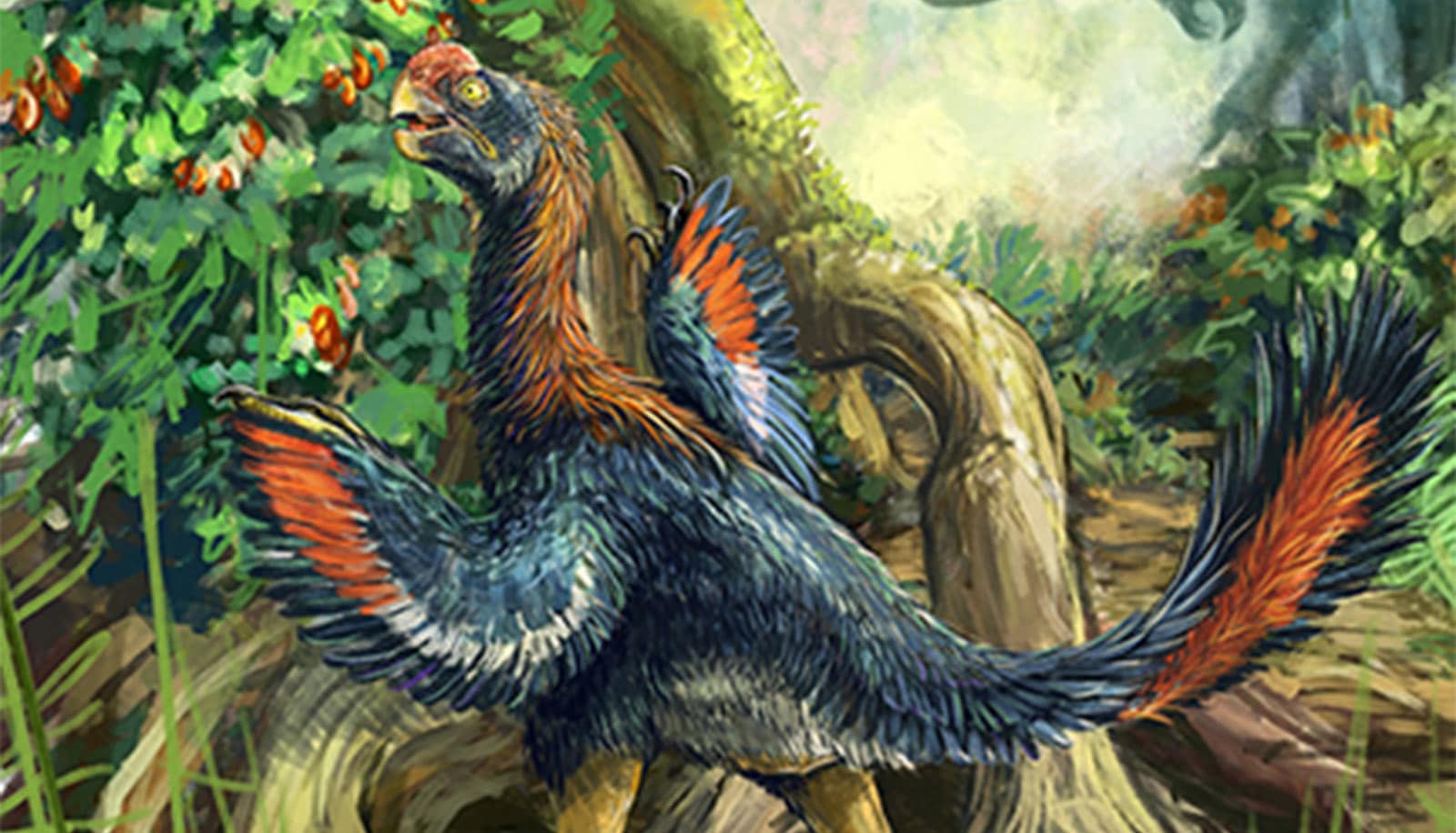


Infernogallus, a fruit-eating dinosaur from the Cretaceous

1 11 2026
Infernogallus, a fruit-eating dinosaur from the Cretaceous

Paleontologists have described a new species of small, turkey-sized dinosaur called Infernogallus jamesi that lived alongside Tyrannosaurus rex in the Hell Creek Formation. CT scans of its exceptionally well-preserved skull revealed palatal bones and muscle attachments strikingly similar to those of modern fruit-eating parrots. This arrangement allowed for a front-to-back sliding motion in the beak, specialized for mashing soft fruits and separating pulp from seeds.

The find provides a rare concrete link between the Cretaceous radiation of flowering plants and the ecological diversification of dinosaurs. Whether these animals actively dispersed seeds or merely acted as consumers remains an open question, though the mechanical evidence for their diet is solid. It is a useful reminder that even heavily studied ecosystems still hide entirely unexpected dietary niches.

more: https://www.futurity.org/dinosaurs-fruit-3351672/?utm_source=rss&utm_medium=rss&utm_campaign=dinosaurs-fruit-3351672

my other side: ivo.blogspot.com


Daily Peanuts Improve Brain Insulin Response in Older Adults

1 11 2026
Daily Peanuts Improve Brain Insulin Response in Older Adults

Researchers at Maastricht University found that eating 60 grams of unsalted, skin-roasted peanuts daily for 16 weeks improved insulin responsiveness in memory-related brain regions of older adults. Using arterial spin labeling MRI, the team observed positive changes in areas like the hippocampus and lingual gyrus after administering insulin nasally. This builds on earlier work by the same group showing a modest increase in cerebral blood flow and verbal memory performance.

The study was small, involving just 31 participants aged 60 to 75, and lasted only 16 weeks, which is too short to draw conclusions about long-term prevention of cognitive decline. It is also unclear which specific components among the fats, fiber, and phytochemicals in peanuts drove the effect, or if similar foods would yield identical results. Still, it is a clean look at how a simple dietary intervention can measurably alter regional brain function.

more: https://www.sciencedaily.com/releases/2026/10/261030003001.htm

my other side: ivo.blogspot.com



Hummingbot CLI for automated algorithmic trading

1 11 2026
Hummingbot CLI for automated algorithmic trading

Hummingbot is an open-source framework for building and running market-making or arbitrage bots across centralized and decentralized exchanges. It provides an hbot command-line interface to manage strategy configurations, monitor trade execution, and handle API key encryption locally. You can deploy it via source install on Miniconda or through Docker containers to integrate with existing automated workflows.

It is a solid tool if you want to move beyond basic scripts and need a stable harness for connecting LLM agents to market data. However, it is not a set-and-forget trading solution and requires significant time to tune strategies and manage risk parameters. Expect a steep learning curve if you are not already comfortable managing exchange API connectivity and order book logic.

more: https://github.com/hummingbot/hummingbot

my other side: ivo.blogspot.com



MuJoCo physics engine for robotics and machine learning

1 11 2026
MuJoCo physics engine for robotics and machine learning

MuJoCo is a C-based physics simulator for articulated structures now maintained by Google DeepMind. It provides precompiled binaries for Linux, Windows, and macOS, alongside official Python bindings and a JAX-accelerated implementation called MJX. The engine is designed for high-performance simulation of contact dynamics in robotics and biomechanics research.

If you are working on differentiable physics or reinforcement learning, this is currently the industry standard. However, the XML-based model definition format has a steep learning curve and feels archaic compared to modern game engines. It is a powerful tool for research, but overkill if you just need basic rigid-body physics for a general application.

more: https://github.com/google-deepmind/mujoco

my other side: ivo.blogspot.com


Jolt Physics is a multi-threaded C++ physics engine

1 11 2026
Jolt Physics is a multi-threaded C++ physics engine

Jolt Physics is a rigid body and collision detection library written in C++17. It focuses on high-performance concurrency, allowing simulation updates and collision queries to run across multiple threads without traditional locking bottlenecks. The engine is battle-tested in large-scale titles like Horizon Forbidden West.

If you are building a simulation or game that requires precise multi-threading, this is currently the best-in-class open source option. It is not, however, a general-purpose scientific simulator and makes specific approximations to favor game-like performance over absolute physical accuracy. Expect to spend significant time on the API integration if you are moving away from a simpler library like PhysX.

more: https://github.com/jrouwe/JoltPhysics


Paperless-ngx manages scanned documents via Docker

1 11 2026
Paperless-ngx manages scanned documents via Docker

Paperless-ngx is a document management system that indexes physical scans into a searchable archive. It runs as a containerized stack using Docker Compose and serves as the active successor to the original Paperless project. It provides an interface for tagging, organizing, and retrieving documents locally.

The software is stable and solves the common problem of digitizing paper records for personal use. However, it does not provide built-in file encryption at rest, meaning you must secure the host machine yourself. It is not suitable for users who require a zero-knowledge cloud solution.

more: https://github.com/paperless-ngx/paperless-ngx

my other side: ivo.blogspot.com


Upscayl is an open source desktop image upscaler

1 11 2026
Upscayl is an open source desktop image upscaler

Upscayl is a FOSS desktop application that upscales low-resolution images locally using Real-ESRGAN models. It wraps a C++ Vulkan engine in an Electron frontend, processing files entirely on your own hardware rather than routing them through a cloud API. Packages are provided for Linux, macOS, and Windows.

It is worth keeping around if you need to bulk-enhance graphics or UI assets locally without paying per-image subscription fees. The main catch is hardware dependency: it requires a dedicated Vulkan-compatible GPU, and integrated graphics chips often fail to run the models.

more: https://github.com/upscayl/upscayl


Hyprland dynamic tiling Wayland compositor for Linux

1 11 2026
Hyprland dynamic tiling Wayland compositor for Linux

Hyprland is a dynamic tiling Wayland compositor written in C++ for Linux, built on its own rendering engine rather than depending on wlroots or libweston. It replaces traditional desktop environments or older tilers like Sway, adding fluid window animations, dynamic layouts, and a built-in plugin system. Configuration files reload instantly upon saving, and the compositor includes socket-based IPC along with explicit tearing support for gaming.

It is worth installing if you want a modern tiling desktop that looks polished out of the box without writing custom layout scripts. The catch is its rapid development pace, which leads to frequent updates and occasionally broken configuration syntax between releases. It is not suitable if you want a minimalist tiler like dwl or require rock-solid ABI stability.

more: https://github.com/hyprwm/Hyprland


SatpamAI: a zero-trust security gate for Claude Code skills

1 11 2026
SatpamAI — zero-trust security gate for Claude Code skills

SatpamAI (satpam is Indonesian for “security guard”) is a Claude Code skill that acts as a mandatory checkpoint before the AI runs any other skill. The premise: third-party AI skills are untrusted artifacts that can hide prompt injection, malware, hardcoded secrets, or supply-chain compromise — so inspect first, act last. Its motto: “No artifact earns trust. Trust is proved by evidence.”

It runs an 8-phase security gate (classify → threat-assess → inspect → decide → controlled execute → verify → audit) and a 10-layer malware analysis (provenance, static code analysis, secret scanning, dependency and permission auditing, integrity checks). A dedicated engine hunts for prompt injection — override attempts, authority impersonation, bypass requests, obfuscated multi-vector payloads — and everything gets a risk rating from PASS up to CRITICAL / UNKNOWN. Crucially it is static-only (“never execute untrusted code to test if it is malicious”) and it fails closed: uncertainty blocks.

One design choice worth noting: “prior session approval means nothing here” — each decision stands on its own evidence, with no grandfathered trust. Install via claude skill install <repo> (or /satpamai, or auto-load from CLAUDE.md). From the same author as SANITY; MIT licensed.

source: github.com/verycoolapps/SatpamAI

my other side: ivo.blogspot.com