How corroding dental implants trigger chronic inflammation

24 10 2026
How corroding dental implants trigger chronic inflammation

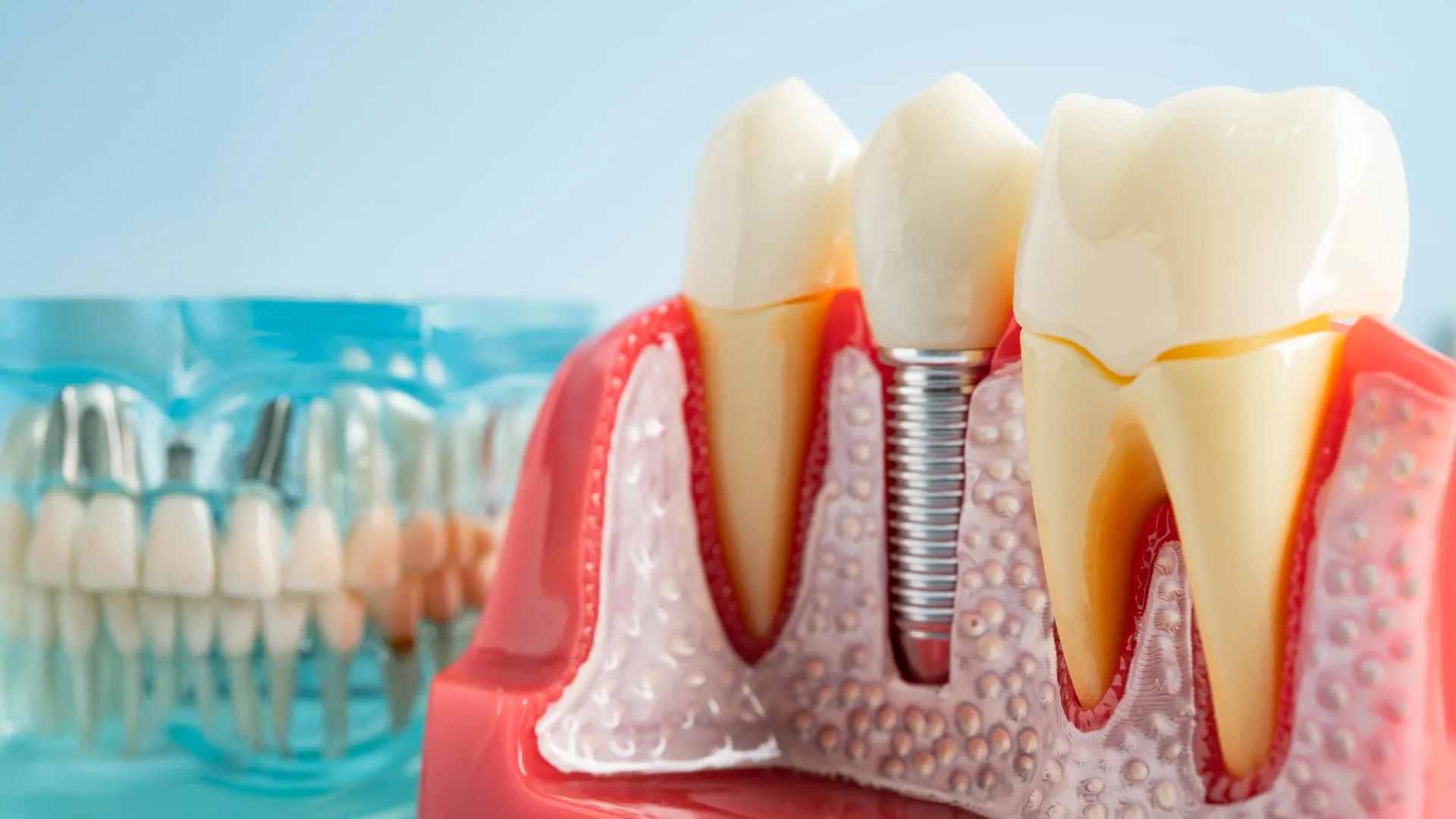
Researchers at Rutgers found that bacteria on dental implants create acidic biofilms that corrode the titanium, releasing microscopic metal particles into nearby tissues. These particles bind with bacterial toxins and trick macrophages, the immune cells meant to clear infection, into a state of permanent, destructive over-inflammation that antibiotics cannot resolve. The team identified TRPC1 as the specific calcium channel mediating this response, noting that disabling it prevented the bone-destroying condition in mice.

This explains why peri-implantitis resists standard gum disease treatments and affects up to twenty percent of implant patients. While finding a concrete drug target is a meaningful step, human trials are still a long way off and the underlying physics of metal wear in the mouth remain difficult to avoid entirely. It is a sober reminder that putting foreign materials into the body often involves trade-offs we only begin to understand decades later.

more: https://www.sciencedaily.com/releases/2026/10/261022081314.htm

my other side: ivo.blogspot.com


Communal adult living as an antidote to isolation

24 10 2026
Communal adult living as an antidote to isolation

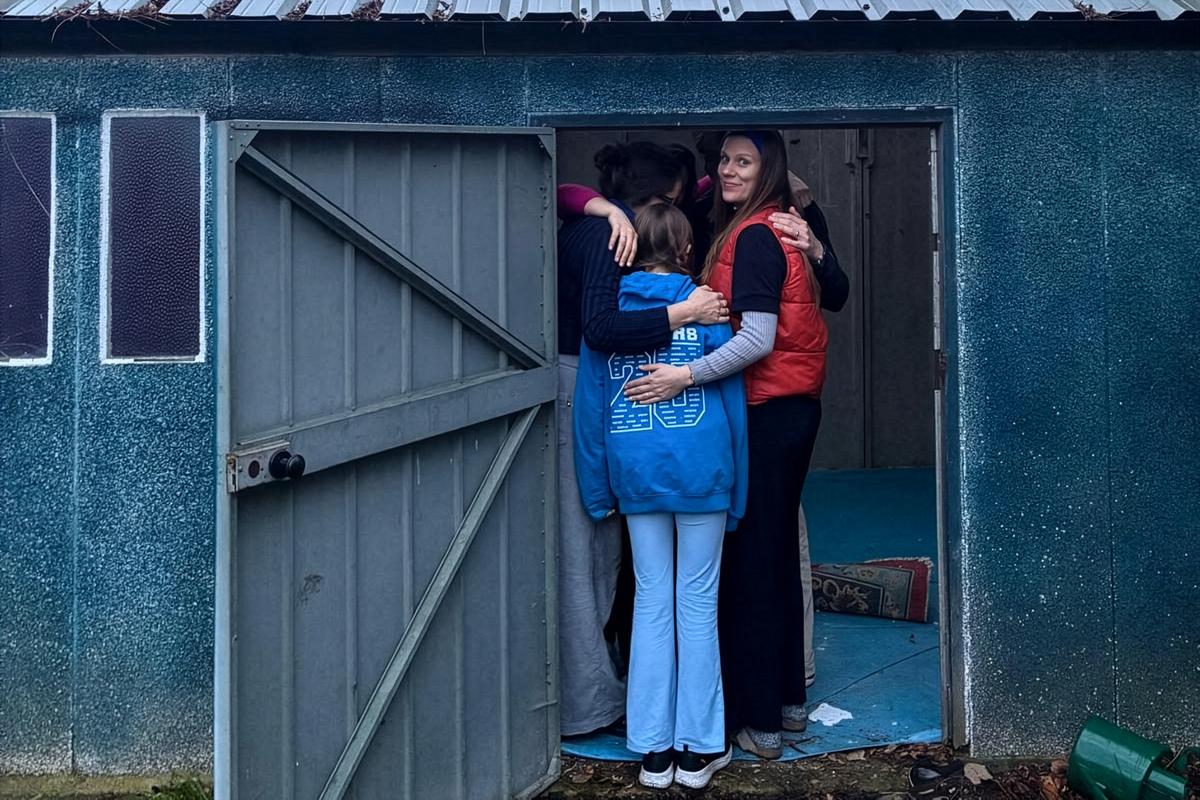
A writer describes abandoning the standard nuclear family model to live with eight other adults in a London terraced house, complete with shared childcare, domestic labor, and even a living room birth. The piece argues that the modern pursuit of privacy, space, and individual autonomy trades the friction of shared life for an underlying weightlessness and chronic loneliness.

It is a rare firsthand look at the friction and relief of stepping off the property ladder into interdependence, though it glosses over the immense privilege required to coordinate such an arrangement. Most people cannot simply opt out of atomized housing without institutional support or considerable social capital. Still, it is a useful prompt to ask what we actually give up for the sake of an extra bedroom.

more: https://aeon.co/essays/living-in-community-is-where-self-illusions-go-to-die

my other side: ivo.blogspot.com


Penundaan Kewajiban Sertifikasi Halal UMKM Sampai 2028

24 10 2026
Penundaan Kewajiban Sertifikasi Halal UMKM Sampai 2028

Pemerintah menunda kewajiban sertifikasi halal bagi usaha mikro dan kecil hingga 2028 karena kendala kesiapan pelaku usaha. Proses administrasi saat ini masih melibatkan tiga lembaga berbeda, mulai dari pemeriksaan auditor independen, fatwa MUI, hingga penerbitan sertifikat oleh BPJPH, di tengah tumpukan ratusan aturan teknis sektoral.

Penundaan ini semestinya dimanfaatkan untuk membenahi kerumitan birokrasi dan pungutan liar, bukan sekadar memperpanjang tenggat waktu. Tanpa pendampingan praktis dan transparansi biaya, kebijakan ini berisiko tetap menjadi beban administratif alih-alih pelindungan konsumen yang efektif.

more: https://theconversation.com/kewajiban-sertifikasi-halal-lebih-baik-ditunda-daripada-membingungkan-dan-memberatkan-usaha-kecil-294842

my other side: ivo.blogspot.com


A Keurig smart coffee maker generated 1 TB of Wi-Fi traffic in 10 days

24 10 2026
A Keurig smart coffee maker generated 1 TB of Wi-Fi traffic in 10 days

A smart Keurig K-Supreme coffee maker quietly pushed 1,008.45 GB of upload traffic (plus about 9.94 GB of downloads) across a home Wi-Fi network over roughly ten days — enough to saturate an entire access point on its own. The owner’s son, who manages the network with Ubiquiti’s UniFi monitoring, spotted the anomaly and posted it on 6 October 2026, and it promptly went viral as another “your IoT device is spying on you” story.

The reality is less dramatic but more interesting. By his own follow-up, most of that terabyte never left the house — the traffic was bouncing around the local network, not streaming your coffee habits to some server. The likely culprit is a bug in that specific unit’s software or network stack, not a deliberate data grab by Keurig; a coffee maker simply has no terabyte of meaningful data to send.

Still, it is a useful reminder of two things: a single misbehaving smart device can hog your whole connection, and you only notice if you are actually watching your network. If you run a lot of IoT gadgets, basic monitoring — plus putting them on their own VLAN or guest network — turns invisible weirdness like this into something you can see and contain.

source: Tom's Hardware

my other side: ivo.blogspot.com


HatchZip extracts archives in place by shrinking them

24 10 2026
HatchZip extracts archives in place by shrinking them

HatchZip is a cross-platform desktop utility and CLI tool that unpacks ZIP, 7z, tar, and gzip archives without requiring double the disk space. Instead of keeping the archive and output simultaneously, it consumes the archive from the end and truncates the file as it goes. It runs on Windows, macOS, and Linux, checking if extraction will fit before modifying any data.

It is worth installing if you frequently deal with large game assets or datasets on constrained drives and want to avoid freeing hundreds of gigabytes just to unpack a payload. The catch is that solid 7z archives cannot be freed until an entire block completes, meaning highly compressed single-file blocks will still demand their full uncompressed size in free space. Skip it if your filesystem or workflow doesn't regularly push you against disk capacity limits.

more: https://github.com/xevrion/hatchzip

my other side: ivo.blogspot.com


Gately: A self-hosted network gateway and reverse proxy toolkit

24 10 2026
Gately: A self-hosted network gateway and reverse proxy toolkit

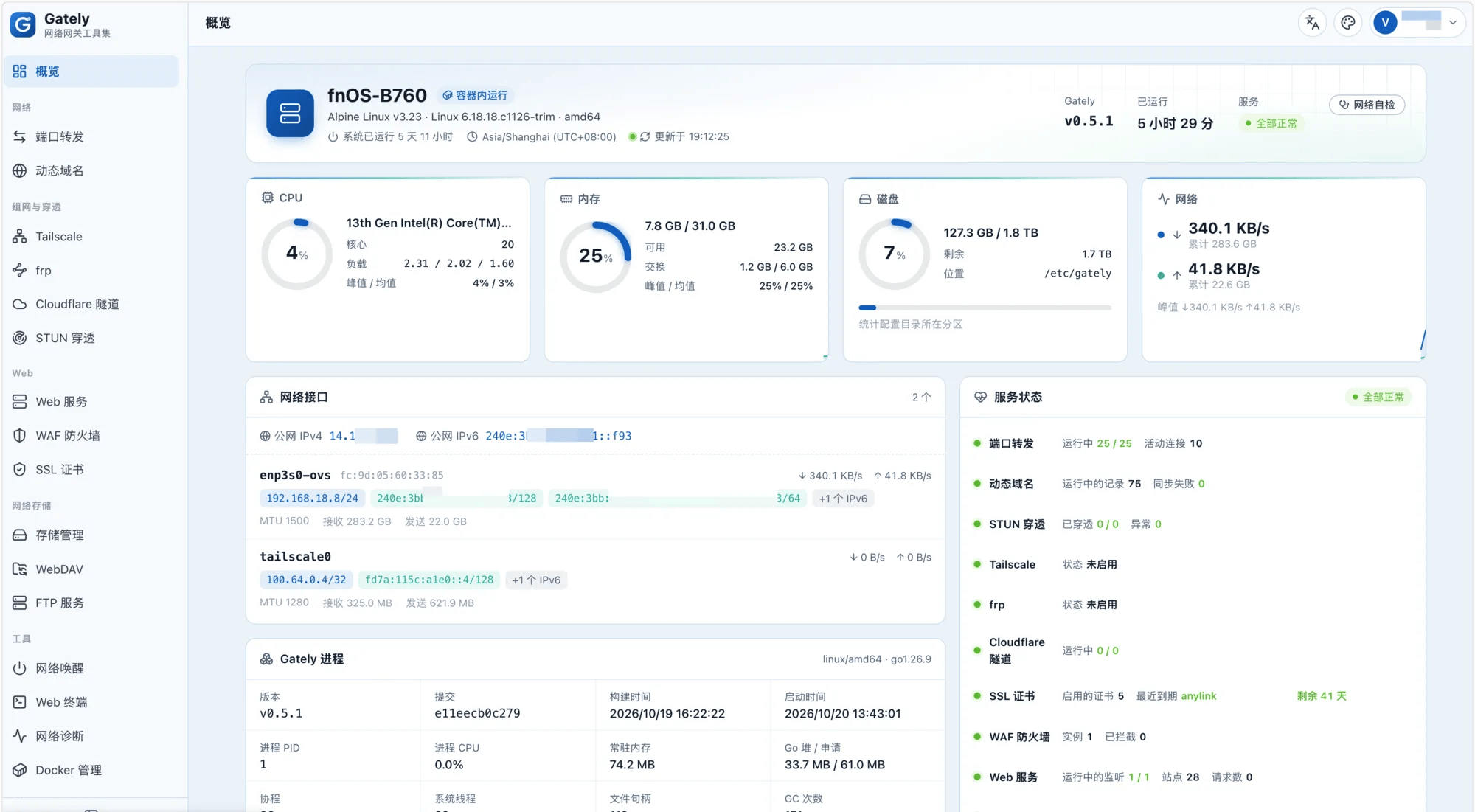
Gately is an open-source, auditable network gateway toolkit packaged as a single 32 MB binary that runs on home networks, NAS boxes, and cloud servers. Written under the Apache-2.0 license, it combines DDNS, STUN traversal, port forwarding, reverse proxying, SSL certificate automation, Tailscale integration, a Coraza-backed WAF, and fail2ban-style intrusion prevention into one interface with plain-text JSON configuration. It also includes an importer for existing Lucky configurations and ships as a native app for fnOS.

It is worth a look if you want to consolidate reverse proxies, tunnel management, and firewall rules without trusting an opaque binary or heavy control plane. The catch is that configuring every subsystem by hand takes time, and if you are already comfortable maintaining a stack of separate tools like Nginx, Certbot, and frp, Gately offers little functional advantage. It is not for teams needing distributed, enterprise-grade edge routing with complex multi-tenant control planes.

more: https://github.com/wangwanjie/gately

my other side: ivo.blogspot.com


A Ten-Dollar Optical Spectrometer for Wearables

23 10 2026
A Ten-Dollar Optical Spectrometer for Wearables

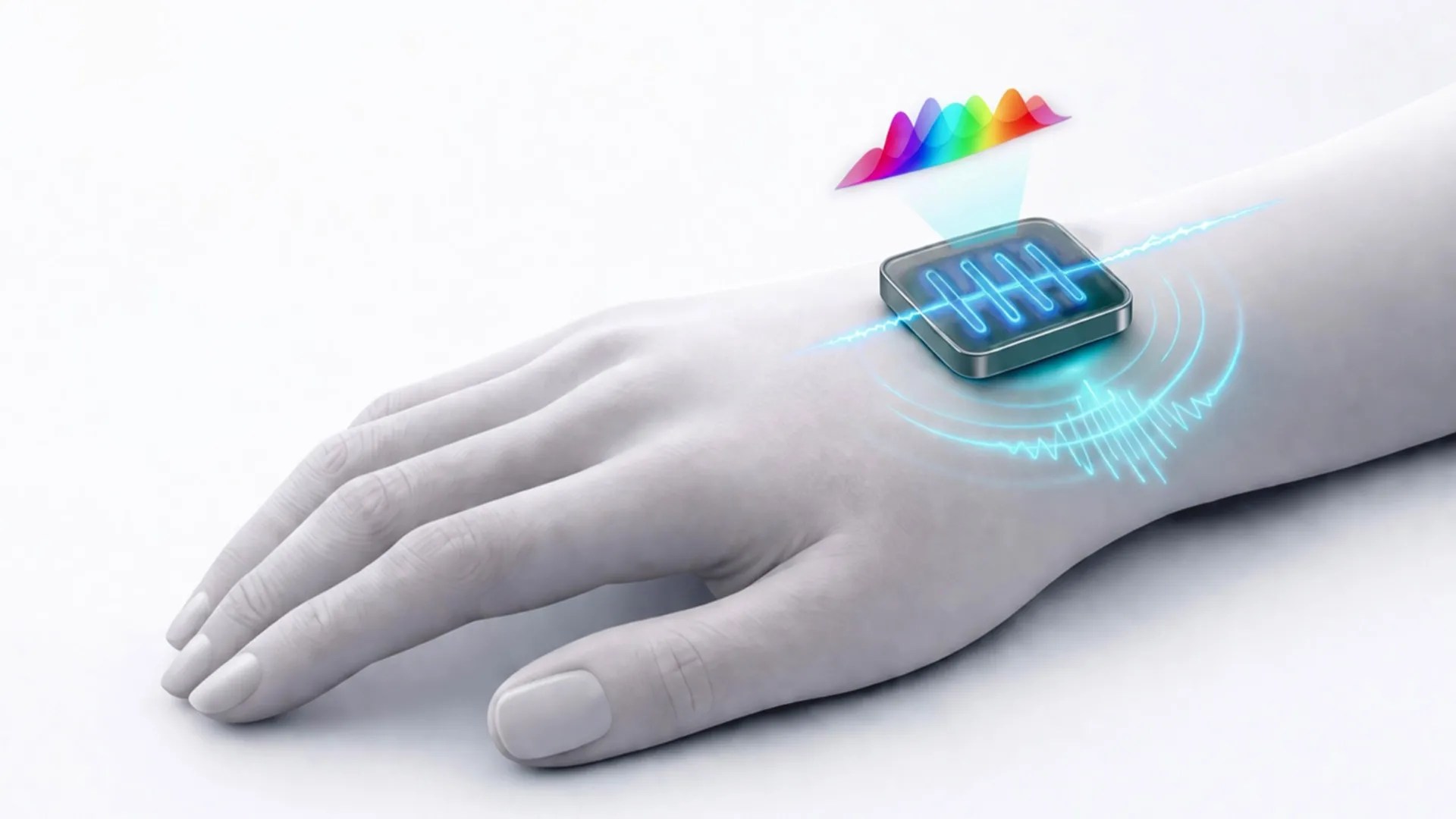
Researchers at Cambridge have built a convolutional optical spectrometer on a silicon nitride chip that costs roughly ten dollars to produce. By applying the convolution theorem directly in the optical domain using repeating components like micro-ring resonators, the device analyzes near-infrared light across the 1200-1700 nanometer range. In tests, the centimeter-scale sensor achieved high classification accuracy on materials and measured biomarkers including blood glucose and lactate in real time.

Shrinking spectrometers usually forces a trade-off between size, resolution, and computational overhead, so seeing benchtop-level precision on a chip is notable. While the noninvasive glucose tracking results from a single participant are promising, they remain preliminary and far from a validated clinical product. It is a neat application of mathematical restructuring to hardware limits, but actual wearable utility will depend heavily on how well it handles real-world skin variation and motion blur over time.

more: https://www.sciencedaily.com/releases/2026/10/261022081312.htm

my other side: ivo.blogspot.com



How viral protein shells assemble without a blueprint

23 10 2026
How viral protein shells assemble without a blueprint

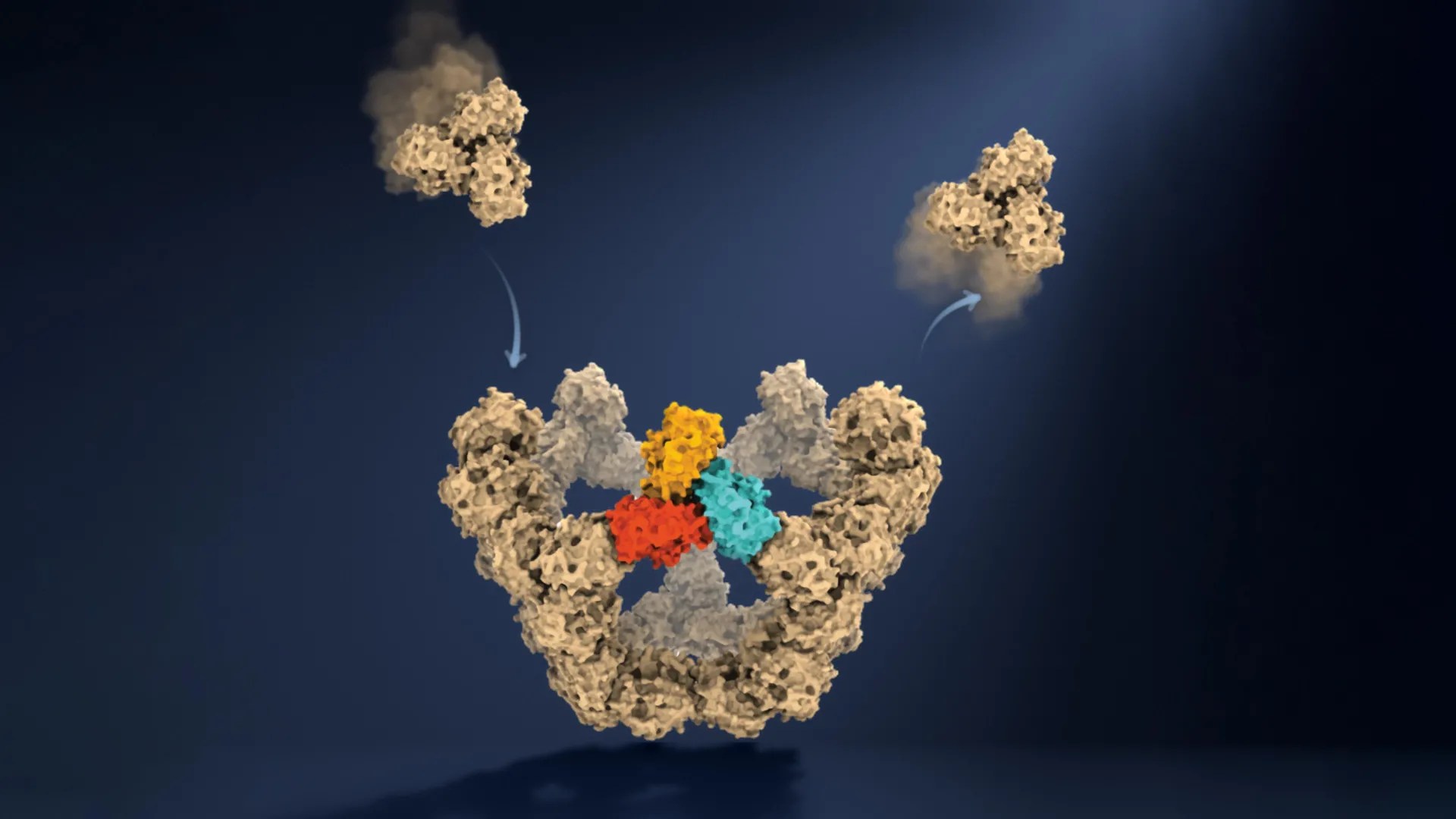
Researchers at Oxford used mass photometry to watch virus-like particles build themselves one molecule at a time. They found that proteins form weak, flexible connections that easily break apart, allowing the components to test different arrangements until stable checkpoints lock them into place. Once a closed pentagonal ring forms, subsequent growth accelerates because fewer valid assembly routes remain.

It is a clear look at how complex biological structures avoid getting trapped in dead-end configurations without any central director. While this study looked at an engineered particle of just sixty units, observing the intermediate stages directly opens a practical way to study how viral construction might be interrupted. We are still a long way from turning these observations into antiviral drugs, but understanding the physical rules of assembly is a necessary first step.

more: https://www.sciencedaily.com/releases/2026/10/261021231248.htm

my other side: ivo.blogspot.com


Melania Trump brokers localized Ukraine ceasefire

23 10 2026
Melania Trump brokers localized Ukraine ceasefire

The White House has announced that Melania Trump successfully negotiated a localized ceasefire in the besieged Ukrainian city of Oleshky. The agreement, confirmed by both Russia and Ukraine, will pause fighting to allow aid delivery and evacuations for the remaining six thousand residents living without reliable food, water, or electricity. Both nations agreed to halt hostilities starting October 27, enabling civilian leaders to enter the front-line city and assist those wishing to leave for either Russia or Ukraine.

First spouses rarely step into active war zones as direct diplomatic brokers, making this intervention an unusual and unexpected channel in a grinding conflict. While the localized truce offers a rare window of relief for a starving population, it remains a heavily restricted humanitarian pause rather than a broader political breakthrough. We should watch whether this quiet back-channel model can be replicated elsewhere, or if it remains a solitary exception in a stalemated war.

more: https://www.bbc.co.uk/news/articles/c6vgxkvl4w5eo?at_medium=RSS&at_campaign=rss

my other side: ivo.blogspot.com



Ollaya runs open decision models locally via a Jev-compatible API

23 10 2026
Ollaya runs open decision models locally via a Jev-compatible API

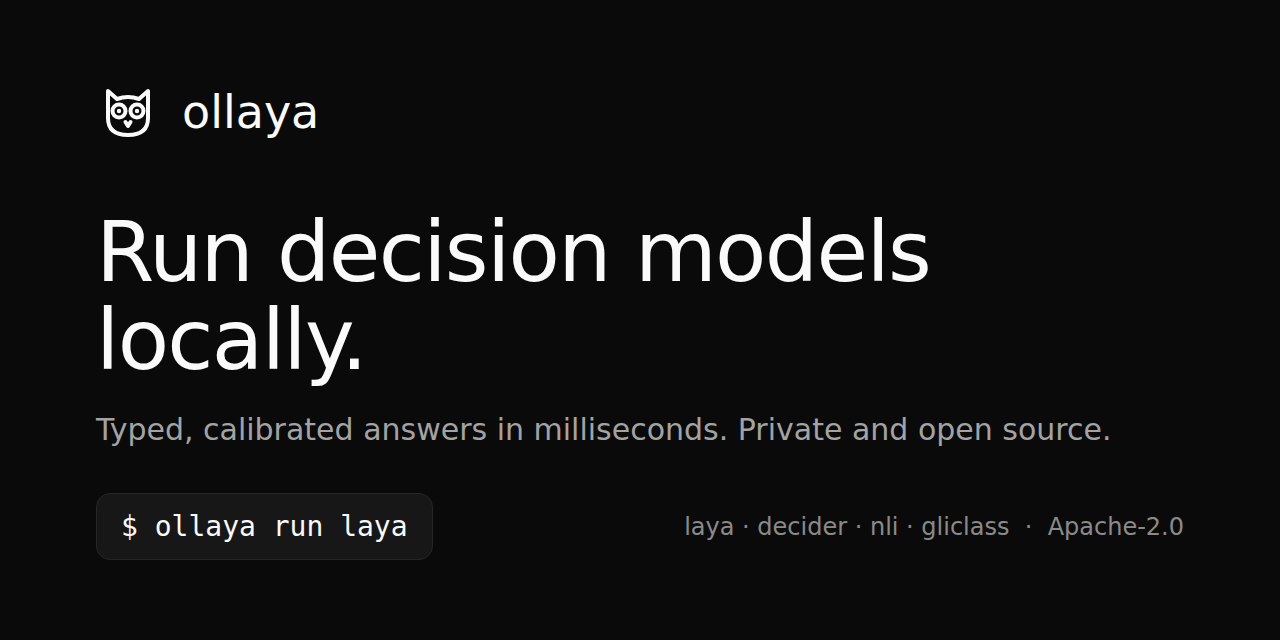
Ollaya is a self-hosted inference daemon and CLI that runs open decision models locally without generating text. Using a single forward pass, it evaluates states like JSON messages against typed questions to return calibrated probabilities in milliseconds. On an RTX 5090, the recommended 4B model processes five questions in 113 ms, while CPU-friendly alternatives take around half a second.

It is worth installing if you are already using TypeSafe workflows and want to run models locally under an Apache-2.0 license. However, it is built exclusively for structured classification and routing rather than text generation, so it will not replace a standard LLM backend. If your application relies on unstructured output or long-form reasoning, skip it.

more: https://github.com/ollaya-dev/ollaya

my other side: ivo.blogspot.com