Why philosophers use equality instead of sameness

10 11 2026
Why philosophers use equality instead of sameness

Philosophers treat human equality as a mathematical axiom rather than a descriptive fact of sameness. This borrows precision from geometry to create an objective standard that justifies political redress for social disparities.

The move treats basic moral status as a fixed starting point, shutting down debate about who counts as a person. It risks ignoring that the premise itself remains controversial and historically specific.

more: https://aeon.co/essays/historical-ideas-of-equality-help-us-imagine-an-equal-world

my other side: ivo.blogspot.com



How physics and psychology define the present moment

5 11 2026
How physics and psychology define the present moment

Jo Marchant examines the friction between how physics, psychology, and philosophy conceptualize now. The talk highlights that the present is not a fixed point but a fluid construct that shifts depending on the lens used. It synthesizes research from her upcoming book to show why the immediate experience resists simple definition.

This matters for anyone tired of feeling behind schedule, suggesting we might derive more clarity from subjective experience than objective clocks. However, the argument remains largely philosophical and lacks a single empirical metric to verify these shifts in perception. Treat it as an invitation to reflect rather than a definitive scientific conclusion.

more: https://aeon.co/videos/always-with-us-yet-ever-elusive-on-the-knottiness-of-now

my other side: ivo.blogspot.com



Grief as love with nowhere to go

29 10 2026
Grief as love with nowhere to go

Death is only the most visible occasion for grief, which actually attaches to any significant loss without a funeral or condolence card. Writing in Aeon, an author examines the unmapped sorrow of estranged parents, bodily decline, drifting friendships, and unclassified breakups. The core argument is simple: grief is not a pathology separate from attachment, but rather what love does when its object is gone.

Culture gives us clear scripts for bereavement after death, but almost no language for disenfranchised or anticipatory grief. Naming these lesser-known losses doesn't make them hurt less, but it removes the added suffering of feeling illegitimate in your sorrow. Anyone navigating a quiet, un-ceremonies heartbreak will recognize the territory here.

more: https://aeon.co/essays/we-need-a-language-to-name-the-grief-that-comes-without-death

my other side: ivo.blogspot.com



Communal adult living as an antidote to isolation

24 10 2026
Communal adult living as an antidote to isolation

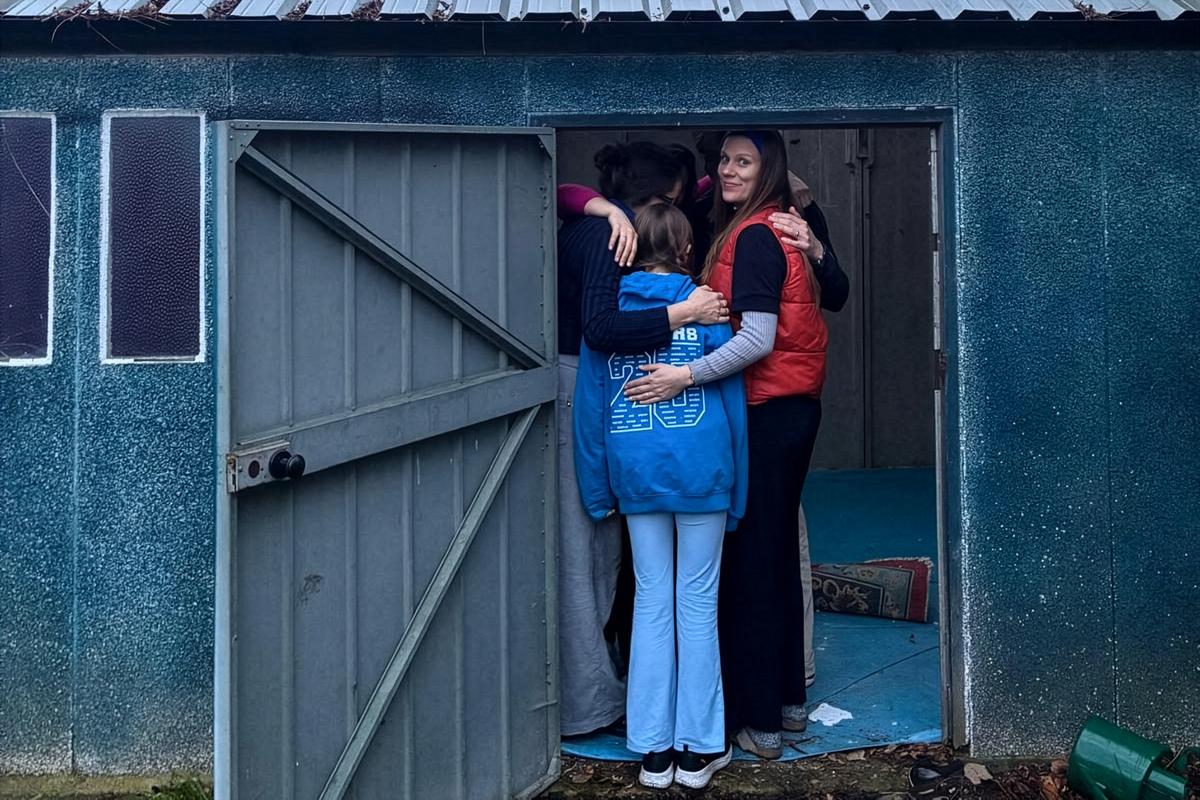
A writer describes abandoning the standard nuclear family model to live with eight other adults in a London terraced house, complete with shared childcare, domestic labor, and even a living room birth. The piece argues that the modern pursuit of privacy, space, and individual autonomy trades the friction of shared life for an underlying weightlessness and chronic loneliness.

It is a rare firsthand look at the friction and relief of stepping off the property ladder into interdependence, though it glosses over the immense privilege required to coordinate such an arrangement. Most people cannot simply opt out of atomized housing without institutional support or considerable social capital. Still, it is a useful prompt to ask what we actually give up for the sake of an extra bedroom.

more: https://aeon.co/essays/living-in-community-is-where-self-illusions-go-to-die

my other side: ivo.blogspot.com


Everyday intuition as a form of perception

22 10 2026
Everyday intuition as a form of perception

We tend to dismiss gut feelings as irrational heuristics, but ordinary intuition functions much like sensory perception by directly presenting facts with rational force. Just as seeing a car in the garage makes its presence immediately apparent, an instant aversion to a stranger or a suspicious email presents a conclusion without requiring an explicit chain of reasoning. This capacity operates continuously in daily life, bridging the gap between simple sensory awareness and abstract philosophical thought experiments.

Treating intuition as perceptual makes sense of why we can act reasonably on hunches we cannot yet articulate. At the same time, we still lack a clear account of when this mechanism misfires, meaning our immediate seemings require careful calibration against actual evidence. It is a useful framework for understanding the mind, but not an excuse to stop checking your work.

more: https://aeon.co/essays/sometimes-you-just-know-somethings-off-but-how

my other side: ivo.blogspot.com


How sixteenth-century Italy learned to love the gun

20 10 2026
How sixteenth-century Italy learned to love the gun

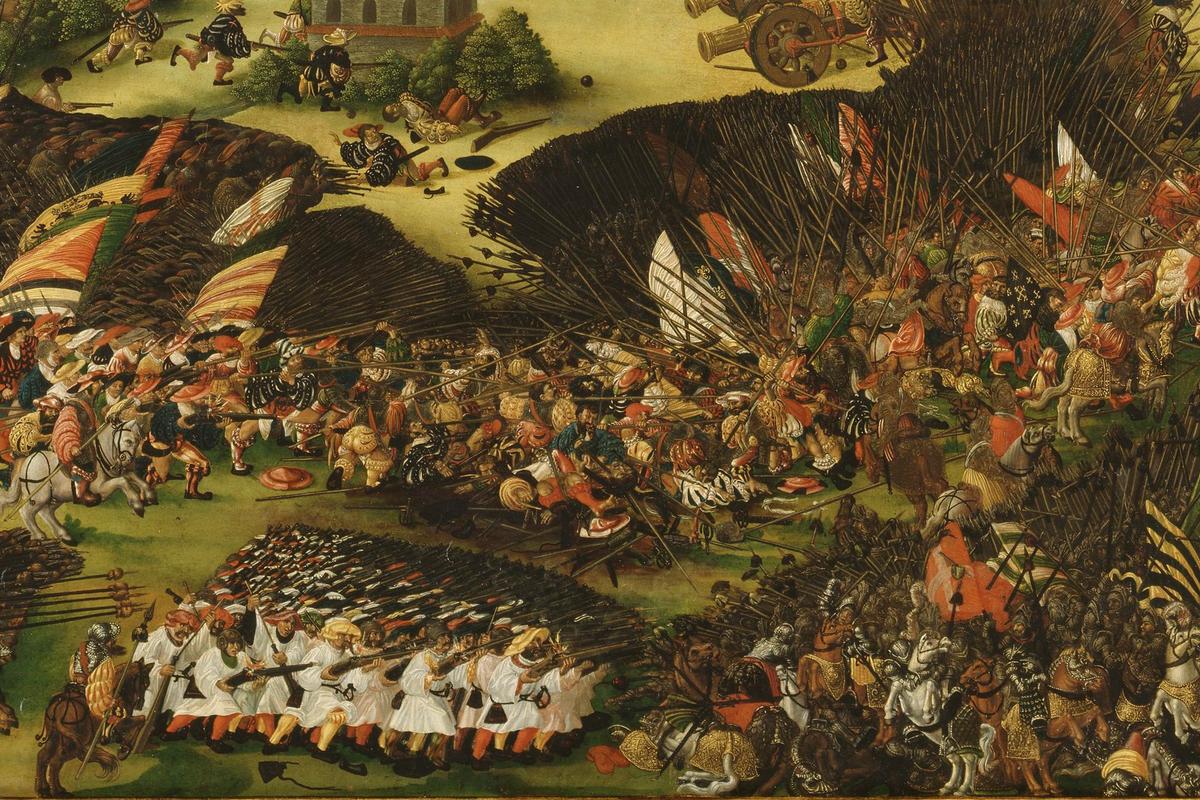
In 1492, Lorenzo de’ Medici owned just five portable firearms, which literature of the era routinely dismissed as the unchivalrous, devilish work of cowards. By 1539, his descendant Cosimo had stocked ninety-one firearms in his Florentine storerooms as recurring foreign wars forced the peninsula to abandon mercenaries for citizen militias. Civic authorities instituted mandatory monthly target practice and armed ten percent of their newly formed infantry with early handguns. A weapon once considered dishonorable quickly became a staple of municipal defense.

The shift shows how rapidly practical military necessity can override entrenched cultural prejudice, even among an artistic elite. Yet because the transition happened before the rise of ordinary soldiers' memoirs, we are left mostly with the records of state arsenals rather than the personal views of the men ordered to carry them. It is a reminder that technological adoption is rarely smooth, usually driven less by enthusiasm than by the grim pressure of survival.

more: https://aeon.co/essays/the-renaissance-gun-from-diabolical-device-to-popular-militias

my other side: ivo.blogspot.com


The limits of formal mathematical systems

15 10 2026
The limits of formal mathematical systems

In 1930, the mathematician David Hilbert declared that every mathematical problem could be solved using the right set of axioms. The following day, a twenty-four-year-old Kurt Gödel proved him wrong by showing that any consistent logical system must contain truths it cannot prove. This meant that certain truths will always lie beyond our ability to formally verify, no matter how many rules we establish.

This result ended generations of attempts to reduce mathematics to pure, air-tight logic, from Kant to Frege. It remains a sobering reminder that formal systems have permanent boundaries. We should be careful not to mistake the completeness of a framework for a complete understanding of reality.

more: https://aeon.co/essays/the-century-long-search-for-the-limits-to-knowledge

my other side: ivo.blogspot.com


How the Venetian foundry became the word ghetto

11 10 2026
How the Venetian foundry became the word ghetto

In March 1516, the Venetian Senate ordered the city's Jews to move to an island in Cannaregio that had previously housed a copper foundry. In the local dialect, the foundry was called a geto, derived from the verb to cast. When the segregated quarter took that name, it became the first time a specific place name transitioned into a general term for segregation itself.

It is a reminder of how casual linguistic accidents can attach themselves to profound historical horrors, outliving their original contexts by centuries. Words that start as local administrative compromises eventually travel across languages and continents, accumulating meanings their originators could never have anticipated. Tracing these etymologies does not simplify history, but it clarifies how our current vocabulary was built from old debris.

more: https://aeon.co/essays/the-making-of-the-ghetto-on-a-venetian-island-in-1516

my other side: ivo.blogspot.com


How public feedback rewrites private memory

5 10 2026
How public feedback rewrites private memory

When a historian posted a long-held, painful memory about his mother's 1946 diary onto Facebook, a friend pointed out something he had never noticed: he always recounted the story with a flat, ironizing deadpan. That outside observation shifted how he understood his own emotional delivery, illustrating how real-time digital responses alter personal narratives while they are being written. Traditional memoir is a solitary labor of finished revision, but serialized public writing turns self-reflection into a continuous, crowdsourced dialogue.

This blurs the line between discovering who you are and performing who you think you are for an audience. It is worth asking whether a coherent self-image can survive being built in public view, or if the feedback loop simply replaces genuine introspection with curated reactions. Anyone trusting social media to help them understand their own history should probably remain skeptical of how much the room shapes the mirror.

more: https://aeon.co/essays/what-i-have-learned-from-posting-episodes-of-my-life-on-facebook

my other side: ivo.blogspot.com


How high-mortality urban environments shape retaliatory violence

5 10 2026
How high-mortality urban environments shape retaliatory violence

Interviews with men in Chicago's highest-violence neighborhoods reveal how the constant threat of death alters everyday cognition. When living under conditions where young residents face higher mortality rates than soldiers in active warzones, retaliation ceases to feel like a choice and becomes an automatic response to grief and danger. A mind shaped by actual trauma stops filtering ambiguous situations, translating routine conflicts into immediate triggers for lethal force.

What makes this research valuable is its focus on the mechanics of escalation rather than broad moralizing about crime rates. The underlying premise—that hyper-vigilance learned through chronic exposure can potentially be unlearned through cognitive behavioral intervention—offers a practical window for change. Still, readers should remain cautious about translating localized group interventions into universal policy solutions without acknowledging the stubborn persistence of structural poverty.

more: https://aeon.co/essays/early-violence-is-a-bad-teacher-but-the-mind-can-learn-anew

my other side: ivo.blogspot.com