SANITY: a Claude Code skill that fights AI hallucinations and insecure code

1 11 2026
SANITY: a Claude Code skill that fights AI hallucinations and insecure code

SANITY is a Claude Code “skill” — a drop-in instruction module — built to stop two of the most expensive failure modes of AI-assisted coding: confident hallucinations (made-up functions, APIs, file contents) and insecure code (SQL injection, hardcoded secrets, missing auth). Its motto is blunt: “a wrong answer delivered confidently causes more damage than ‘I don’t know.’”

It works on two axes at once — epistemic integrity (verify before you claim) and security integrity (OWASP Top 10 enforcement). There is a “FORTRESS” framework of mandatory checks (read-before-claim, threat modeling, security audits), a confidence matrix that rates each claim CONFIRMED / INFERRED / UNCERTAIN / BLOCKED, an anti-pattern blacklist, and a single SANITY score — security weighted 60%, epistemics 40%, because a breach hurts more than wasted time. The blocks are hard: OWASP violations and hardcoded secrets cannot be worked around.

Install it with claude skill install <repo>, copy sanity.md into ~/.claude/skills/, or auto-load it from your project’s CLAUDE.md. If you run Claude Code (or similar agents) against production code, it is worth a look — and the README is bilingual (EN/ID). MIT licensed.

source: github.com/verycoolapps/sanity-anti-hallucination-skill

my other side: ivo.blogspot.com



Blood tests for Alzheimer’s risk over ten years

31 10 2026
Blood tests for Alzheimer's risk over ten years

A large international study found that measuring levels of the blood biomarker p-tau217 can help predict future cognitive decline in healthy older adults. Researchers combined data from six observational studies to track nearly 2,700 participants, discovering that very high biomarker levels correlated with a 38 percent chance of developing cognitive impairment within five years and a 78 percent chance over ten years. Importantly, the protein remained predictive even after accounting for existing amyloid-beta plaques and known genetic risk factors like APOE4.

While the methodological scope is impressive, the practical utility right now is practically nil for someone walking into a clinic. Because there are no approved preventive treatments to alter the disease course for asymptomatic people, a positive result currently offers no actionable medical recourse beyond standard lifestyle advice. It is a genuine scientific advance in biomarker tracking, but one that outruns our current therapeutic toolkit.

more: https://www.sciencedaily.com/releases/2026/10/261029072142.htm

my other side: ivo.blogspot.com



The widening gender gap in lifetime caregiving

31 10 2026
The widening gender gap in lifetime caregiving

Women in the United States spend an average of seven years over their lifetime caring for older family members and friends, compared to four years for men. A recent study in the Journals of Gerontology Series B shows this three-year gap has grown by a year since 2011. While men and women spend roughly equal time caring for spouses, women take on significantly more care for parents, extended family, and friends across every measured task.

Demographic projections suggest this disparity may widen further as the population ages and more adults reach later life without close kin. The study models lifetime expectations based on current rates, which means shifts in paid care availability or changing social norms could alter the trajectory. Even so, the baseline numbers quantify a structural burden that falls unevenly across households long before formal long-term care systems are engaged.

more: https://www.futurity.org/caregiving-gap-3351702/?utm_source=rss&#038;utm_medium=rss&#038;utm_campaign=caregiving-gap-3351702

my other side: ivo.blogspot.com


Meta-analisis menunjukkan perempuan unggul dalam kecerdasan emosional

31 10 2026
Meta-analisis menunjukkan perempuan unggul dalam kecerdasan emosional

Sebuah tinjauan terhadap data dari 76 negara selama hampir tiga dekade menunjukkan bahwa perempuan secara rata-rata memiliki skor kecerdasan emosional yang lebih tinggi, khususnya dalam mengenali dan mengelola perasaan orang lain. Pola data memperlihatkan kesenjangan ini menyusut dari masa anak-anak ke dewasa serta menipis dalam tiga dekade terakhir, mengindikasikan faktor sosialisasi dan latihan dini memainkan peran lebih besar ketimbang biologi bawaan. Artinya, keterampilan membaca emosi ini terbentuk karena perempuan sejak kecil lebih sering diajak mendiskusikan perasaan.

Temuan ini penting karena menggeser pandangan bahwa kecerdasan emosional adalah sifat lahiriah yang melekat pada gender tertentu. Namun, risikonya terletak pada eksploitasi keterampilan tak terlihat di tempat kerja, di mana beban meredakan konflik dan mendukung tim kerap dibebankan pada perempuan tanpa pengakuan atau kompensasi yang layak. Perusahaan perlu belajar memperlakukan kecerdasan emosional sebagai kompetensi profesional yang nyata, bukan sekadar sifat dasar yang otomatis tersedia.

more: https://theconversation.com/riset-ungkap-perempuan-lebih-cerdas-secara-emosional-tapi-ada-beban-di-balik-keunggulan-ini-295344

my other side: ivo.blogspot.com


TokenEconomizer cuts AI coding agent costs by learning locally

31 10 2026
TokenEconomizer cuts AI coding agent costs by learning locally

TokenEconomizer is a local plugin for Claude Code, GitHub Copilot CLI, and other agents that reduces API costs by 18 to 31 percent on SWE-bench. It stores repository facts in ~/.tokeneconomizer, prunes unused tool definitions from context, and injects redirects when an agent loops on a failing turn. The plugin works without modifying the underlying agent or its weights.

It is worth installing if you run the same agent repeatedly on the same codebase and want to trim redundant prompt overhead. The catch is that it requires background model calls to propose facts and judge loops, meaning savings depend heavily on whether those helper calls cost less than the tokens they save.

more: https://github.com/microsoft/TokenEconomizer

my other side: ivo.blogspot.com


Appflare manages open source apps in your Cloudflare account

31 10 2026
Appflare manages open source apps in your Cloudflare account

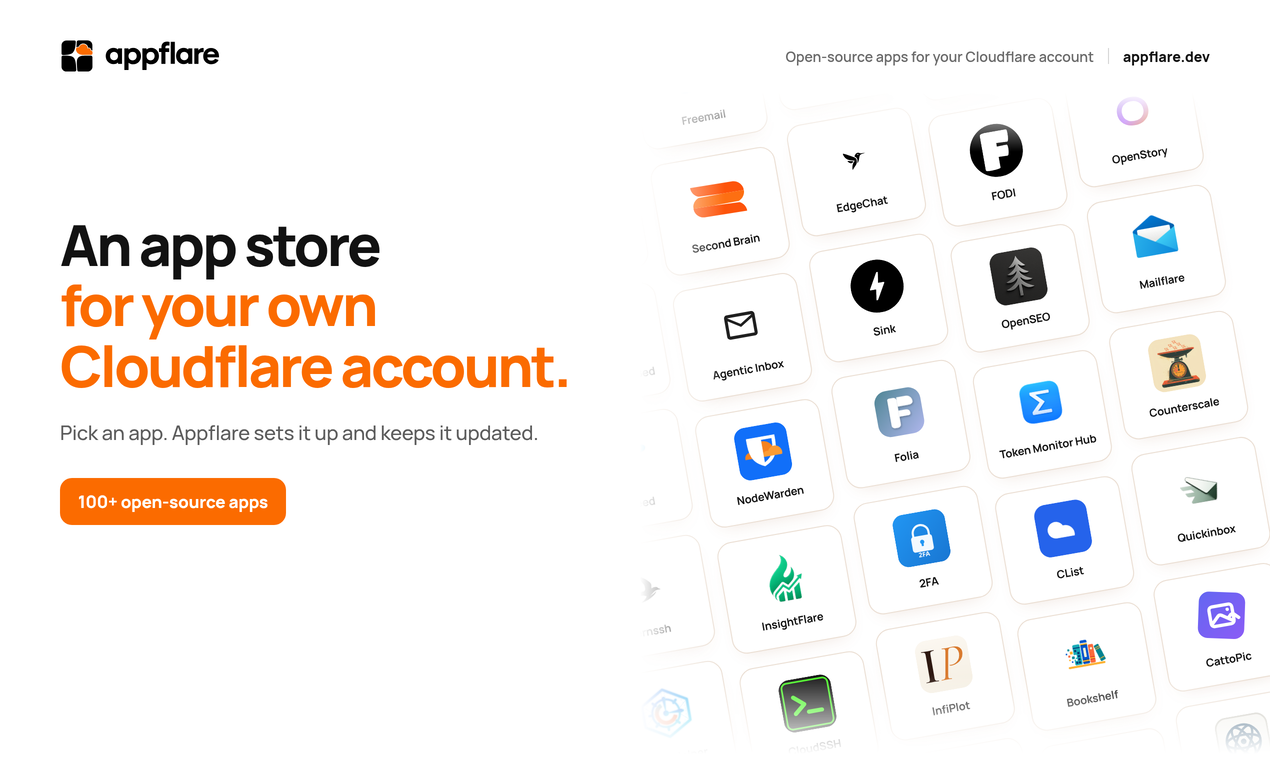
Appflare is an open source manager that installs and updates over 100 applications directly inside your own Cloudflare account. It handles the underlying resources like databases and storage, providing a single dashboard for custom domains and access control. Most apps run entirely within the free Workers tier, utilizing a browser installer or a Node.js CLI.

It is worth a look if you already rely on Cloudflare infrastructure and want to self-host small utilities without managing a VPS. The catch is that you are tightly coupled to Cloudflare's ecosystem and proprietary limits, making it a poor fit if you prefer portable Docker deployments on generic hardware.

more: https://github.com/appflare/appflare

my other side: ivo.blogspot.com


Bias gender dan relasi kuasa dalam KBBI daring

30 10 2026
Bias gender dan relasi kuasa dalam KBBI daring

Analisis terhadap ribuan lema kata sifat dalam KBBI daring menunjukkan bagaimana contoh kalimat kerap menormalisasi relasi kuasa tertentu dan memosisikan perempuan sebagai subyek negatif. Sifat buruk seperti cerewet atau cengeng konsisten dilekatkan pada figur perempuan, sementara kata bermuansa positif dijelaskan secara lebih netral. Pilihan subyek ini mencerminkan nilai sosial penyusunnya alih-alih sekadar mencatat bahasa secara objektif.

Kamus resmi memegang kuasa besar dalam menentukan pemakaian yang dianggap sah oleh publik dan institusi pendidikan. Temuan ini mengingatkan bahwa bahkan rujukan kebahasaan paling standar pun tidak kebal dari bias kultural. Kita perlu membaca kamus secara kritis, dan penyusunnya sudah saatnya membersihkan contoh-contoh kalimat yang memperkuat stereotip lama.

more: https://theconversation.com/kamus-tidak-pernah-netral-bagaimana-kbbi-daring-menyimpan-relasi-kuasa-dan-bias-gender-294882

my other side: ivo.blogspot.com


Why crocodiles survived the asteroid impact

30 10 2026
Why crocodiles survived the asteroid impact

When the asteroid hit 66 million years ago, it did not render the entire planet uninhabitable. A new study of over 7,000 fossils shows that crocodiles and their relatives tracked warm climates rather than adapting to new temperatures. This strict thermal preference kept them in equatorial refuges where conditions remained relatively stable, unlike the collapsing habitats of non-avian dinosaurs.

It is a reminder that survival in a mass extinction often comes down to geography and existing habits rather than clever adaptation. Yet the lineage's remarkable anatomical history—producing everything from bus-sized predators to tiny pug-faced herbivores—shows that physical diversity can thrive while core ecological requirements remain rigid. We should be cautious about reading too much purpose into these ancient patterns, as the same climate conservatism that saved them once could make them uniquely vulnerable to rapid warming today.

more: https://www.sciencedaily.com/releases/2026/10/261030002922.htm

my other side: ivo.blogspot.com


How the brain overrides automatic habits

30 10 2026
How the brain overrides automatic habits

Researchers at UT Austin recorded neural activity in monkeys playing a computer game that triggered automatic responses. They found that self-control does not work by turning down activity in the brain's habit center, the striatum. Instead, the orbitofrontal cortex jams the striatum's signals, disrupting the autopilot mechanism while total neural activity remains the same.

This mechanism offers a clearer physical picture of why impulse control fails in addiction and obsessive-compulsive disorders. Still, the work is based on non-human primates performing a narrow computer task, and translating these specific circuit dynamics to human clinical treatment remains a long way off.

more: https://www.futurity.org/brain-impulse-self-control-3351642/?utm_source=rss&#038;utm_medium=rss&#038;utm_campaign=brain-impulse-self-control-3351642

my other side: ivo.blogspot.com


OpenIDEA: A Native Rust Rewrite of IntelliJ IDEA

30 10 2026
OpenIDEA: A Native Rust Rewrite of IntelliJ IDEA

OpenIDEA is an open-source, native application that replicates IntelliJ keymaps, tool windows, and search habits using a Rust core. Benchmarked on a 32-core Windows machine opening a 770-file Python repository, it starts in 1.1 seconds and uses 169 megabytes of memory compared to IntelliJ's 13.2 seconds and 2 gigabytes. It includes an editor, debugger, terminal, and database clients for over sixty languages while building on Tauri and Rust.

It is worth trying if you like JetBrains ergonomics but are tired of JVM memory usage and sluggish startup times. The catch is that the analysis engine is not nearly as deep as IntelliJ's, meaning code insight will lag behind on large codebases. This is an early-stage alternative, so expect missing plugins and rough edges if you rely on deep language-specific tooling.

more: https://github.com/l0ng-ai/openidea

my other side: ivo.blogspot.com