Chronic Stress Increases Heart Attack Risk 43%

22 09 2026
Chronic Stress Increases Heart Attack Risk 43%

A UK study of almost 480,000 adults found that people with the highest chronic inflammation—measured by the blood marker GlycA—had a 43 % higher risk of heart attack and stroke than those with the lowest levels. The same group showed subtle heart changes: thicker walls, smaller chambers and poorer filling. These changes can develop years before any symptoms appear.

The finding links everyday stress and social disadvantage to silent heart damage, suggesting that inflammation is a pathway by which inequality and mental strain raise cardiovascular risk. It does not prove causation, and the study’s observational design cannot rule out other factors. Further work is needed to see if lowering inflammation can actually prevent heart events, but the data highlight the importance of managing stress, smoking and weight.

more: https://www.sciencedaily.com/releases/2026/09/260920222354.htm



Pinloop CLI Terminal Job Search

22 09 2026
Pinloop CLI Terminal Job Search

Pinloop CLI is a Node‑based command‑line tool (requires Node 22+) that lets you search millions of worldwide job postings from the terminal. It fetches listings hourly from company hiring systems and major boards, stores your resume and preferences locally, and can call an LLM to score each posting against your profile. The tool is installed with a single npm global install and interacts with Pinloop’s servers for search, filtering, and account management.

If you already work with coding agents and prefer staying in the shell, Pinloop can be a convenient alternative to web job boards, though the free tier caps you at five pulls and 150 LLM judgments per month. The reliance on external servers and a paid Pro plan for higher limits means it isn’t a standalone solution for heavy job hunting, and it won’t help if you need a full UI or offline access.

more: https://github.com/pinloop-ai/pinloop-cli


AgentSafe Proxy Enforces Decionis Authorization

22 09 2026
AgentSafe Proxy Enforces Decionis Authorization

AgentSafe is a lightweight HTTP proxy (v0.2.0) that you can install via Homebrew, Docker, or Helm. It intercepts each request from an AI agent or service, forwards the intent to the Decionis control plane, and only forwards the request onward when Decionis returns an ALLOW grant. The proxy records every decision as a signed dossier and never makes its own policy decisions.

If you need a clear authority boundary for autonomous agents, AgentSafe gives you a reproducible test harness and a single‑use grant model. It depends on a running Decionis service (and optionally the Presence layer) and only works for HTTP traffic, so it isn’t a drop‑in for non‑HTTP workloads or environments without those services.

more: https://github.com/decionis/agent-safe-pipeline


Cybermes CLI and MCP Server

22 09 2026
Cybermes CLI and MCP Server

Cybermes is a Go‑based offensive security framework released on GitHub (v0.9.1) that bundles more than 200 modular playbooks and a native Model Context Protocol (MCP) server. It can be run as a standalone CLI for headless CI pipelines or as an MCP service that streams security tools into AI‑assisted IDEs such as Gemini, Claude, and Cursor. The package includes Docker support, Windows PowerShell installers, and a health‑check script that validates dependencies and API keys. It aims to replace ad‑hoc script collections and manual tool chaining with a single, versioned pipeline.

If you already have a mature suite of custom scripts, Cybermes adds little beyond convenience and may feel heavyweight for small bug‑bounty jobs. The MCP integration works only with supported AI clients, so environments without those assistants get only the CLI path. It’s a solid time‑saver for teams that need repeatable, AI‑augmented assessments, but not essential for solo developers who prefer direct tool control.

more: https://github.com/Zyrexnn/Cybermes


Rune IDE/Tmux Clone – GPU‑Accelerated Native Editor

22 09 2026
Rune IDE/Tmux Clone – GPU‑Accelerated Native Editor

Rune is a native, GPU‑accelerated IDE and terminal multiplexer written in Go. It bundles a terminal multiplexer, an editor, and language intelligence into a single binary for Linux and macOS, using OpenGL or Metal for rendering. The first public release ships with a zero‑dependency installer that pulls a single binary from the internet.

For developers who want a lightweight alternative to Vim or VS Code that can run inside a tmux‑style session, Rune is worth a try. It requires a recent GPU to get the best performance and has no Windows support yet, so teams that need cross‑platform tooling may find it lacking. Also, the plugin ecosystem is still small, so advanced language features may be limited until the community grows.

more: https://github.com/unstablebuild/rune


Reverify CLI: Verify AI Claims in Binary

22 09 2026
Reverify CLI: Verify AI Claims in Binary

Reverify is a pure‑Python CLI that checks every hypothesis an AI makes against the actual bytes of a binary. On a benchmark of 71 Windows system files it caught 97 % of hallucinated claims, never accepting a false one. It works on PE, ELF and Mach‑O, supports x86, x64, ARM and ARM64, and can be installed with pip or run directly from source.

If you need to keep an AI honest while reverse‑engineering malware, CTFs or proprietary software, Reverify is worth trying. It requires Python 3.10+ and runs only on Linux, macOS, or Windows with a recent pip; it doesn’t provide a GUI and is not suitable for production code verification.

more: https://github.com/2akouwu/reverify


Autoprompt cuts coding agent failures by 45 percent

22 09 2026
Autoprompt cuts coding agent failures by 45 percent

Autoprompt is a CLI that wraps coding agents like Claude Code and Codex to review and fix their output. In a reported OpenCode benchmark, it reduced failures from 29 to 16, a 45% drop in error rate. It requires Node 20 and Python 3.11, and integrates with eleven different agent providers.

The trade-off is significant: expect roughly three times the execution time and double the token usage. If you are running small, quick tasks, the overhead likely outweighs the benefit. Use this for complex workflows where a second pass is worth the cost.

more: https://github.com/Spielewoy/autoprompt-skill


DeepSeek Balance Whale Widget Plugin

21 09 2026
DeepSeek Balance Whale Widget Plugin

The DeepSeek Balance Whale Widget is a DSH bundle plugin that adds a persistent bubble in the lower‑right corner of the DSH Web interface. It shows the DeepSeek API balance, today's consumption, and per‑round cost, refreshing every 60 seconds and offering full customisation of the bubble content. Installation is a single `dsh plugin` command and it works without any session token. The same repository also provides a separate Codex‑desktop branch that ships as a standalone plugin.

If you already use DSH and want an on‑screen, programmable view of your DeepSeek quota, the widget is a handy addition. The main drawbacks are the two mutually exclusive branches – you must pick either the web or Codex version – and the setup can be fiddly if you need custom API providers. It’s overkill for anyone not embedded in the DSH ecosystem.

more: https://github.com/MeteorNOX/DeepSeek-Balance-Whale-Widget


Phone Harness Controls Real Phones via CLI

21 09 2026
Phone Harness Controls Real Phones via CLI

Phone Harness is a command‑line tool that lets you control iPhone and Android devices from macOS, Linux, or Windows. It captures the device screen via iPhone mirroring or adb, OCRs the UI with Vision or the accessibility tree, and simulates taps and typing. No jailbreak, no Xcode, and nothing installed on the phone.

It is worth trying if you need automated UI testing or agent‑driven phone interaction, but it cannot handle multi‑touch, camera, or Face ID flows. The user must pair the device each time, and the tool is best suited for single‑device use cases, not production‑level persistent automation.

more: https://github.com/ShawnPana/phone-harness


FuXi: A Static Binary Terminal Coding Agent

21 09 2026
FuXi: A Static Binary Terminal Coding Agent

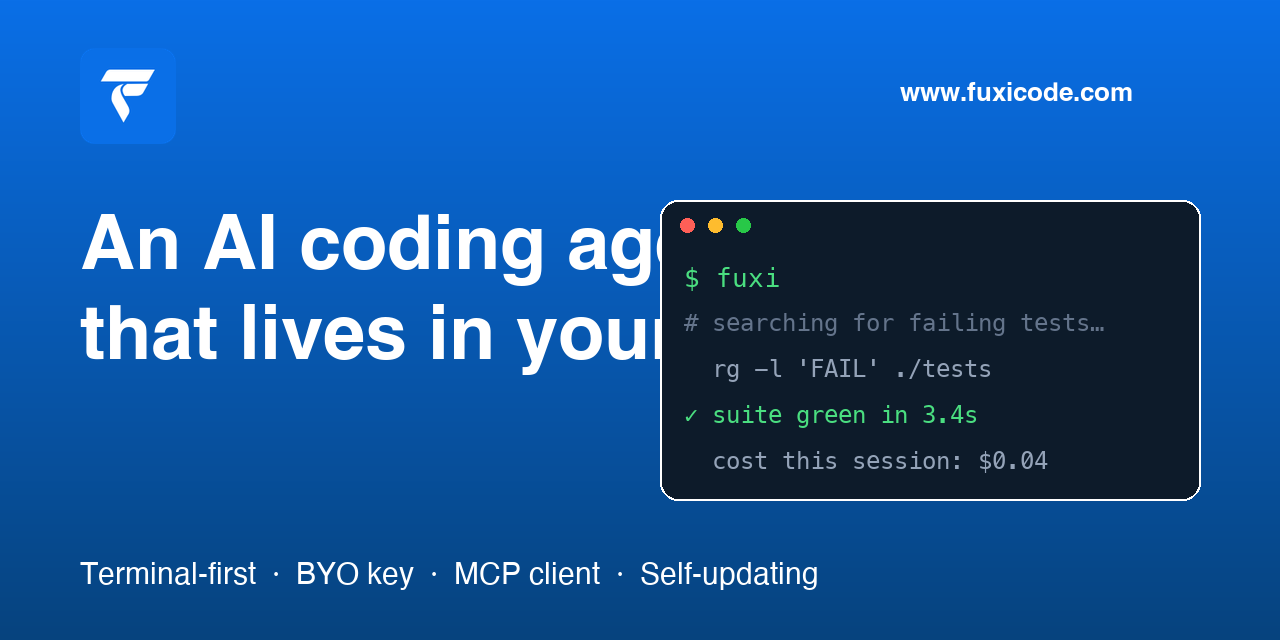
FuXi is a terminal AI coding agent written in Go that ships as a single static binary with no runtime dependencies. It reads code, edits files, and runs commands from a rich TUI, supporting cost-aware routing across multiple LLM providers.

The code is proprietary, so you cannot audit or modify the engine while the docs and installer are open. You need an account to start, though you can bring your own API keys to avoid managed model transmission.

more: https://github.com/fuxicodex/Fuxi