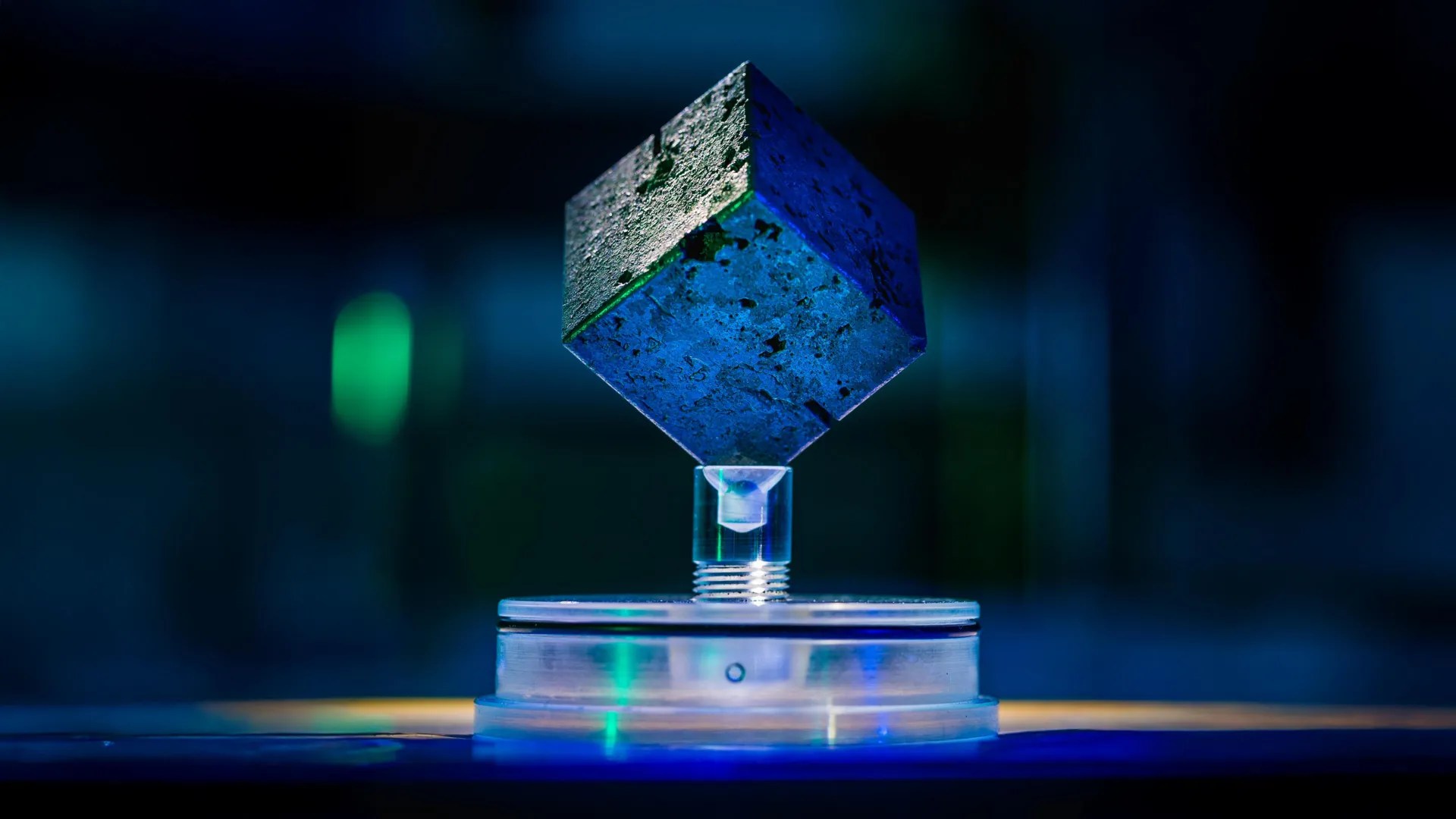
A nuclear forensic analysis of surviving uranium cubes from Germany's 1945 B-VIII experimental reactor shows the project was nowhere near criticality. Reconstructing the core from the physical artifacts and archival notes, researchers calculated that the reactor would have required roughly twice as much uranium and more than double the heavy water Germany had available. Werner Heisenberg insisted after the war that the pile needed only a modest addition of fuel to achieve a self-sustaining chain reaction, but the actual deficit was insurmountable.
Postwar accounts by the German researchers often framed the effort as a near-success thwarted mainly by Allied sabotage, a narrative that helped protect their scientific reputations. Reconstructing a dismantled reactor from two surviving cubes and wartime paperwork involves some modeling assumptions, but the scale of the missing inventory makes it clear that German physicists were fundamentally blocked by logistics rather than timing.
more: https://www.sciencedaily.com/releases/2026/10/261015073218.htm


Leave a Reply