Programming immune cells directly inside the body

7 10 2026
Programming immune cells directly inside the body

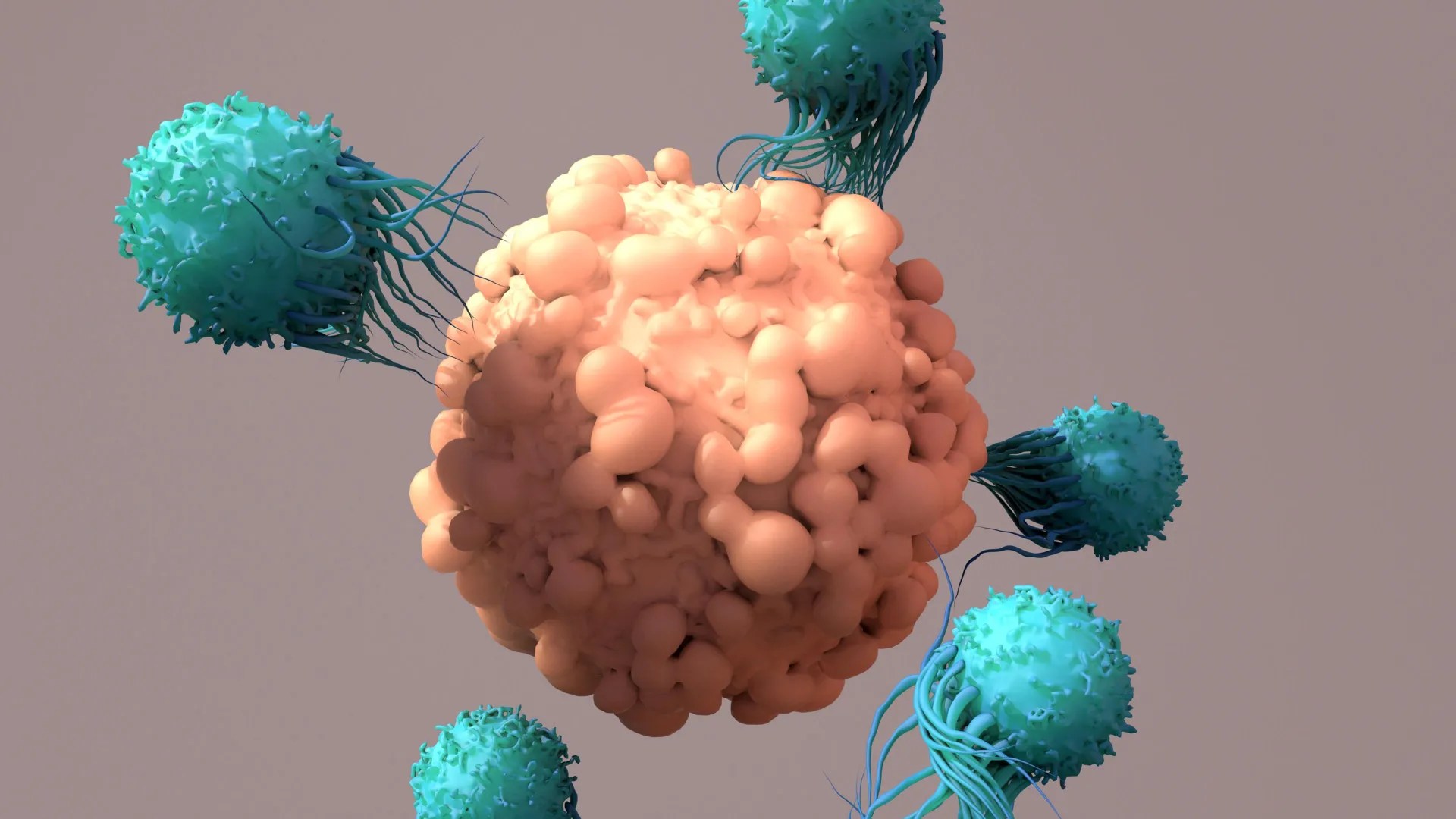
Researchers at UCSF have developed a two-particle system that delivers CRISPR-Cas9 gene-editing machinery directly to circulating T cells in mice. The method inserts cancer-fighting CAR instructions into a precise genomic location without removing the cells. In tests on mice with aggressive leukemia, a single injection cleared detectable cancer within two weeks.

Current CAR-T therapies require expensive, weeks-long offsite manufacturing and harsh preparatory chemotherapy. Doing this work in vivo could eventually lower costs and widen access, but moving from mice to humans introduces major safety hurdles. Without a chance for post-manufacturing quality control, researchers must be entirely certain the gene-editing machinery targets only the intended cells.

more: https://www.sciencedaily.com/releases/2026/10/261005071532.htm

my other side: ivo.blogspot.com


Celah diagnosis dan takaran antibiotik pneumonia balita

7 10 2026
Celah diagnosis dan takaran antibiotik pneumonia balita

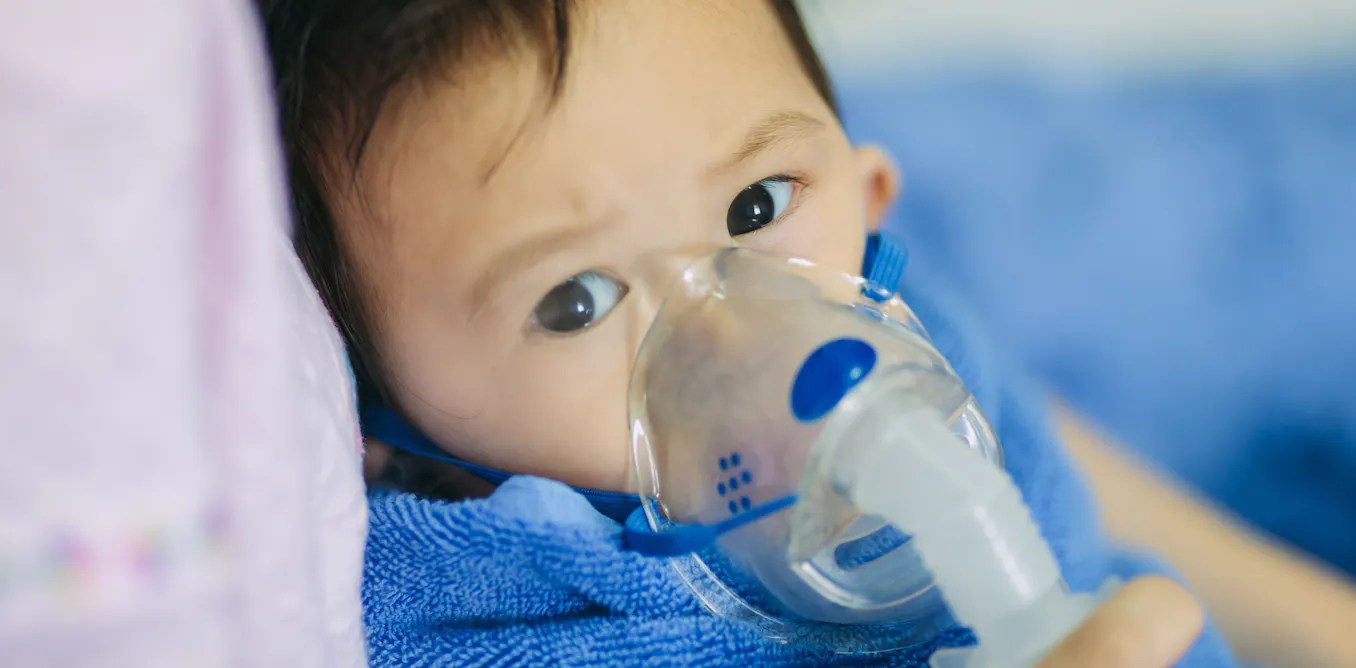
Sebuah studi terhadap rekam medis anak di puskesmas menemukan bahwa sekitar sepertiga pasien yang didiagnosis pneumonia sebenarnya tidak memenuhi kriteria WHO. Di antara yang diagnosisnya tepat, hanya sebagian kecil yang menerima dosis amoksisilin sesuai anjuran standar, sementara sisanya mendapat dosis terlalu rendah atau tidak diberi sama sekali.

Masalah ini tampaknya tidak bersumber dari kelalaian individu semata, melainkan tumpang tindih antara pedoman internasional dan aturan lokal di fasilitas kesehatan tingkat pertama. Kita perlu membaca temuan ini secara hati-hati karena penelitian tersebut belum memetakan panduan mana yang secara aktual dipakai oleh tenaga kesehatan di lapangan.

more: https://theconversation.com/salah-diagnosis-tak-tepat-dosis-pekerjaan-rumah-di-balik-pneumonia-anak-292446

my other side: ivo.blogspot.com


Blocking an aging protein regrows joint cartilage

7 10 2026
Blocking an aging protein regrows joint cartilage

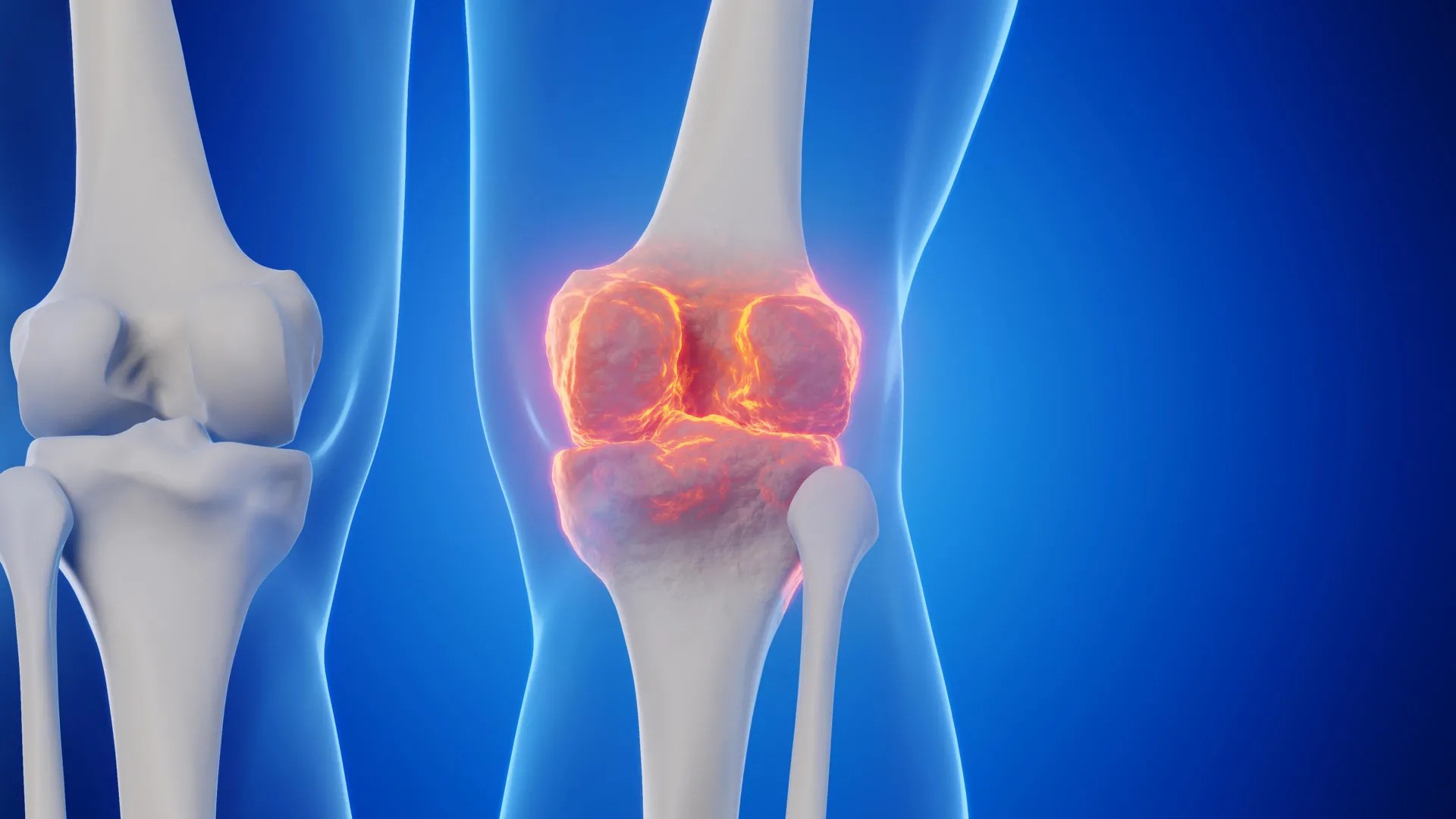
Stanford researchers found that inhibiting a protein called 15-PGDH can restore cartilage in older mice and in human tissue samples taken during joint surgeries. The protein, which accumulates with age, drives tissue degradation rather than healing. Rather than relying on stem cells, the treatment works by reverting existing cartilage cells to a more youthful state.

This is a notable shift from current osteoarthritis treatments, which focus entirely on managing pain rather than reversing tissue damage. However, the work has only been demonstrated in animals and lab-grown human samples, meaning a safe and effective drug for humans is still a long way off. We will need to see if this mechanism translates safely inside a living human joint before getting ahead of ourselves.

more: https://www.sciencedaily.com/releases/2026/10/261005011249.htm

my other side: ivo.blogspot.com


Quran Recital: slow, word-by-word recitation with synced highlighting

7 10 2026
Quran Recital — slow word-by-word recitation with synced highlighting

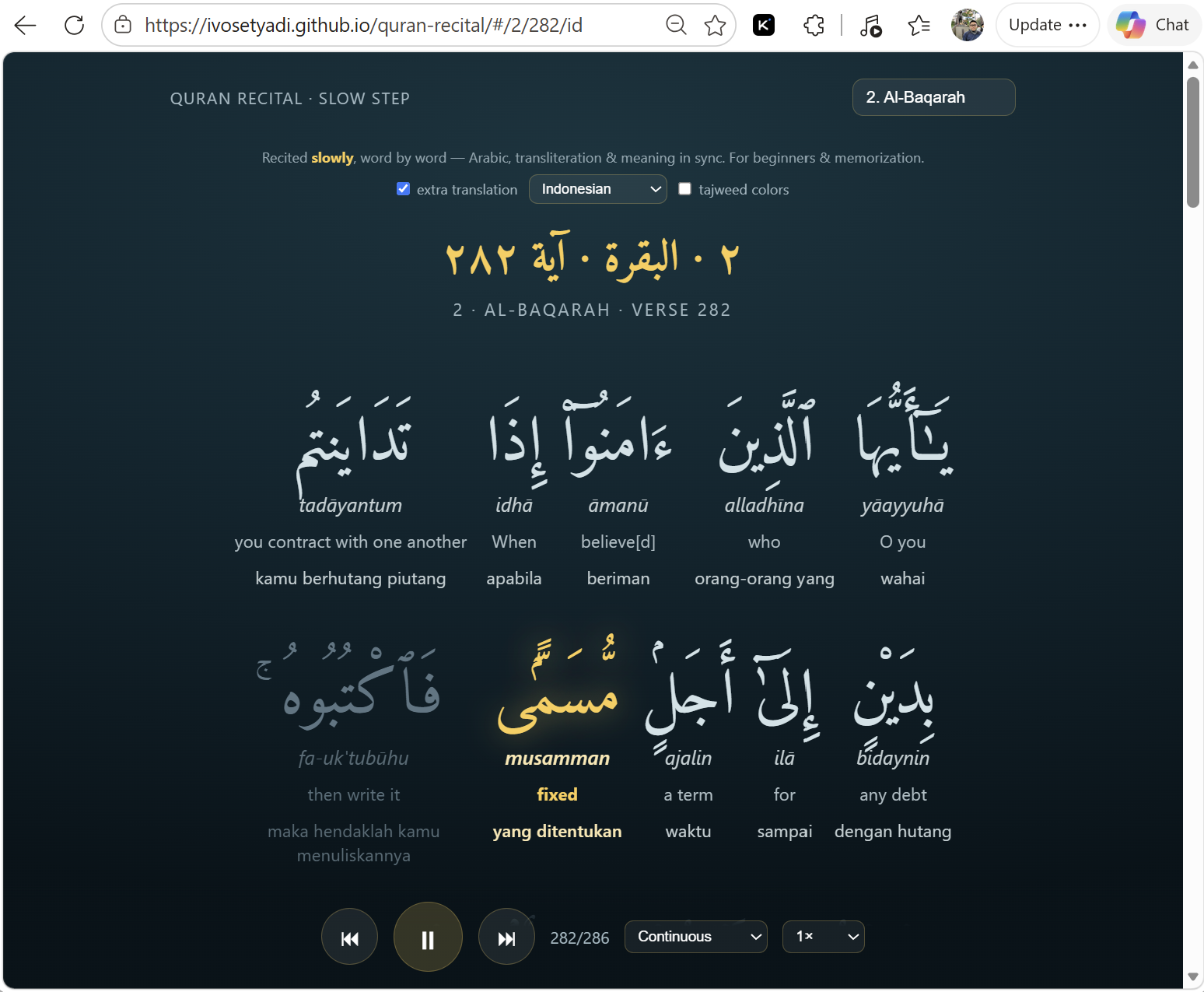
Quran Recital is a browser tool for studying and memorising the Quran, built around slow, word-by-word audio with synced highlighting. As each word is recited, the Arabic lights up alongside its transliteration and English meaning — an interlinear view aimed at hifz and careful study. It runs entirely client-side: plain HTML, CSS and vanilla JavaScript, no backend and no build step.

Quran Recital interlinear view — Arabic word with transliteration and meaning

Beyond the sync, it handles the small things that matter to learners: tajweed colour-coding (ghunnah, ikhfa, qalqalah and friends), optional per-word translations in Indonesian, Urdu, Bengali, Turkish, Persian, Hindi and Tamil, all 114 surahs, tap-a-word to jump and replay, repeat / continuous / stop-after-ayah modes, and 0.75×–1.25× speed. The recitation is al-Husary’s slow Murattal; audio streams from public CDNs with a fallback, and deep links preserve your language and tajweed settings for sharing. MIT licensed — the Quran text and audio stay under their own source licenses.

source: github.com/ivosetyadi/quran-recital

my other side: ivo.blogspot.com


How ice plumes sort salts on Enceladus

6 10 2026
How ice plumes sort salts on Enceladus

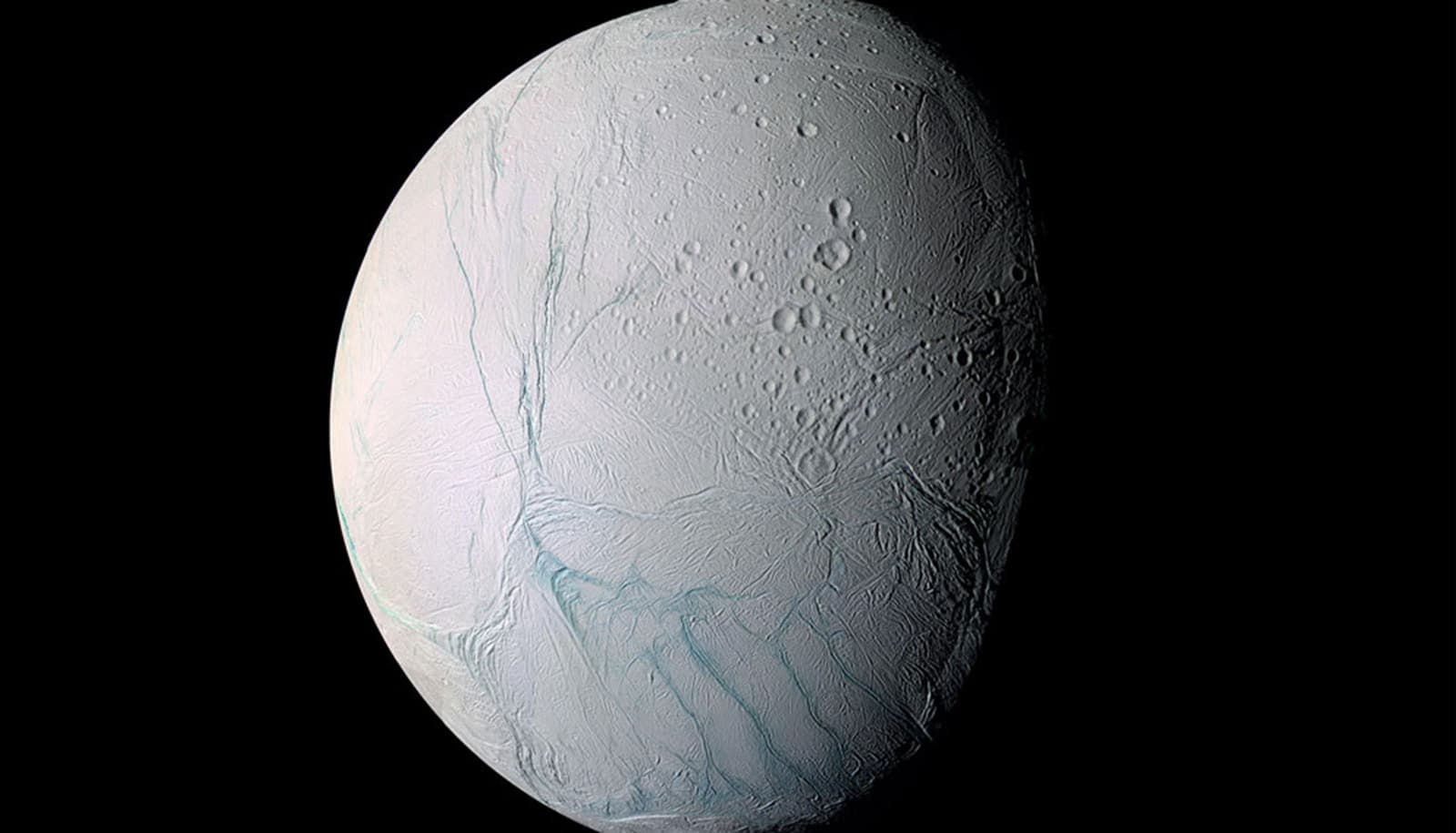
As water from the subterranean ocean of Saturn's moon Enceladus erupts through ice vents, freezing droplets undergo a natural sorting process. Researchers analyzing data from the Cassini spacecraft found that slow freezing separates different salts and compounds into distinct regions within individual ice grains. When these grains collide with vent walls and fracture, they yield micrometer-scale fragments with highly concentrated chemical compositions rather than uniform ocean samples.

This natural fractionation means future probes will need to analyze individual grains rather than bulk samples, since homogenizing them would erase rare signatures. While the mechanism raises hopes that organic molecules might be concentrated enough to detect, it also complicates interpretation; any potential biosignature will likely be hidden in only a tiny fraction of the debris. The findings reinforce that finding alien life will depend as much on understanding the sampling mechanism as on the instruments themselves.

more: https://www.futurity.org/saturns-moon-extraterrestrial-life-3348032/?utm_source=rss&utm_medium=rss&utm_campaign=saturns-moon-extraterrestrial-life-3348032

my other side: ivo.blogspot.com


Capturing the ultrafast coupling of protons and electrons

6 10 2026
Capturing the ultrafast coupling of protons and electrons

Researchers at SLAC and PNNL used ultrafast X-ray spectroscopy to capture how protons and electrons move together during light-driven reactions. By studying a ruthenium-based molecule in water, the team recorded both local electronic changes and the simultaneous reorganization of the surrounding solvent. This is the first time these combined movements have been observed with structural sensitivity in a single experiment.

Understanding this coordinated motion could eventually help engineers design better fuel cells and catalysts that mimic biological efficiency. However, the technique was demonstrated on a simple, well-understood model system specifically chosen to avoid messy intermediate steps. We are still a long way from applying this level of observation to complex, real-world biological systems like photosynthesis.

more: https://www.sciencedaily.com/releases/2026/10/261004001841.htm

my other side: ivo.blogspot.com


Quarks leave fluid wakes in primordial plasma

6 10 2026
Quarks leave fluid wakes in primordial plasma

Physicists analyzing particle collisions at CERN have found that quarks leave behind ripples as they travel through quark-gluon plasma. By isolating single high-energy quarks rather than pairs, an MIT-led team detected the splashes and swirls generated in this trillion-degree soup. The measurements confirm that the universe's earliest matter behaved as a dense, unified fluid rather than a collection of independent particles.

This gives researchers a way to map the properties of the hottest liquid known to physics, though the droplets last for less than a quadrillionth of a second and must be reconstructed from complex collision patterns. We are still a long way from turning these snapshots into a complete picture of the first microseconds of the universe. It is a neat technical advance, but interpreting the wakes will require plenty of refinement before we understand how that primordial fluid truly flowed.

more: https://www.sciencedaily.com/releases/2026/10/261004002556.htm

my other side: ivo.blogspot.com


NoBuildCMS: a flat-file CMS with no database and no build step

6 10 2026
NoBuildCMS — flat-file PHP CMS, no database, no build step

NoBuildCMS is a small PHP content management system that throws out the two things that usually make a CMS heavy: the database and the build pipeline. Content lives as plain JSON files on disk, pages render through sandboxed Twig templates, and there is no npm, no bundler, no migration step. Tailwind comes from a CDN and the Datastar hypermedia library is vendored — so you clone it and it runs.

The interesting part is what it still manages to do without that machinery: a live dashboard that pushes edits to public pages over Server-Sent Events, role-based access with append-only audit logs, a media library, multi-tenant workspaces, and a “Datastar Lab” of eleven working hypermedia examples. It leans on hypermedia-first ideas — think HTMX or Hotwire — but kept entirely in PHP 8.2+. If you like Git-friendly flat files and want interactivity without a JavaScript build, it is worth a look. MIT licensed.

source: github.com/ivosetyadi/nobuildcms

my other side: ivo.blogspot.com


Google EmbeddingGemma 2 adds multimodal sentence transformers

6 10 2026
Google EmbeddingGemma 2 adds multimodal sentence transformers

Google has released EmbeddingGemma 2, a sub-1 billion parameter model that maps text, code, images, video, and audio into a shared 768-dimensional space. Integrated into sentence-transformers v6.1.0, the architecture is modular so you can drop unused modality encoders at load time to scale the footprint from 270M parameters up to 740M. It includes support for task-specific prompts and native dimension truncation down to 128 dimensions.

If you are building a local RAG pipeline or cross-modal search tool that needs to handle mixed media without a heavy inference server, this is worth testing. The catch is that matching modalities still requires strict adherence to prompt names and specific token markers, and sub-1B models will inevitably lag behind larger proprietary endpoints on nuanced retrieval tasks. Skip it if your stack is purely text-based and already tuned around existing dense retrievers.

more: https://developers.googleblog.com/embeddinggemma-2-the-developer-guide/

my other side: ivo.blogspot.com


Agent Memory provides persistent long-term storage for AI

6 10 2026
Agent Memory provides persistent long-term storage for AI

Agent Memory is a runtime that gives AI agents local, file-based persistence by mapping conversations to a directory of Markdown files indexed by SQLite. It functions as a local cache that agents can query via shell commands, allowing them to recall context across sessions without relying on external databases or cloud APIs. The system treats the filesystem as the source of truth, meaning all data remains readable by standard tools like grep even if the index is deleted.

It is worth your time if you prefer local, transparent, and git-managed data over opaque vector database abstractions. However, it requires you to manage a directory-based workflow and configure individual agent schemas, which adds overhead if you just want a plug-and-play solution. It is not for users who prefer managed services or have no interest in maintaining their own data structure.

more: https://github.com/tigerless-labs/agent-memory

my other side: ivo.blogspot.com