geo-score: CLI tool for AI search engine crawlability

27 09 2026
geo-score: CLI tool for AI search engine crawlability

geo-score is a Python script that evaluates a web site's readiness for AI search engine citations, outputting a zero to one hundred score based on an open rubric. Running it requires only Python 3.8 and the standard library, executing a single check via a piped curl command without local installation. It inspects robots.txt, sitemaps, structured data, and content formatting to identify mechanical gaps preventing retrieval.

The script is worth running for a quick baseline on how LLMs and answer engines see your static markup, but the higher tiers require your own API keys to query actual citation behavior. It separates the static score from dynamic query checks because a high technical score does not guarantee you will actually get cited against competitors. Skip it if you are not actively trying to optimize for generative search engines like Perplexity or Gemini.


more: https://github.com/jianruntech/geo-score


MemoraX Code Adds Memory Layers to Coding Agents

27 09 2026
MemoraX Code Adds Memory Layers to Coding Agents

MemoraX Code is a Node.js 20+ package that provides a persistent memory layer for various LLM coding agents including Claude Code, Cursor, and DeepSeek Harness. It runs locally as a background process to store repository rules, architectural history, and past engineering decisions across different sessions. The tool requires libsecret on Linux and specifically manages plugin integration for supported CLI and editor-based coding tools.

This is worth installing if you are tired of re-explaining project constraints to your AI assistant every time you open a new terminal window. It is not for users who want zero external dependencies, as it relies on a cloud-based backend for synchronization and requires careful management of API keys. If you frequently context-switch between projects, the overhead of setup is minimal compared to the time saved on redundant prompting.

more: https://github.com/memorax-ai/memorax-code


Energy consumption patterns in the dreaming brain

26 09 2026
Energy consumption patterns in the dreaming brain

Researchers at Tohoku University have identified a metabolic paradox during REM sleep where blood volume and fuel supply increase even as neuronal ATP levels decline. By observing transparent mouse skulls, they found that the brain undergoes a large-scale energy shift starting roughly 50 seconds before the onset of dreaming. This suggests the brain prioritizes specific metabolic pathways to power high-demand activities like memory consolidation.

This study offers a concrete look at how biological systems balance tight energy budgets during complex internal processing. However, it remains unclear whether this ATP depletion is a necessary cost of synaptic reorganization or a byproduct of inefficiency. Further research is needed to determine if this pattern in rodents directly mirrors the energy economy of human sleep.

more: https://www.sciencedaily.com/releases/2026/09/260925093206.htm


Cleaning products react with indoor ozone to form nanoparticles

26 09 2026
Cleaning products react with indoor ozone to form nanoparticles

When scented cleaners release terpenes like limonene or pinene indoors, those compounds react with ambient ozone within minutes to produce ultrafine nanoparticles measuring 1 to 30 nanometers across. Research from Purdue University found that routine mopping or spraying with scented products generates billions to trillions of these particles. The total inhaled respiratory dose during a standard cleaning session can equal or exceed what someone would breathe standing next to a busy road.

The practical takeaway is straightforward: truly clean air does not smell like anything, and switching to unscented products or opening a window prevents the reaction. However, this study measured particle formation in a model house rather than tracking health outcomes in humans over time. While the particle counts are high, how these specific indoor organic nanoparticles compare in toxicity to combustion soot remains an open question.

more: https://www.sciencedaily.com/releases/2026/09/260925093152.htm


Direct observation of chemical reactions creating urban smog

26 09 2026
Direct observation of chemical reactions creating urban smog

Chemists at UC Riverside have directly observed the formation of Criegee intermediates, fleeting molecules produced when ozone reacts with plant-emitted isoprene. By using cavity ring-down spectroscopy, the researchers captured these short-lived compounds that have been theorized for eighty years but never previously detected in this context. This process acts as a primary trigger for the secondary organic aerosols that comprise city haze.

The study clarifies that while trees release the isoprene, the driver of the resulting pollution is ground-level ozone, suggesting that air quality management must focus on reducing nitrogen oxides and volatile organic compounds. However, these findings are based on controlled laboratory conditions that do not fully replicate the complex, shifting environment of the open atmosphere. It remains a foundational observation rather than a complete model of atmospheric chemistry.

more: https://www.futurity.org/how-smog-begins-3345472/?utm_source=rss&utm_medium=rss&utm_campaign=how-smog-begins-3345472


Fauxnix translates bash to PowerShell for AI agents

26 09 2026
Fauxnix translates bash to PowerShell for AI agents

fauxnix-cli is a Node.js CLI and MCP server for Windows systems running Node 18 or later and PowerShell 5.1+. It deterministically translates bash commands into native PowerShell at runtime without LLM calls, WSL, or virtual machines. Covering 109 core utilities verified against GNU coreutils test suites, it allows AI coding agents to run standard bash pipelines directly on Windows hosts.

It is worth setting up if you run coding agents natively on Windows and want to eliminate broken tool calls caused by the model's poor PowerShell generation. The main catch is the restricted surface area: with only 109 translated commands, complex shell scripts, unmapped flags, or heavy interactive tools will fail and still require a full Linux environment.

more: https://github.com/20000419/fauxnix


zvec-grep: Combined Keyword, BM25, and Vector Search

26 09 2026
zvec-grep: Combined Keyword, BM25, and Vector Search

zvec-grep is a local-first command line tool that unifies ripgrep, BM25, and vector search into a single interface. Requiring Node.js 22 or newer, it stores local indexes in a hidden directory and runs embedding generation on your own machine. It is designed to be called directly by humans in the terminal or invoked automatically by local coding agents.

It is worth trying if you are tired of switching between grep and separate vector databases for agent workflows. The catch is that setting up local embeddings adds another moving part to your shell scripts, and the Node.js implementation sits alongside an experimental Rust version. Skip it if standard ripgrep already handles your codebase searches.

more: https://github.com/zvec-ai/zvec-grep


Chat on Steroids gives ChatGPT local desktop access

26 09 2026
Chat on Steroids gives ChatGPT local desktop access

totec448-spec/chat-on-steroids is an open-source workspace that connects ChatGPT to local files, terminals, and testing tools via MCP and a browser extension. It runs on Windows, macOS, and Linux, letting multiple background workers edit code and run tests simultaneously while sharing your standard ChatGPT conversation limits. The system relies on your existing ChatGPT account and developer mode rather than invoking an independent API directly.

If you routinely juggle multiple terminal windows and want a local orchestrator to handle multi-file edits through your browser session, it saves manual context switching. The catch is that it is an unsigned beta touching your local shell with user-level privileges, and it sits precariously on top of OpenAI browser automation that could break with any interface update. Skip it if you require stable enterprise tooling or want to avoid juggling local security permissions for an unverified desktop app.

more: https://github.com/totec448-spec/chat-on-steroids


Univer Workspace provides deployable collaborative office tooling

26 09 2026
Univer Workspace provides deployable collaborative office tooling

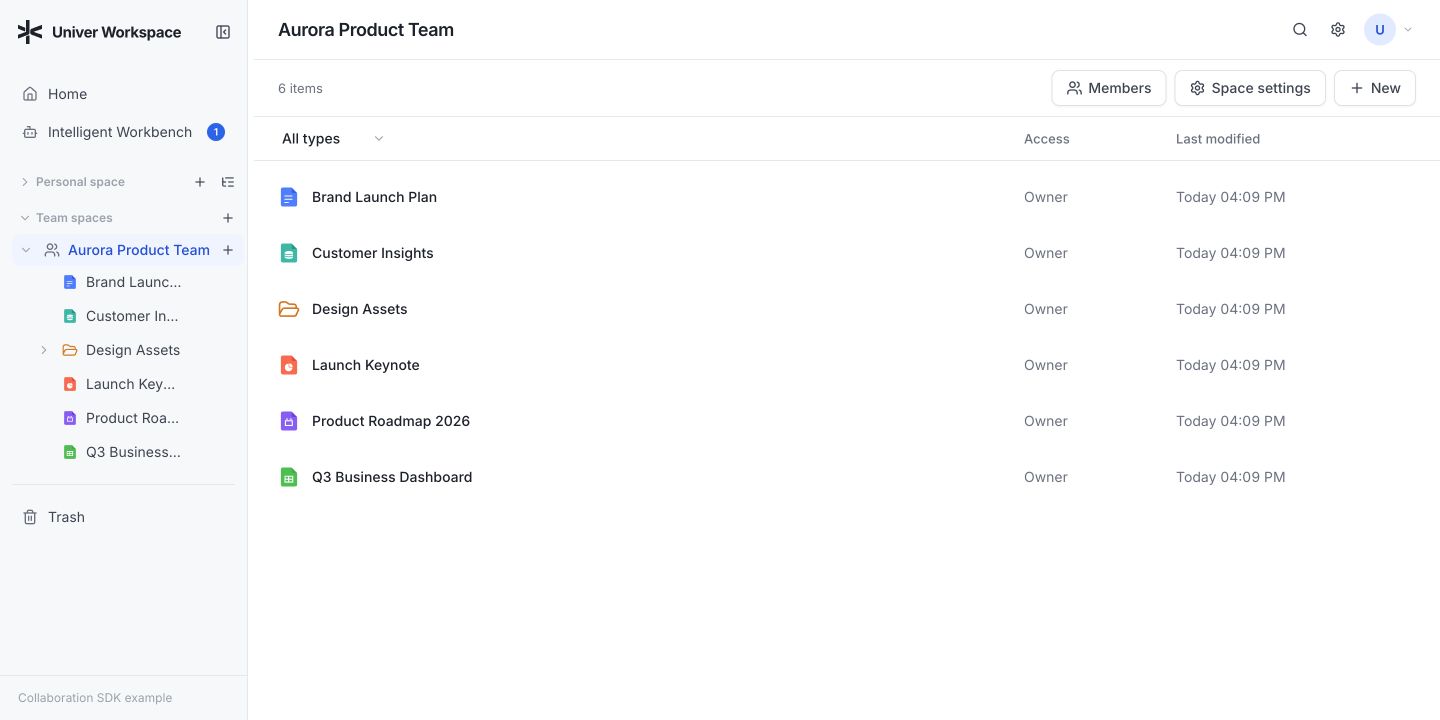
Univer Workspace is a self-hosted suite that combines spreadsheets, documents, and slides into a single, unified runtime. It exposes a CLI and an agent-focused API, allowing scripts or AI models to modify document state, validate layouts, and render outputs via a persistent server. You deploy the browser client and server stack locally to maintain control over your blob storage and identity provider.

This is a sensible choice if you need to build custom internal workflows where documents must be programmatically updated by automated agents. It is not for users seeking a drop-in replacement for Google Workspace, as it requires significant manual configuration and hosting maintenance. Expect to spend time managing the infrastructure and building your own integration scripts.

more: https://github.com/dream-num/univer-workspace


Awesome Cloudflare Self-Hosted directory of serverless applications

26 09 2026

This repository lists open-source projects designed to run entirely within a Cloudflare account using Workers, D1, and R2. It covers replacements for common SaaS tools like analytics platforms, feedback boards, and link shorteners. Each entry is audited for its actual deployment configuration rather than its marketing claims.

The list is a useful resource if you want to eliminate monthly SaaS invoices and consolidate your infrastructure on Cloudflare’s edge. However, it is not for those who want portability, as these apps are tightly coupled to Cloudflare proprietary APIs and are difficult to migrate elsewhere.

more: https://github.com/theoephraim/awesome-cloudflare-selfhosted