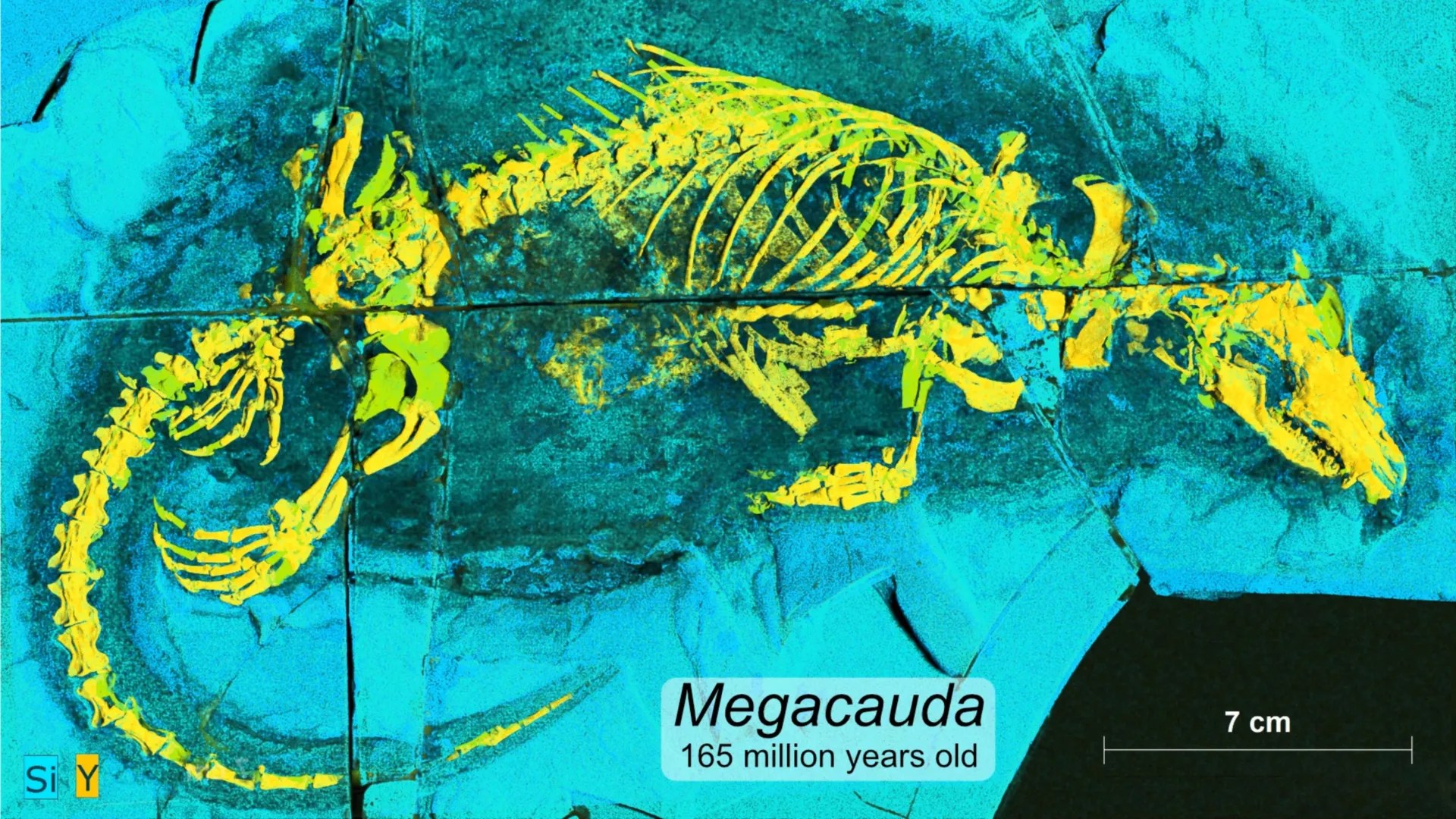
Fossil evidence from a 165-million-year-old jurassic mammaliaform named Megacauda sungei shows the earliest known development of a mammalian soft palate. This anatomical structure separated the mouth from the pharynx, allowing the animal to breathe and swallow simultaneously. CT scans of the half-meter-long fossil revealed it lived an otter-like aquatic lifestyle in what is now Inner Mongolia.
The evolution of the soft palate was a critical step that enabled young mammals to nurse safely without choking, providing the reliable nutrition required to support heavy brain development over millions of years. While researchers have linked this adaptation to the broader arc of mammalian evolution, soft tissue preservation in fossils remains rare, leaving details about its exact evolutionary staging open to ongoing debate among paleontologists.
more: https://www.sciencedaily.com/releases/2026/10/261012185005.htm


Leave a Reply