How ice plumes sort salts on Enceladus

6 10 2026
How ice plumes sort salts on Enceladus

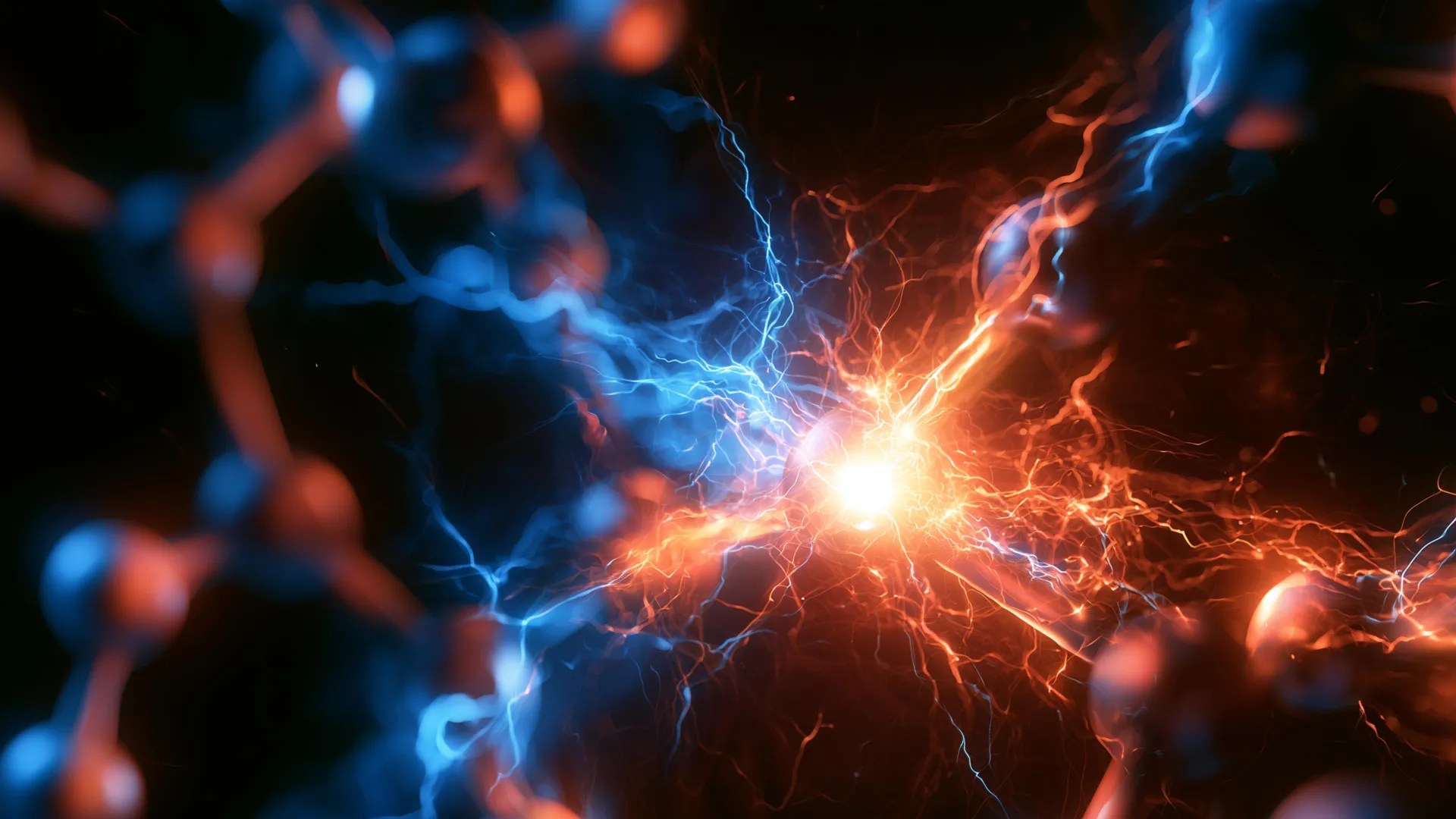
As water from the subterranean ocean of Saturn's moon Enceladus erupts through ice vents, freezing droplets undergo a natural sorting process. Researchers analyzing data from the Cassini spacecraft found that slow freezing separates different salts and compounds into distinct regions within individual ice grains. When these grains collide with vent walls and fracture, they yield micrometer-scale fragments with highly concentrated chemical compositions rather than uniform ocean samples.

This natural fractionation means future probes will need to analyze individual grains rather than bulk samples, since homogenizing them would erase rare signatures. While the mechanism raises hopes that organic molecules might be concentrated enough to detect, it also complicates interpretation; any potential biosignature will likely be hidden in only a tiny fraction of the debris. The findings reinforce that finding alien life will depend as much on understanding the sampling mechanism as on the instruments themselves.

more: https://www.futurity.org/saturns-moon-extraterrestrial-life-3348032/?utm_source=rss&utm_medium=rss&utm_campaign=saturns-moon-extraterrestrial-life-3348032

my other side: ivo.blogspot.com


Capturing the ultrafast coupling of protons and electrons

6 10 2026
Capturing the ultrafast coupling of protons and electrons

Researchers at SLAC and PNNL used ultrafast X-ray spectroscopy to capture how protons and electrons move together during light-driven reactions. By studying a ruthenium-based molecule in water, the team recorded both local electronic changes and the simultaneous reorganization of the surrounding solvent. This is the first time these combined movements have been observed with structural sensitivity in a single experiment.

Understanding this coordinated motion could eventually help engineers design better fuel cells and catalysts that mimic biological efficiency. However, the technique was demonstrated on a simple, well-understood model system specifically chosen to avoid messy intermediate steps. We are still a long way from applying this level of observation to complex, real-world biological systems like photosynthesis.

more: https://www.sciencedaily.com/releases/2026/10/261004001841.htm

my other side: ivo.blogspot.com



Quarks leave fluid wakes in primordial plasma

6 10 2026
Quarks leave fluid wakes in primordial plasma

Physicists analyzing particle collisions at CERN have found that quarks leave behind ripples as they travel through quark-gluon plasma. By isolating single high-energy quarks rather than pairs, an MIT-led team detected the splashes and swirls generated in this trillion-degree soup. The measurements confirm that the universe's earliest matter behaved as a dense, unified fluid rather than a collection of independent particles.

This gives researchers a way to map the properties of the hottest liquid known to physics, though the droplets last for less than a quadrillionth of a second and must be reconstructed from complex collision patterns. We are still a long way from turning these snapshots into a complete picture of the first microseconds of the universe. It is a neat technical advance, but interpreting the wakes will require plenty of refinement before we understand how that primordial fluid truly flowed.

more: https://www.sciencedaily.com/releases/2026/10/261004002556.htm

my other side: ivo.blogspot.com


NoBuildCMS: a flat-file CMS with no database and no build step

6 10 2026
NoBuildCMS — flat-file PHP CMS, no database, no build step

NoBuildCMS is a small PHP content management system that throws out the two things that usually make a CMS heavy: the database and the build pipeline. Content lives as plain JSON files on disk, pages render through sandboxed Twig templates, and there is no npm, no bundler, no migration step. Tailwind comes from a CDN and the Datastar hypermedia library is vendored — so you clone it and it runs.

The interesting part is what it still manages to do without that machinery: a live dashboard that pushes edits to public pages over Server-Sent Events, role-based access with append-only audit logs, a media library, multi-tenant workspaces, and a “Datastar Lab” of eleven working hypermedia examples. It leans on hypermedia-first ideas — think HTMX or Hotwire — but kept entirely in PHP 8.2+. If you like Git-friendly flat files and want interactivity without a JavaScript build, it is worth a look. MIT licensed.

source: github.com/ivosetyadi/nobuildcms

my other side: ivo.blogspot.com


Google EmbeddingGemma 2 adds multimodal sentence transformers

6 10 2026
Google EmbeddingGemma 2 adds multimodal sentence transformers

Google has released EmbeddingGemma 2, a sub-1 billion parameter model that maps text, code, images, video, and audio into a shared 768-dimensional space. Integrated into sentence-transformers v6.1.0, the architecture is modular so you can drop unused modality encoders at load time to scale the footprint from 270M parameters up to 740M. It includes support for task-specific prompts and native dimension truncation down to 128 dimensions.

If you are building a local RAG pipeline or cross-modal search tool that needs to handle mixed media without a heavy inference server, this is worth testing. The catch is that matching modalities still requires strict adherence to prompt names and specific token markers, and sub-1B models will inevitably lag behind larger proprietary endpoints on nuanced retrieval tasks. Skip it if your stack is purely text-based and already tuned around existing dense retrievers.

more: https://developers.googleblog.com/embeddinggemma-2-the-developer-guide/

my other side: ivo.blogspot.com


Agent Memory provides persistent long-term storage for AI

6 10 2026
Agent Memory provides persistent long-term storage for AI

Agent Memory is a runtime that gives AI agents local, file-based persistence by mapping conversations to a directory of Markdown files indexed by SQLite. It functions as a local cache that agents can query via shell commands, allowing them to recall context across sessions without relying on external databases or cloud APIs. The system treats the filesystem as the source of truth, meaning all data remains readable by standard tools like grep even if the index is deleted.

It is worth your time if you prefer local, transparent, and git-managed data over opaque vector database abstractions. However, it requires you to manage a directory-based workflow and configure individual agent schemas, which adds overhead if you just want a plug-and-play solution. It is not for users who prefer managed services or have no interest in maintaining their own data structure.

more: https://github.com/tigerless-labs/agent-memory

my other side: ivo.blogspot.com


Microsoft ThinkingBox Grades Agent State Consistency

6 10 2026
Microsoft ThinkingBox Grades Agent State Consistency

Microsoft and Hugging Face released ThinkingBox via OpenEnv to evaluate AI agent reliability across 507 stateful business workflows. Instead of checking generated text or tool calls, it runs agents in isolated Model Context Protocol sessions and checks the resulting database records. Running 12 LLM models across 121,680 trials, the benchmark measures whether an agent can produce the correct backend state twenty times in a row.

It is worth running if you are building autonomous database workflows and need to move past single-run pass rates. The catch is that most current models suffer drastic reliability drops when forced to repeat tasks consistently, retaining as little as eight percent of their pass@1 score. Skip this if you only need conversational assistants or static text generation.

more: https://huggingface.co/blog/microsoft/thinkingbox

my other side: ivo.blogspot.com


Dsh plugin adds free frontier models without registration

6 10 2026
Dsh plugin adds free frontier models without registration

The dsh-our-free-model repository provides a zero-dependency plugin for the dsh runtime that exposes models like DeepSeek V4.1 and Kimi K3. Installation requires no API keys, accounts, or configuration, routing requests directly through the OpenCode Zen gateway. It includes a local OpenAI-compatible forwarding port, a usage dashboard, and automatic hot-reloading.

It is worth installing if you already use dsh and want free access to frontier models without managing credits. However, availability depends entirely on your local network's exit IP, and heavily managed desktop bundles may disable the plugin's auto-update features. Skip it if you require guaranteed uptime or enterprise SLAs.

more: https://github.com/Ebony-Vinyl/dsh-our-free-model

my other side: ivo.blogspot.com


How public feedback rewrites private memory

5 10 2026
How public feedback rewrites private memory

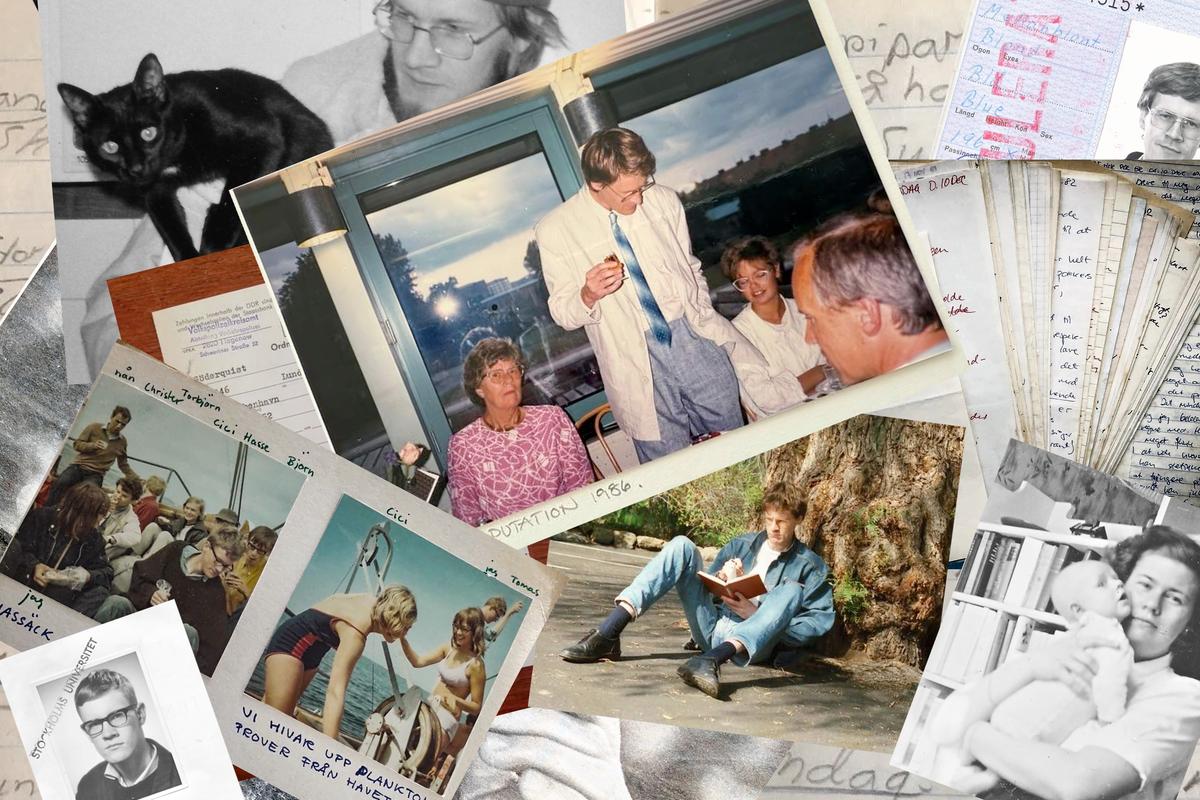
When a historian posted a long-held, painful memory about his mother's 1946 diary onto Facebook, a friend pointed out something he had never noticed: he always recounted the story with a flat, ironizing deadpan. That outside observation shifted how he understood his own emotional delivery, illustrating how real-time digital responses alter personal narratives while they are being written. Traditional memoir is a solitary labor of finished revision, but serialized public writing turns self-reflection into a continuous, crowdsourced dialogue.

This blurs the line between discovering who you are and performing who you think you are for an audience. It is worth asking whether a coherent self-image can survive being built in public view, or if the feedback loop simply replaces genuine introspection with curated reactions. Anyone trusting social media to help them understand their own history should probably remain skeptical of how much the room shapes the mirror.

more: https://aeon.co/essays/what-i-have-learned-from-posting-episodes-of-my-life-on-facebook

my other side: ivo.blogspot.com


How high-mortality urban environments shape retaliatory violence

5 10 2026
How high-mortality urban environments shape retaliatory violence

Interviews with men in Chicago's highest-violence neighborhoods reveal how the constant threat of death alters everyday cognition. When living under conditions where young residents face higher mortality rates than soldiers in active warzones, retaliation ceases to feel like a choice and becomes an automatic response to grief and danger. A mind shaped by actual trauma stops filtering ambiguous situations, translating routine conflicts into immediate triggers for lethal force.

What makes this research valuable is its focus on the mechanics of escalation rather than broad moralizing about crime rates. The underlying premise—that hyper-vigilance learned through chronic exposure can potentially be unlearned through cognitive behavioral intervention—offers a practical window for change. Still, readers should remain cautious about translating localized group interventions into universal policy solutions without acknowledging the stubborn persistence of structural poverty.

more: https://aeon.co/essays/early-violence-is-a-bad-teacher-but-the-mind-can-learn-anew

my other side: ivo.blogspot.com