Ovis: browser and phone client for herdr

22 10 2026
Ovis: browser and phone client for herdr

Ovis is a PWA and browser interface for the herdr agent manager, letting you monitor and reply to Claude Code, Codex, and other CLI agent sessions from your phone or desktop. It gives you a chat-to-terminal toggle, push alerts, a mobile keyboard modifier bar, and voice dictation running over a Tailscale connection. The installer requires macOS or glibc Linux, Bun 1.4+, Node 18+, and herdr 0.9.0+.

It is worth setting up if you already run herdr and want to manage long-running local coding sessions away from your desk without dealing with raw SSH. The catch is its strict environment requirements and the security footprint of exposing local agent terminals via Tailscale serve. Skip it if you do not use herdr or prefer managing tmux sessions manually.

more: https://github.com/devswha/ovis

my other side: ivo.blogspot.com



pgrundev/pgx: Multi-tenant Postgres runtime for short-lived databases

22 10 2026
pgrundev/pgx: Multi-tenant Postgres runtime for short-lived databases

pgx is a v0.1.0 Rust runtime that packs a thousand isolated PostgreSQL-compatible databases into roughly 150 megabytes of memory on a single machine. It mints warm databases in about six milliseconds and uses ZFS copy-on-write to branch a ten-gigabyte template in under a second. It replaces the pattern of spinning up separate Docker containers or server processes for test suites, CI jobs, and agent sandboxes.

It is worth testing if your workflow creates and destroys databases constantly, though it requires ZFS on Linux to get the fast copy-on-write storage cloning. It is built strictly for ephemeral development environments and agent workloads rather than long-running production primaries. You should skip it if your stack relies on database extensions or specific PostgreSQL features that fall outside its core wire protocol and regression test coverage.

more: https://github.com/pgrundev/pgx

my other side: ivo.blogspot.com


Rubix: A 42KB x86-64 assembly compiler

22 10 2026
Rubix: A 42KB x86-64 assembly compiler

Rubix is a systems programming language with a compiler written entirely in pure x86-64 assembly. The resulting binary is roughly 42 kilobytes, has zero libc or external dependencies, and compiles source files in under a millisecond. It handles multi-file imports, heap allocation, and standard control flow while targeting Linux, Windows, and macOS.

It is an impressive technical exercise if you want to study low-level compilation and x86-64 mechanics without the weight of LLVM or C. However, it is strictly tied to the x86-64 architecture and lacks the ecosystem maturity required for production software. Skip it unless you specifically want to hack on bare-metal assembly tooling.

more: https://github.com/tek-sys-hub/Rubix-lang

my other side: ivo.blogspot.com


Astronaut hearts adapt well to simulated Martian gravity

21 10 2026
Astronaut hearts adapt well to simulated Martian gravity

Researchers monitoring 13 astronauts after six months on the International Space Station found that daily two-hour exercise regimens successfully prevented severe cardiovascular deconditioning. When tested under simulated Martian gravity, the subjects showed no significant signs of strain or orthostatic hypotension. The heart initially struggles during the first two weeks in space, but cardiac filling and stroke volume gradually recover over time.

This is reassuring for long-duration mission planning, though the sample size remains tiny and test conditions on Earth cannot fully replicate the physiological unknown of a nine-month transit. We still lack data on how cumulative radiation might compound these cardiovascular stresses over years in deep space. Exercise helps, but it is not a complete shield against orbital biology.

more: https://www.sciencedaily.com/releases/2026/10/261020085016.htm

my other side: ivo.blogspot.com


Ultra-processed food categories matter more than processing level

21 10 2026
Ultra-processed food categories matter more than processing level

A study of over 460,000 adults tracked for nearly two decades found no overall link between ultra-processed food consumption and colorectal cancer. However, the effects varied widely by ingredient type: ultra-processed whole grains and dairy were associated with lower cancer rates, while processed meats were linked to higher ones. The findings suggest that nutritional content remains a more reliable guide than the degree of industrial processing alone.

It is easy to reach for broad categories when thinking about diet, but this research reminds us that a label like ultra-processed covers everything from industrial hot dogs to fortified whole-grain cereals. The data relies on a single dietary questionnaire from the mid-1990s and an older, largely white demographic, meaning we should be cautious about applying these exact numbers too broadly. Ultimately, standard advice around fiber and meat seems to hold true regardless of how a food was manufactured.

more: https://www.sciencedaily.com/releases/2026/10/261020085014.htm

my other side: ivo.blogspot.com


Cash transfers work best after forest fires

21 10 2026
Cash transfers work best after forest fires

Forest fires routinely destroy rural livelihoods while corporate actors profit from cheap land clearing. A report from The Conversation argues that unconditional cash transfers are far more effective than food packages for mitigating this rural poverty.

Giving direct money lets families buy food and medicine without selling productive assets or falling into debt during the months it takes for local economies to recover. Bureaucratic delays still hinder disaster response, and cash alone will not stop the underlying political economy of burning land.

more: https://theconversation.com/karhutla-memperparah-kemiskinan-bansos-apa-yang-paling-ideal-untuk-menafkahi-warga-294654

my other side: ivo.blogspot.com


Profiling TorchNeuron on AWS Trainium

21 10 2026
Profiling TorchNeuron on AWS Trainium

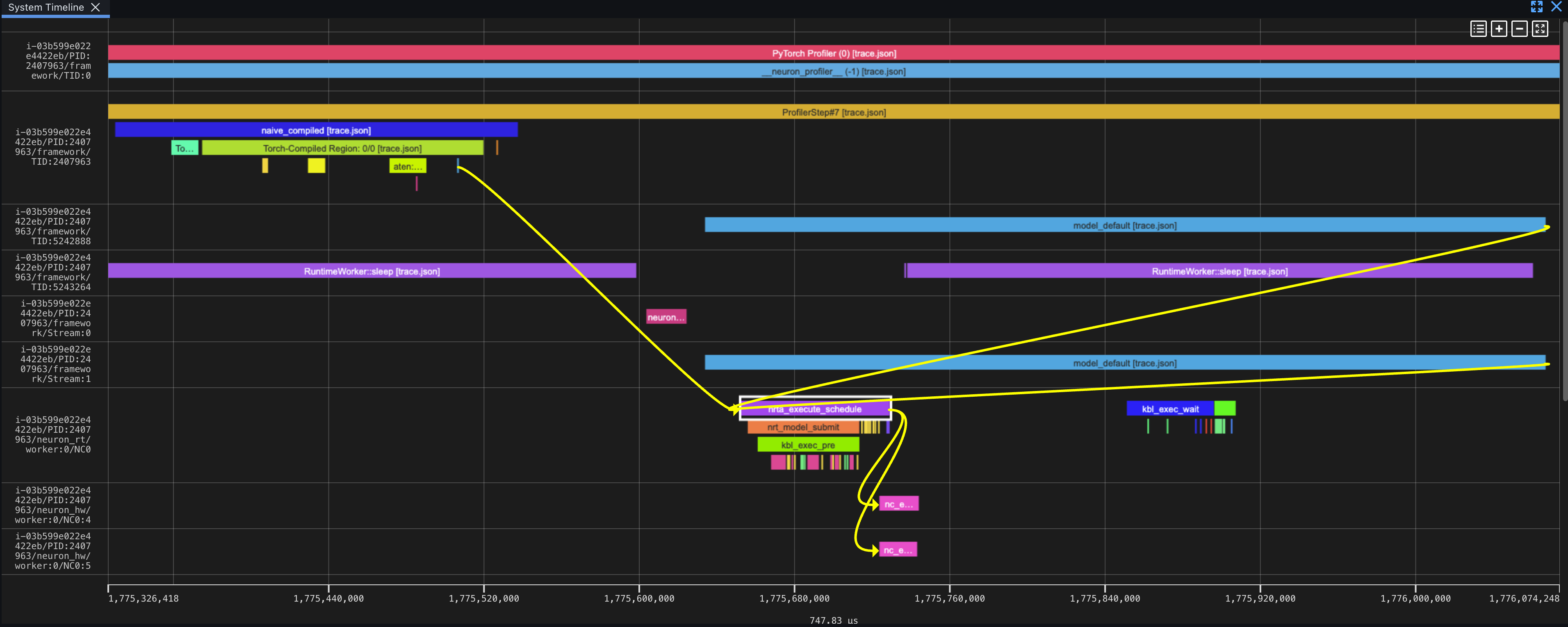
Hugging Face's guide covers system-level performance analysis for AWS Trainium using TorchNeuron and the NeuronProfiler API. It walks through setting up NeuronConfig, capturing device and runtime traces, and analyzing an RMSNorm implementation using Neuron Explorer. The post shows how to wire standard PyTorch profiler steps into the PrivateUse1 backend without modifying core model code.

It is worth reading if you are deploying models on Trainium and need to move past guesswork to trace actual hardware bottlenecks. The catch is that it only covers the mechanics of capturing a trace for a single tiny operation rather than diagnosing a full production model. If you are not targeting AWS silicon, you can safely skip it.

more: https://huggingface.co/blog/amazon/profiling-torchneuron-part-1

my other side: ivo.blogspot.com


Scientists restored vision in mice by removing one protein that blocks eye repair

21 10 2026
Scientists restored vision in mice by removing one protein that blocks eye repair

Mammal eyes don’t heal the way a zebrafish’s does: once retinal cells die, the loss is usually permanent, which is why conditions like retinitis pigmentosa and macular degeneration are so hard to reverse. A team at KAIST in South Korea has now shown why — and how to switch the repair ability back on, at least in mice.

The culprit is a protein called Prox1. After retinal injury, Prox1 moves from neurons into support cells called Müller glia and effectively locks them, stopping them from behaving like the regenerative, stem-like cells they are in fish and amphibians. When the researchers blocked that transfer with an anti-Prox1 antibody delivered by a harmless virus (AAV), the Müller glia started regenerating retinal neurons and vision loss was delayed — an effect that lasted six months and beyond, the first long-term neural retina regeneration seen in a mammal. They also found the same Prox1 build-up in a human retinitis pigmentosa patient’s retina, hinting the mechanism carries over to us.

Important caveat: this was done in mice, not people. It is a preclinical result — promising, but years of safety work and human trials away. The viral headline version (“scientists unlocked the secret to eye repair”) overstates where this actually is. Still, as a proof of concept that a mammal retina can be coaxed into regenerating, it is a real step.

source: Nature Communications — studi KAIST

my other side: ivo.blogspot.com


How sixteenth-century Italy learned to love the gun

20 10 2026
How sixteenth-century Italy learned to love the gun

In 1492, Lorenzo de’ Medici owned just five portable firearms, which literature of the era routinely dismissed as the unchivalrous, devilish work of cowards. By 1539, his descendant Cosimo had stocked ninety-one firearms in his Florentine storerooms as recurring foreign wars forced the peninsula to abandon mercenaries for citizen militias. Civic authorities instituted mandatory monthly target practice and armed ten percent of their newly formed infantry with early handguns. A weapon once considered dishonorable quickly became a staple of municipal defense.

The shift shows how rapidly practical military necessity can override entrenched cultural prejudice, even among an artistic elite. Yet because the transition happened before the rise of ordinary soldiers' memoirs, we are left mostly with the records of state arsenals rather than the personal views of the men ordered to carry them. It is a reminder that technological adoption is rarely smooth, usually driven less by enthusiasm than by the grim pressure of survival.

more: https://aeon.co/essays/the-renaissance-gun-from-diabolical-device-to-popular-militias

my other side: ivo.blogspot.com



Why MSCI may downgrade Indonesia’s stock market

20 10 2026
Why MSCI may downgrade Indonesia's stock market

MSCI is considering downgrading Indonesia from an emerging market to a standalone market, citing four structural problems: opaque share ownership, questionable free-float numbers, coordinated trading, and weak regulatory enforcement. When the warning triggered a trading halt last week, it exposed how easily the local index can be manipulated. If the downgrade goes through, Indonesia will join countries like Zimbabwe and Russia on the global blacklist.

For years, local authorities treated rising index numbers as proof of economic health while ignoring the mechanics behind the screens. The risk now isn't just about fleeing foreign capital or battered retail portfolios, but the deeper realization that domestic regulators lack the independence to enforce fair play. When transparency is treated as optional, markets stop functioning as capital allocators and start acting as casinos.

more: https://theconversation.com/indonesia-memang-pantas-masuk-kategori-standalone-yang-tak-layak-investasi-294657

my other side: ivo.blogspot.com