SANITY: a Claude Code skill that fights AI hallucinations and insecure code

1 11 2026
SANITY: a Claude Code skill that fights AI hallucinations and insecure code

SANITY is a Claude Code “skill” — a drop-in instruction module — built to stop two of the most expensive failure modes of AI-assisted coding: confident hallucinations (made-up functions, APIs, file contents) and insecure code (SQL injection, hardcoded secrets, missing auth). Its motto is blunt: “a wrong answer delivered confidently causes more damage than ‘I don’t know.’”

It works on two axes at once — epistemic integrity (verify before you claim) and security integrity (OWASP Top 10 enforcement). There is a “FORTRESS” framework of mandatory checks (read-before-claim, threat modeling, security audits), a confidence matrix that rates each claim CONFIRMED / INFERRED / UNCERTAIN / BLOCKED, an anti-pattern blacklist, and a single SANITY score — security weighted 60%, epistemics 40%, because a breach hurts more than wasted time. The blocks are hard: OWASP violations and hardcoded secrets cannot be worked around.

Install it with claude skill install <repo>, copy sanity.md into ~/.claude/skills/, or auto-load it from your project’s CLAUDE.md. If you run Claude Code (or similar agents) against production code, it is worth a look — and the README is bilingual (EN/ID). MIT licensed.

source: github.com/verycoolapps/sanity-anti-hallucination-skill

my other side: ivo.blogspot.com


TokenEconomizer cuts AI coding agent costs by learning locally

31 10 2026
TokenEconomizer cuts AI coding agent costs by learning locally

TokenEconomizer is a local plugin for Claude Code, GitHub Copilot CLI, and other agents that reduces API costs by 18 to 31 percent on SWE-bench. It stores repository facts in ~/.tokeneconomizer, prunes unused tool definitions from context, and injects redirects when an agent loops on a failing turn. The plugin works without modifying the underlying agent or its weights.

It is worth installing if you run the same agent repeatedly on the same codebase and want to trim redundant prompt overhead. The catch is that it requires background model calls to propose facts and judge loops, meaning savings depend heavily on whether those helper calls cost less than the tokens they save.

more: https://github.com/microsoft/TokenEconomizer

my other side: ivo.blogspot.com


OpenBot: A Local Workspace for Persistent AI Agents

30 10 2026
OpenBot: A Local Workspace for Persistent AI Agents

OpenBot is a desktop application for macOS, Windows, and Linux that runs multiple persistent AI agents in parallel. It wraps CLI tools and app servers from Anthropic, OpenAI, xAI, Google, Cursor, and Cline into a single interface with isolated workspaces, FIFO message queues, an embedded browser, and agent-to-agent messaging. The application manages local file transfers and context compaction automatically across long sessions.

It is worth downloading if you routinely juggle multiple terminal-based AI agents and want a unified window with shared history instead of scattered tmux panes. The major catch is security: agents currently run with unrestricted access and approval policies disabled after first-launch consent, meaning it will execute shell commands and modify files without prompting. Do not run it outside of a throwaway VM or a directory with strict backups.

more: https://github.com/nightly-labs/openbot

my other side: ivo.blogspot.com


Automated Agent Evaluation and Hill Climbing with Agents CLI

29 10 2026
Automated Agent Evaluation and Hill Climbing with Agents CLI

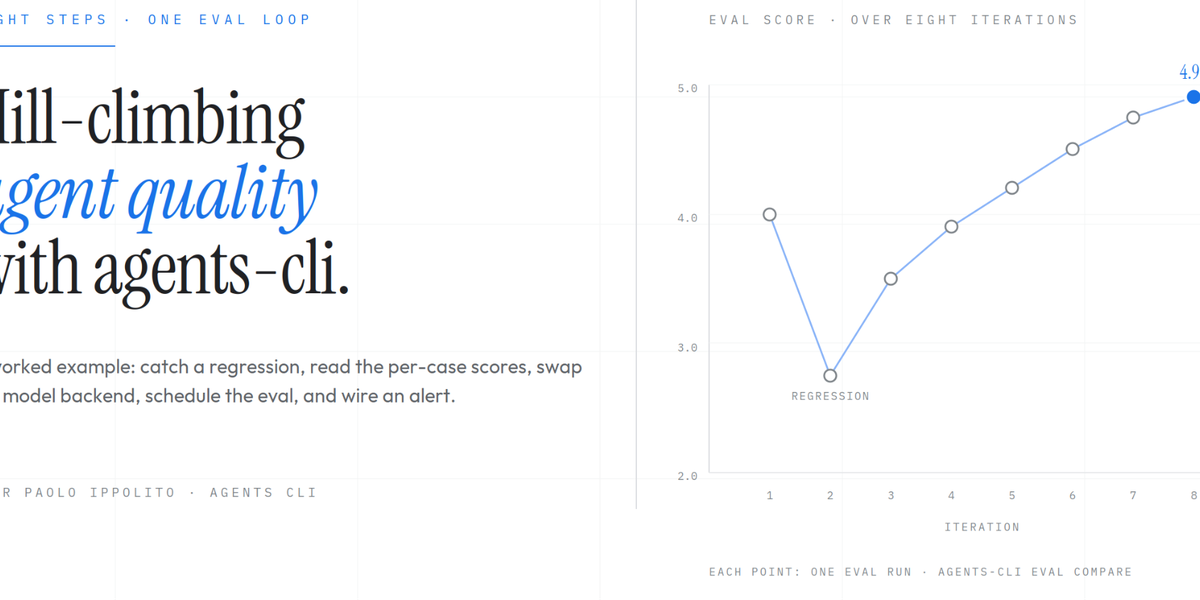
Google Developers released the Agents CLI framework to automate the testing loop for agent development. It provides specific commands for generating traces, grading responses via LLM-as-judge, and performing automated prompt optimization to improve performance metrics over time.

The framework is useful if you are tired of manual testing and want a consistent way to track regressions during prompt iteration. However, it requires you to build and maintain your own evaluation dataset, which is where the real work happens. It is not a magic fix for poor agent logic, only a tool to measure it.

more: https://developers.googleblog.com/hill-climbing-agent-quality-with-agents-cli-evaluation/

my other side: ivo.blogspot.com


AnySpeechRecognizer and AnyDecisionModel for Swift

29 10 2026
AnySpeechRecognizer and AnyDecisionModel for Swift

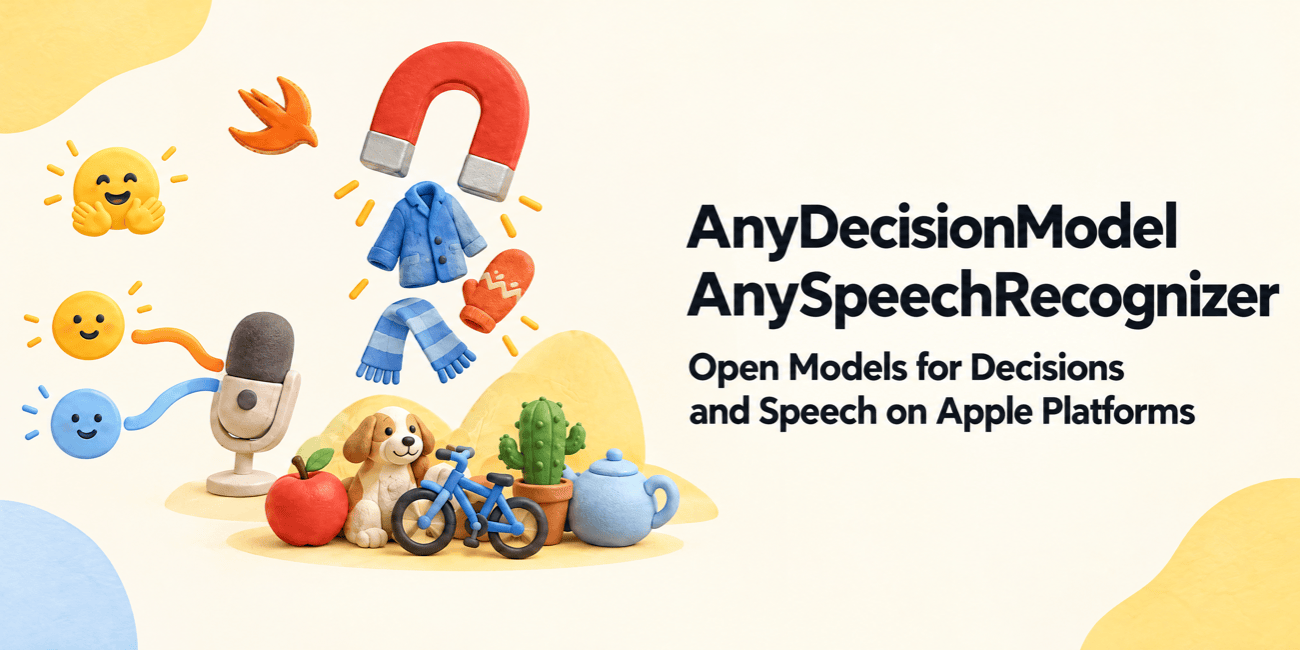
Mattt has released AnySpeechRecognizer and AnyDecisionModel, two Swift packages that extend the AnyLanguageModel approach to on-device audio transcription and decision making. AnySpeechRecognizer mirrors Apple's SpeechAnalyzer API while letting you swap out the default engine for open models like NVIDIA Parakeet v3, Parakeet Ultra, and Alibaba Qwen3-ASR running on Core ML. It also adds a speaker diarization module using Streaming Sortformer, which Apple's native framework lacks.

It is worth adopting if you need to run non-Apple speech or decision models locally without rewriting your routing logic. However, alternative engines like Qwen lack volatile results and word timing, and you will need to manage hefty model downloads ranging from 250 megabytes to over two gigabytes. Skip this if you are content using Apple's default APIs and hardware constraints directly.

more: https://huggingface.co/blog/anydecisionmodel

my other side: ivo.blogspot.com


Dossier: self-hosted job search and resume generator

27 10 2026
Dossier: self-hosted job search and resume generator

Dossier is a Docker-based web app that runs on a single server, storing your career history in a local PostgreSQL database. It parses job listings, scores them against your profile, and uses an AI model of your choice to generate tailored resumes, cover letters, and application emails. You can connect it to local models via Ollama or use standard API keys, keeping your data under your own control.

It is worth setting up if you are actively applying and want to stop rewriting resumes by hand without feeding your employment history to a third-party SaaS. The catch is that generation quality depends entirely on the LLM you attach, and it requires manual oversight to ensure the output reads naturally. Skip it if you prefer managing markdown files in Git or want a turnkey hosted service.

more: https://github.com/AienTech/dossier

my other side: ivo.blogspot.com



Google Elephant-Goldfish Model for spec-driven AI development

26 10 2026
Google Elephant-Goldfish Model for spec-driven AI development

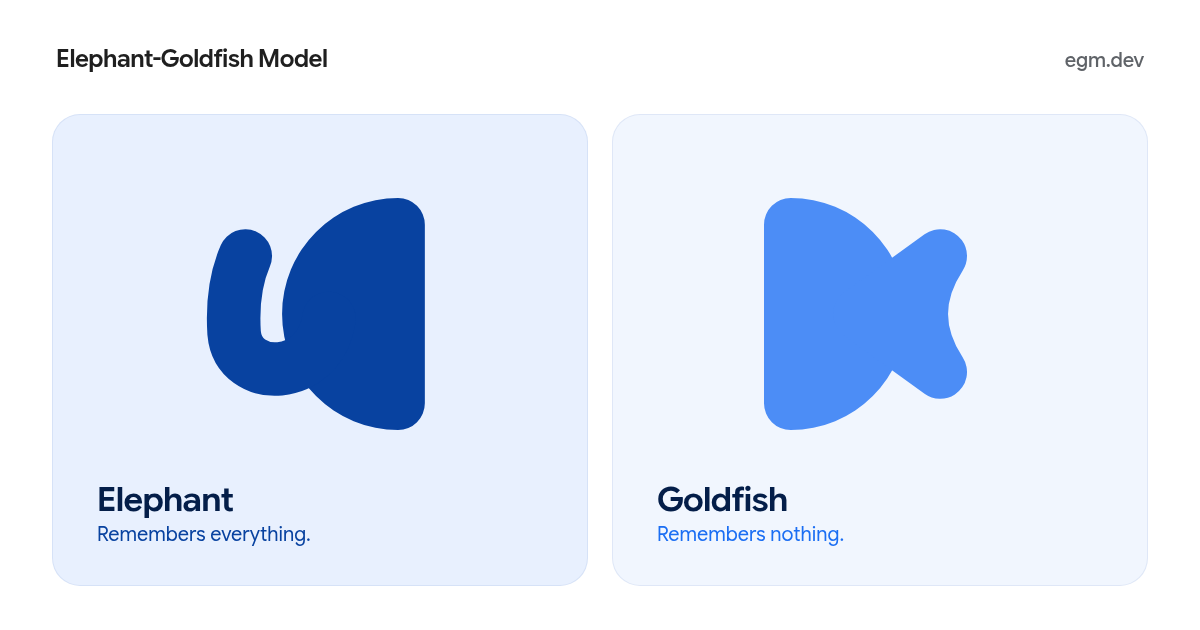
The Elephant-Goldfish Model is an open-source plugin that structures AI coding workflows using two distinct agent types. Deep-context elephant sessions handle architecture and design specs, while isolated zero-context goldfish subagents run stress tests and reviews without conversational bias. The package provides commands for brainstorming, drafting markdown specs, automated review swarms, and drift detection across several harness environments.

It is worth adopting if you already rely on AI agents and want to enforce structured design documents before writing code. The catch is that it adds significant process overhead and requires buying into a specific multi-agent methodology. Skip it if you prefer lightweight, ad-hoc prompting or small scripts where formal spec generation slows you down.

more: https://github.com/google/elephant-goldfish-model

my other side: ivo.blogspot.com


Ollaya runs open decision models locally via a Jev-compatible API

23 10 2026
Ollaya runs open decision models locally via a Jev-compatible API

Ollaya is a self-hosted inference daemon and CLI that runs open decision models locally without generating text. Using a single forward pass, it evaluates states like JSON messages against typed questions to return calibrated probabilities in milliseconds. On an RTX 5090, the recommended 4B model processes five questions in 113 ms, while CPU-friendly alternatives take around half a second.

It is worth installing if you are already using TypeSafe workflows and want to run models locally under an Apache-2.0 license. However, it is built exclusively for structured classification and routing rather than text generation, so it will not replace a standard LLM backend. If your application relies on unstructured output or long-form reasoning, skip it.

more: https://github.com/ollaya-dev/ollaya

my other side: ivo.blogspot.com


Hugging Face Trainium compatibility lookup space

23 10 2026
Hugging Face Trainium compatibility lookup space

David Corvoysier documented a Hugging Face Space that checks whether popular text and vision models run on AWS Trainium instances using the torch-neuronx backend. The tool reports pass-fail status, core counts, memory usage, and wall time across up to sixteen Trainium2 cores. It also provides the exact installation recipes and python scripts used for each test.

It is worth checking if you are deploying standard Transformers models on AWS custom silicon and want to avoid blind compilation failures. The catch is that tests are currently limited to generation tasks fitting on four devices, and a pass only verifies basic output rather than production throughput or long-context stability.

more: https://huggingface.co/blog/torch-neuronx-model-support

my other side: ivo.blogspot.com


Using Database State as RL Rewards

23 10 2026
Using Database State as RL Rewards

Microsoft and Hugging Face released ThinkingBox-Training, an open-source codebase for using terminal database states as binary reward functions during agent post-training. By filtering tasks using an offline policy-relative difficulty measure and applying 50 steps of GRPO, they fine-tuned Qwen3.8-27B to increase average success from 51.7% to 60.8%. Tasks completed successfully across all twenty test attempts rose from 38 to 107.

It is worth adopting if you are already running GRPO loops and need objective, non-LLM-as-a-judge verification for backend tool use. The catch is that you need a reliable execution sandbox for your target databases and enough compute to filter out tasks that are either too easy or hopeless for your base model. Skip this if your agent workflows do not involve persistent state changes or complex multi-step backend transactions.

more: https://huggingface.co/blog/microsoft/thinkingbox-training

my other side: ivo.blogspot.com