Microsoft ThinkingBox Grades Agent State Consistency

6 10 2026
Microsoft ThinkingBox Grades Agent State Consistency

Microsoft and Hugging Face released ThinkingBox via OpenEnv to evaluate AI agent reliability across 507 stateful business workflows. Instead of checking generated text or tool calls, it runs agents in isolated Model Context Protocol sessions and checks the resulting database records. Running 12 LLM models across 121,680 trials, the benchmark measures whether an agent can produce the correct backend state twenty times in a row.

It is worth running if you are building autonomous database workflows and need to move past single-run pass rates. The catch is that most current models suffer drastic reliability drops when forced to repeat tasks consistently, retaining as little as eight percent of their pass@1 score. Skip this if you only need conversational assistants or static text generation.

more: https://huggingface.co/blog/microsoft/thinkingbox

my other side: ivo.blogspot.com


Dsh plugin adds free frontier models without registration

6 10 2026
Dsh plugin adds free frontier models without registration

The dsh-our-free-model repository provides a zero-dependency plugin for the dsh runtime that exposes models like DeepSeek V4.1 and Kimi K3. Installation requires no API keys, accounts, or configuration, routing requests directly through the OpenCode Zen gateway. It includes a local OpenAI-compatible forwarding port, a usage dashboard, and automatic hot-reloading.

It is worth installing if you already use dsh and want free access to frontier models without managing credits. However, availability depends entirely on your local network's exit IP, and heavily managed desktop bundles may disable the plugin's auto-update features. Skip it if you require guaranteed uptime or enterprise SLAs.

more: https://github.com/Ebony-Vinyl/dsh-our-free-model

my other side: ivo.blogspot.com


Concat: open source local video editor in Rust

5 10 2026
Concat: open source local video editor in Rust

Concat is a cross-platform video editor built on a native Rust engine and FFmpeg, positioned as a free alternative to CapCut. It runs locally on macOS, Windows, Linux, and Android, handling auto-captions via Whisper, background removal, and 4K export entirely on your machine without cloud uploads or accounts. It also exposes a JSON-RPC, gRPC, and MCP API for programmatic editing.

It is worth a look if you want a timeline editor that does not require a subscription or telemetry, though it is currently in beta and still has rough edges. Because it relies on local models and GPU compositing, resource usage depends heavily on your hardware, and it lacks the extensive stock asset libraries found in commercial tools.

more: https://github.com/jub0t/concat

my other side: ivo.blogspot.com


FreeVideo runs MiniMax H3 on 8 GB GPUs

4 10 2026
FreeVideo runs MiniMax H3 on 8 GB GPUs

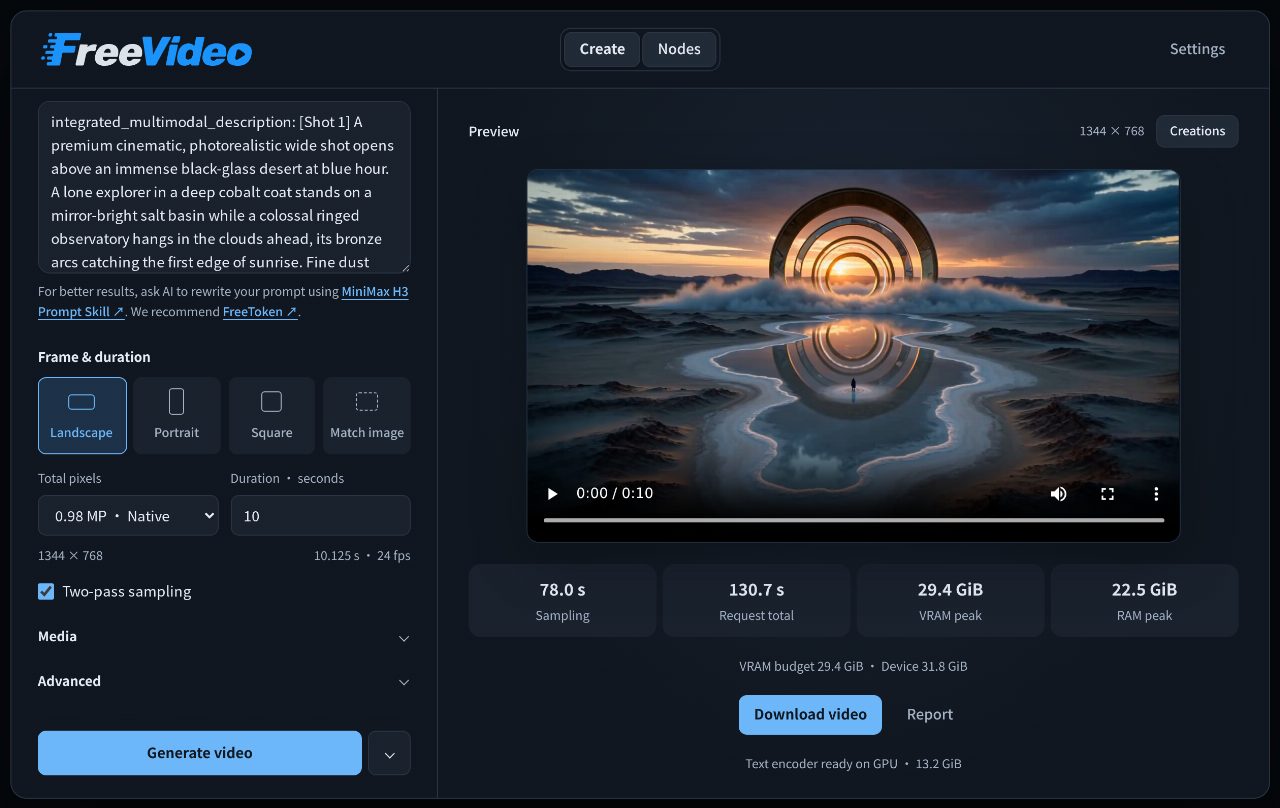
FreeVideo is a local inference engine for the MiniMax H3 video model that operates inside ComfyUI or via a Linux command line. By combining the 8-step VDN-H3 model with weight streaming, asynchronous prefetching, and hardware-adaptive FP8 execution, it runs on consumer hardware with as little as 8 GB of VRAM and 16 GB of system RAM. It accepts text, image, video, and audio inputs while supporting community LoRAs.

It is worth testing if you want to experiment with local video generation without renting cloud instances, provided you have patience for streaming latency on lower-end hardware. The setup handles the memory management well, but generation speeds on an 8 GB card will still be slow enough to rule out rapid iteration. Skip it if you are looking for real-time preview workflows.

more: https://github.com/FlashML-org/FreeVideo

my other side: ivo.blogspot.com


Answer me with HTML: CLI agent skill for visual output

4 10 2026
Answer me with HTML: CLI agent skill for visual output

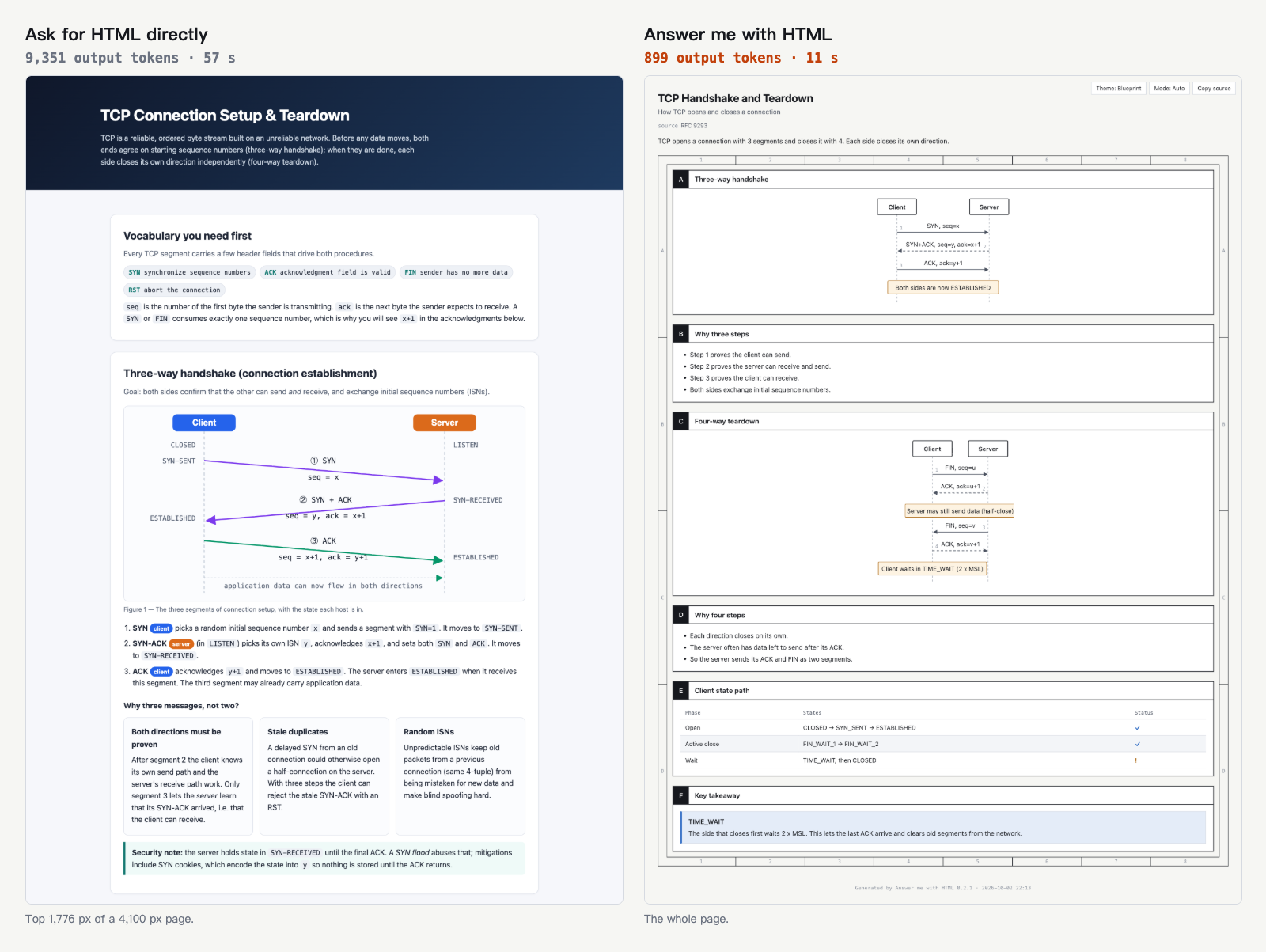
This CLI agent skill for Claude Code and Cursor intercepts complex queries and generates a standalone HTML page instead of raw text. According to local benchmarks on Claude Sonnet 3.5, it cuts output tokens by 7.4x and drops response time from 46 seconds to 13 seconds. It uses a bundled Node.js CLI to compile agent-written markdown drafts into styled diagrams, tables, and timelines.

It is worth installing if you frequently ask agents for structural explanations or comparative data and want to avoid walls of text. However, total dollar costs stay roughly the same because context re-reads offset token savings on generation. Skip it if you primarily use agents for short, single-line answers that do not benefit from visual formatting.

more: https://github.com/QingYunA/answer-me-with-html

my other side: ivo.blogspot.com


Paperclip: Multi-agent AI corporate hierarchy management

3 10 2026
Paperclip: Multi-agent AI corporate hierarchy management

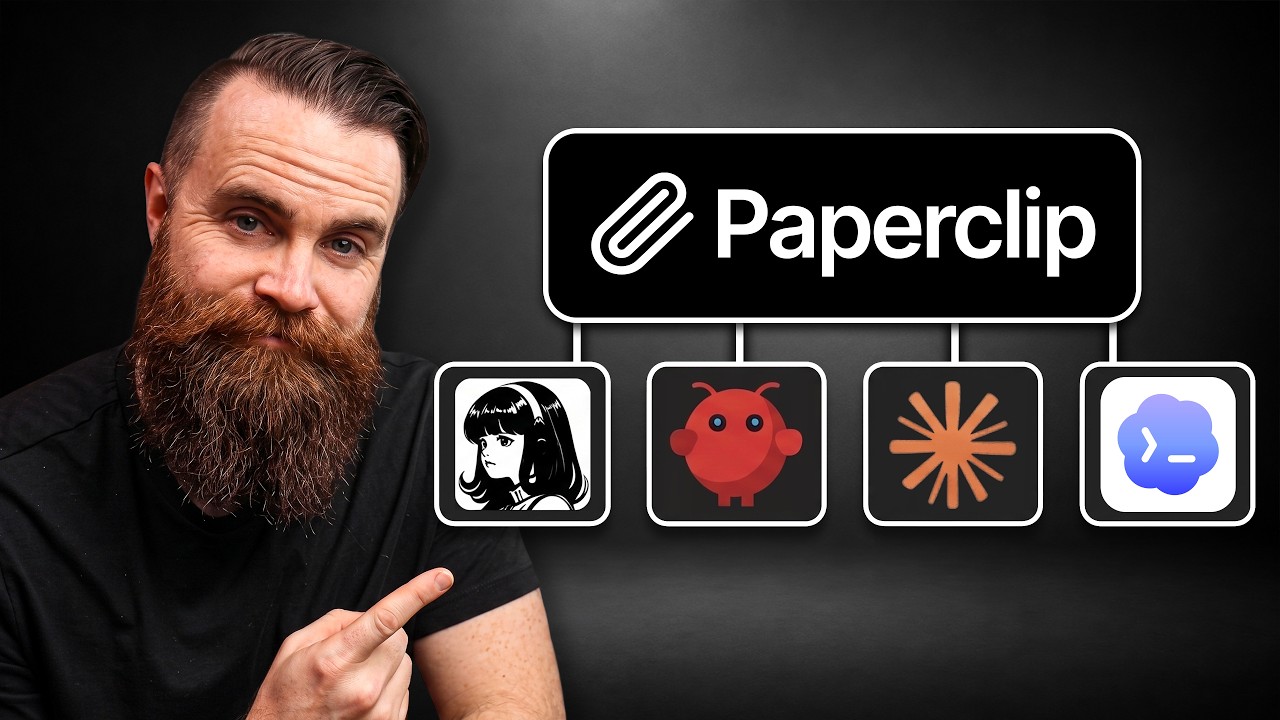
Paperclip is an open-source meta-harness that lets you organize separate AI agents into a corporate reporting structure. You act as the board of directors while tools like Claude Code, Codex, and local models fill out the employee roster. The companion guide steps through Node 24 installation, agent provisioning, and task delegation on a single local machine or remote server.

It is worth a weekend of experimentation if you are already managing multiple coding agents and want a structured way to hand off dependent tasks. However, it adds a significant layer of operational overhead and management busywork for tasks you could easily script yourself. Skip it if you just want to get code written rather than administrating a virtual org chart.

more: https://github.com/theNetworkChuck/paperclip-guide

my other side: ivo.blogspot.com


OpenMausBot runs local AI agent teams in a chat interface

3 10 2026
OpenMausBot runs local AI agent teams in a chat interface

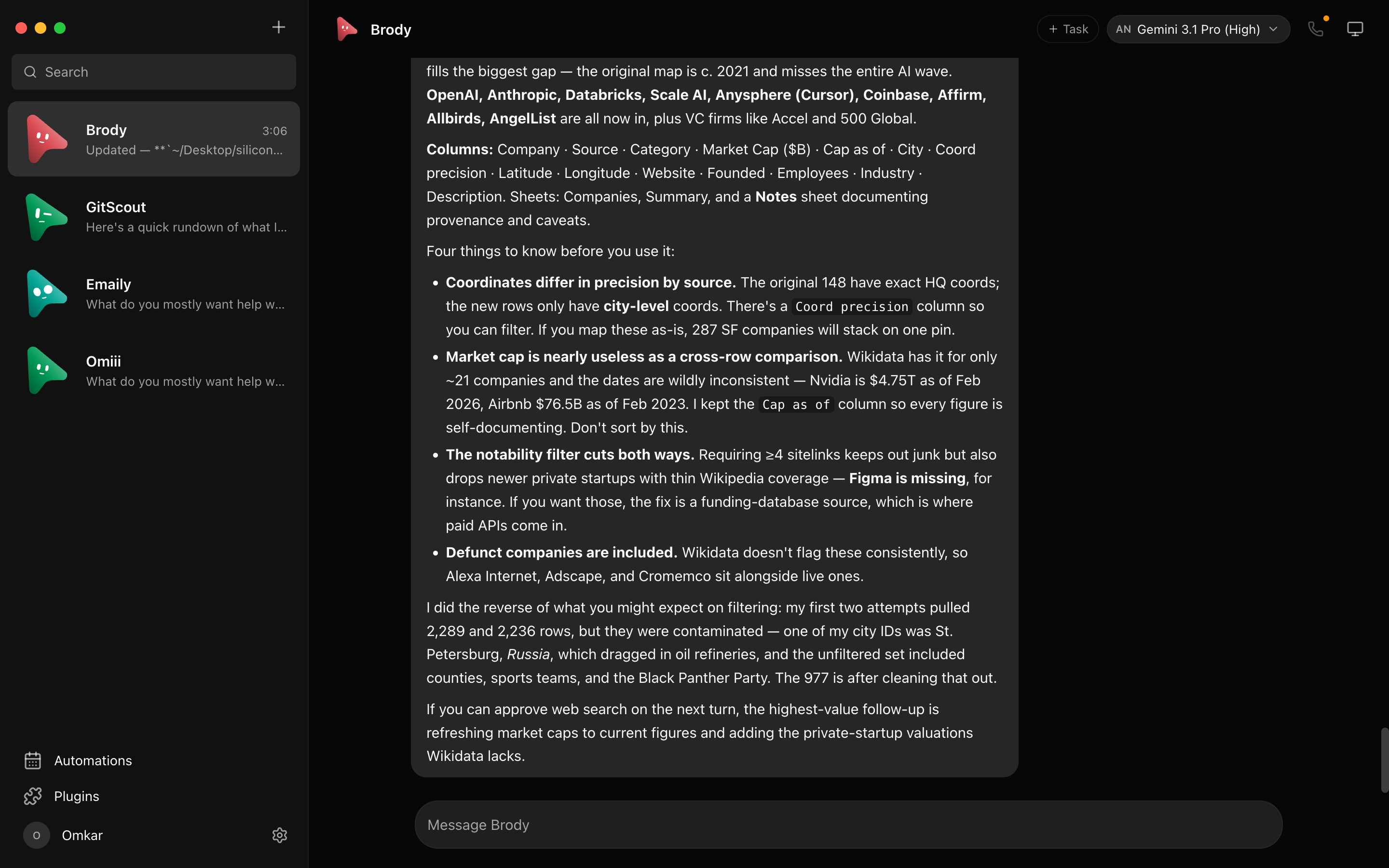
OpenMausBot is an Electron app and local harness server that runs CLI-based AI agents like Claude and Codex as interactive chat contacts. It stores transcripts and keys in your home directory while giving each agent an isolated virtual machine or container to execute tasks. You can assign different models, connect external apps via Composio, and approve shell commands or file edits through inline permission cards.

It is worth trying if you want a local multi-agent setup without managing raw scripts or relying on a hosted SaaS dashboard. The catch is that local execution requires existing CLI subscriptions and careful permission management to avoid unintended system modifications. Skip this if you prefer a zero-config web service or rely entirely on cloud-managed agent fleets.

more: https://github.com/milind-soni/OpenMausBot

my other side: ivo.blogspot.com


Monid: A Unified Tool Registry for AI Agents

3 10 2026
Monid: A Unified Tool Registry for AI Agents

Monid is an open-source connector framework that exposes over 2,000 tools across 72 providers through a single API base URL and key. Written in TypeScript for Deno 2, it handles authentication, declarative request definitions, and per-call usage metering without custom client code for each vendor. Agents use a discovery endpoint to select providers at runtime based on live health, latency, and pricing rather than static configuration.

It is worth cloning if you are actively building agents that need dynamic access to web search, enrichment, or media generation APIs without maintaining dozens of client integrations. The catch is that you have to supply your own vendor keys for the underlying services and write or adopt TypeScript connectors for anything missing from the catalog. It is not a hosted gateway or a magic execution layer; it is just the glue code to normalize tool calls.

more: https://github.com/monid-ai/monid

my other side: ivo.blogspot.com


Ptero, an open-source multi-model AI chat interface

3 10 2026
Ptero, an open-source multi-model AI chat interface

Ptero is a self-hosted chat client written in PHP and JavaScript that connects to various hosted LLMs like Llama, DeepSeek, and Mistral. It stores your conversation history entirely in browser local storage rather than on a remote database. You can run it standalone or embed the interface into a WordPress site using a shortcode.

It is worth a look if you want a clean, zero-signup way to test multiple models without wiring up a complex node stack. The catch is that while the interface is open source under the GPL v2, you still rely on third-party API providers for the actual model inference. Skip this if you need fully offline local execution or a Python-centric backend.

more: https://github.com/aminkheddache-dotcom/Ptero

my other side: ivo.blogspot.com


Zeron Daemon Control Plane for Coding Agents

3 10 2026
Zeron Daemon Control Plane for Coding Agents

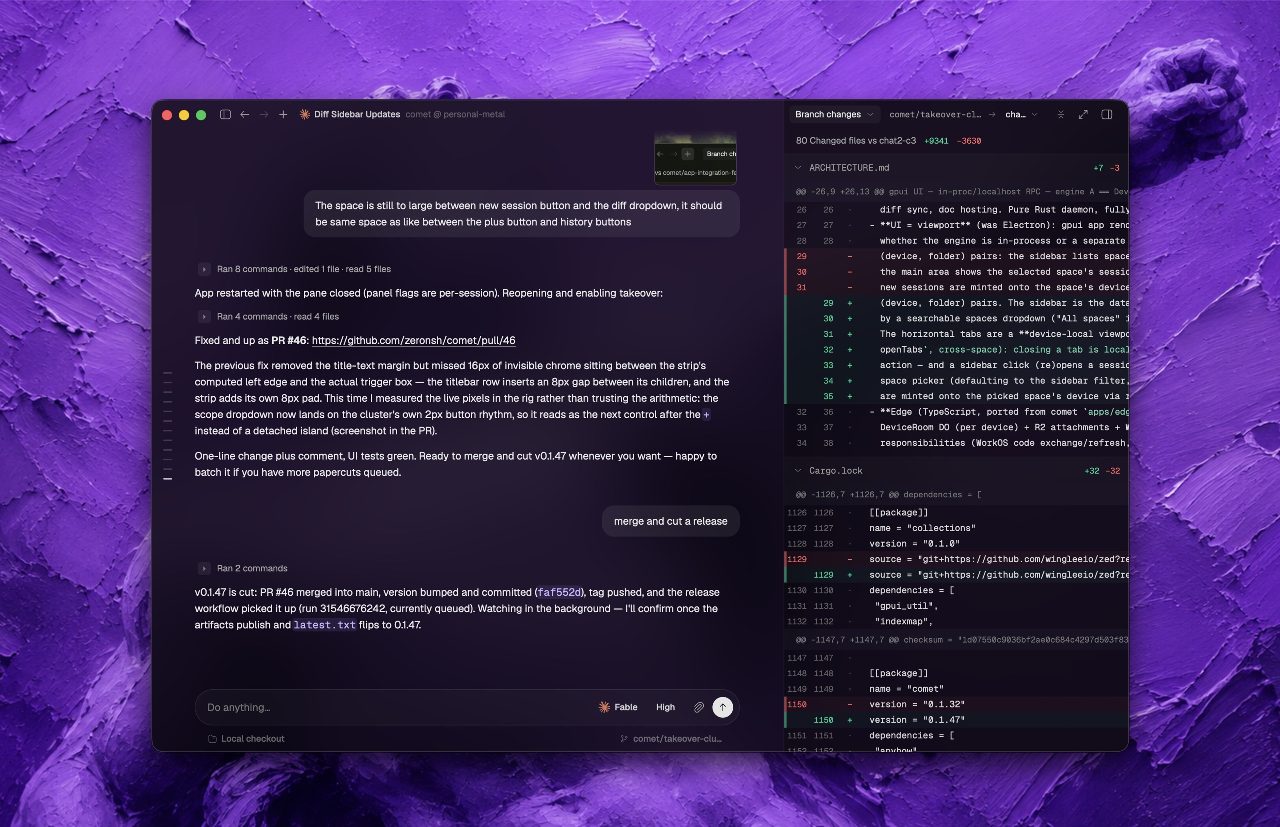
Zeron is a local-first control plane for managing coding agents like Claude Code, Cursor, and Devin across multiple devices. The installer sets up a background daemon that stores sessions locally by default without requiring an account or network connection. Optional multi-device sync lets you route sessions through an always-on machine or VPS.

It is worth a look if you run agents across a laptop and a desktop and want a unified interface without forcing your code into a third-party cloud. The catch is that syncing requires trusting peer devices with full read and write access to your workspaces, including local files. Skip it if you only use a single machine or prefer managing your agent processes via raw terminal tabs.

more: https://github.com/zeronsh/zeron

my other side: ivo.blogspot.com