Agent Lightning v1.0 trains agents via proxies

12 10 2026
Agent Lightning v1.0 trains agents via proxies

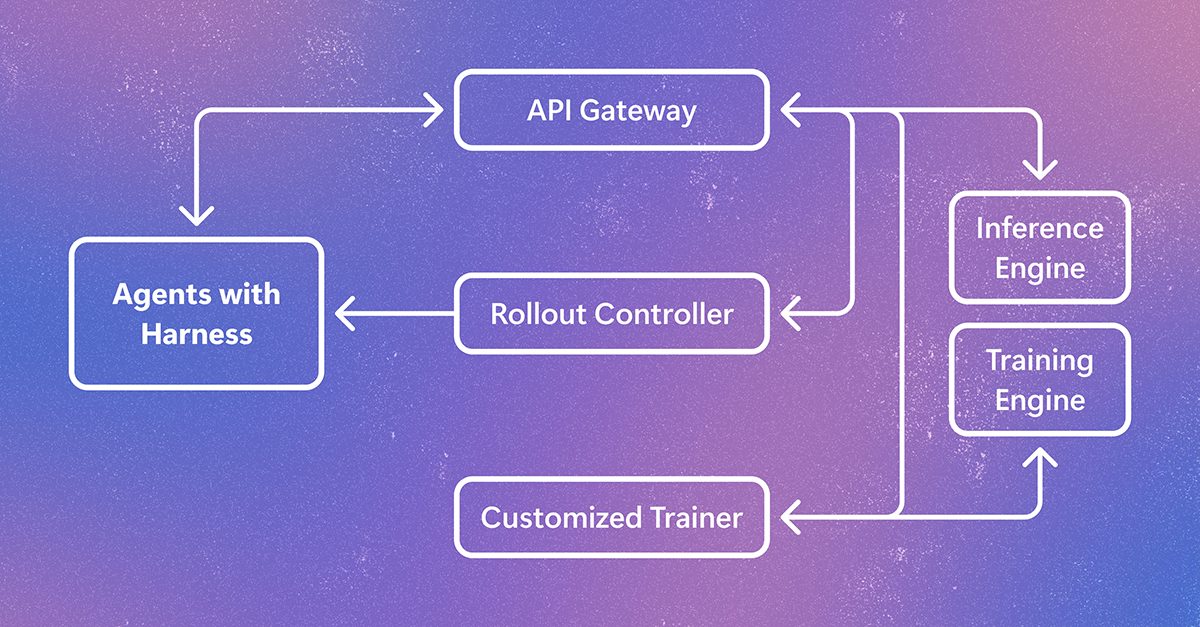
Agent Lightning v1.0 is a 3,500-line open-source framework from Microsoft Research for applying reinforcement learning to existing agent harnesses. Instead of forcing you to rewrite your agent's execution loop inside the training framework, it sits between your agent and the LLM API as an OpenAI-compatible proxy. It records model calls and handles collocated asynchronous training on a shared pool of GPUs.

It is worth a look if you are already maintaining a custom harness like OpenHands or mini-SWE-agent and want to tune it without rewriting your stack. The catch is that splitting rollouts into variable training samples introduces complex data alignment challenges, and it assumes you have the compute infrastructure to run heavy concurrent agent loops. Skip it if you are looking for an out-of-the-box training environment with zero systems overhead.

more: https://www.microsoft.com/en-us/research/blog/agent-lightning-v1-0-a-3500-line-lightweight-agentic-rl-framework-for-training-agents-with-real-harnesses/

my other side: ivo.blogspot.com


Pinvou Agent brings local AI workflows to the desktop

11 10 2026
Pinvou Agent brings local AI workflows to the desktop

Pinvou Agent is an open-source desktop workspace that combines document chat, vector knowledge bases, and design generation into a single Electron application. It supports local models via vLLM alongside any OpenAI-compatible endpoint, and lets you hook up CLI tools and MCP servers. The codebase also includes ACP support for plugging in coding agents like Claude Code or Codex against a local project directory.

If you are tired of juggling CLI windows and browser tabs for different AI tasks, this consolidates them neatly under ~/.pinvou3/ with persistent sessions and local voice input. However, it is a heavy desktop wrapper that still requires managing your own model backends and API keys for cloud endpoints. Skip it if you prefer keeping your workflow strictly inside a terminal or your existing text editor.

more: https://github.com/Pinvou/pinvou-agent

my other side: ivo.blogspot.com


Aurelio: Self-hosted wealth management and financial planning

10 10 2026
Aurelio: Self-hosted wealth management and financial planning

Aurelio is a local-first financial planning app that tracks your accounts, portfolios, debts, and cash flow in a single SQLite database. It requires Node.js 22 and uv, runs locally via shell scripts, and stores records in backend/data.db. The optional AI advisor connects through OpenRouter using your own API key to answer questions and propose data changes.

It is worth a look if you want complete control over your financial data without SaaS subscriptions or cloud lock-in. The catch is the setup friction and the fact that AI-driven features like portfolio analysis cost real money per query and require manual validation. Skip it if you just want a hands-off spreadsheet or a plug-and-play bank aggregator.

more: https://github.com/LosaLosSantos/aurelio-finance

my other side: ivo.blogspot.com


Distilling custom local models using agentic prompt workflows

9 10 2026
Distilling custom local models using agentic prompt workflows

Yuvraj Sharma and Abubakar Abid describe using an agentic HuggingChat tool called ML-intern to turn large models into tiny, CPU-runnable custom variants. For sixteen dollars of compute, the system takes an initial prompt and dataset, handles training and evaluation on Hugging Face hardware, and outputs models like a 0.8B Qwen-Image rewriter that replaces a 20GB teacher model. The process relies on detailed specification prompts that enforce baseline testing and strict budget limits.

It is worth trying if you routinely need task-specific models that fit on local hardware without paying API fees. The catch is that the output quality depends entirely on writing structured prompts up to two thousand words long, including verified facts and smoke tests. If you prefer turnkey tooling or do not want to curate training datasets, skip this approach.

more: https://huggingface.co/blog/building-with-ml-intern

my other side: ivo.blogspot.com


Magpie runs a local AI translation and routing gateway

9 10 2026
Magpie runs a local AI translation and routing gateway

Magpie is a cross-platform menu bar app and local proxy that unifies dozens of AI coding agents behind standard wire APIs. It translates between OpenAI, Anthropic, and Gemini formats on localhost while managing quotas across multiple accounts and subscription logins. Instead of editing separate JSON config files for every tool, you pick a model from a list and the gateway handles failover automatically when limits hit.

It is worth installing if you juggle multiple CLI agents and paid accounts, saving you from manually rotating API keys when quotas run out mid-task. The catch is that routing traffic through an extra local proxy adds another moving part to debug when requests fail or tokens do not match up. Skip it if you only use a single official client and standard API keys without hitting limits.

more: https://github.com/yetone/magpie

my other side: ivo.blogspot.com


Liquid AI releases open d1 multimodal decision models

8 10 2026
Liquid AI releases open d1 multimodal decision models

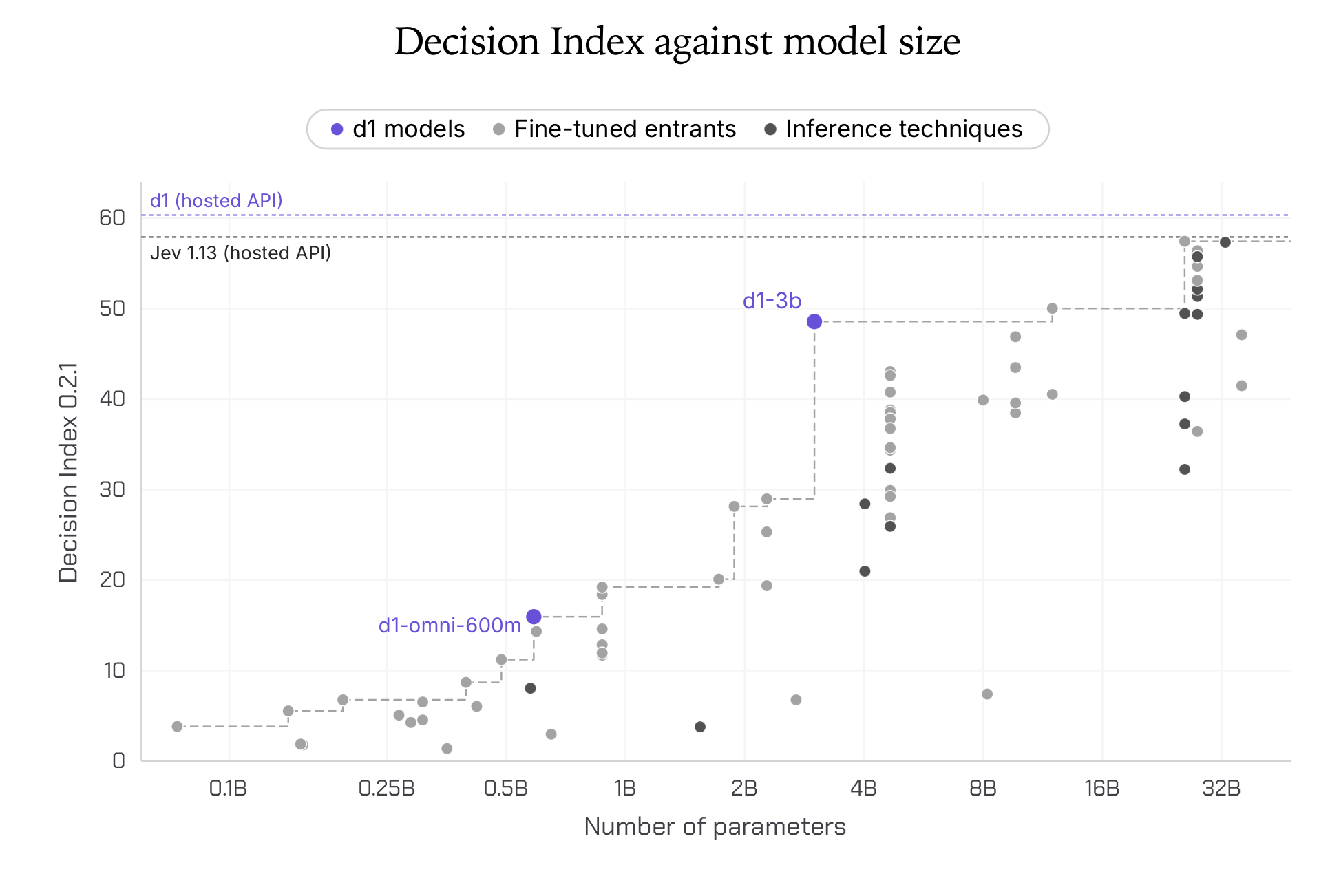
Liquid AI has released d1-3B and d1-omni-600M, two decision models designed to perform classification and extraction tasks in a single forward pass. These models move away from generative token output, delivering responses on edge hardware like the Jetson AGX Orin in under 50 milliseconds. The 3B parameter model handles text, vision, and audio, while the smaller 600M version targets footprint-constrained environments.

If you are building structured data pipelines or classification tasks on the edge, this is worth testing to avoid the overhead of a full generative LLM. However, be aware that you must use trust_remote_code for the custom inference architecture, which introduces a dependency on their specific implementation. It is not a general-purpose conversational agent, so look elsewhere if you need chat capabilities.

more: https://huggingface.co/blog/LiquidAI/open-d1

my other side: ivo.blogspot.com


OpenQodex adds AI code review to local workflows

8 10 2026
OpenQodex adds AI code review to local workflows

OpenQodex is a command-line tool that automates code review by leveraging local instances of Claude Code or Codex. It identifies uncommitted changes, runs targeted scanners, and produces a local HTML report summarizing findings without requiring external accounts or servers. It requires Node 22, Git, and a Unix-based environment like macOS, Linux, or WSL.

It is a useful utility if you already rely on coding agents and want a structured way to enforce local quality gates before pushing. However, it is not for those looking for a zero-config setup, as it demands manual dependency management and relies heavily on the performance and behavior of the underlying AI reviewers. If you prefer automated CI pipelines over local terminal workflows, this will likely feel redundant.

more: https://github.com/openqodex/openqodex

my other side: ivo.blogspot.com


Meta’s Muse Code: a one-line-install coding agent

8 10 2026
Muse Code — Meta coding agent powered by Muse Spark

Muse Code is Meta’s coding agent, powered by its Muse Spark model and pitched around a one-line install and a multi-agent architecture for building, debugging and shipping. The install really is one line:

irm https://dev.meta.ai/install.ps1 | iex        # Windows
curl -fsSL https://dev.meta.ai/install.sh | bash   # macOS / Linux

After that you authenticate once with muse login, and the command is simply muse.

A few things are worth knowing before you run it. There is no npm package and no official GitHub repo — the primary distribution is that installer script, hosted on Meta’s own dev.meta.ai / api.meta.ai domains (I checked: the product page and the script both return 200, and the script is genuinely Meta-hosted). On Windows the installer downloads a launcher, drops it in your user directory, and adds muse to your PATH. As always with irm … | iex or curl … | bash you are executing a remote script directly, so it is worth reading install.ps1 first — it is plain text.

Muse Code sits inside a wider Muse line-up: Muse Spark (1.1–1.3), Glimmer, Image, Voice Transcribe, and SAM 3.1. Product page below.

source: developer.meta.com/ai/lp/muse-code

my other side: ivo.blogspot.com


Google EmbeddingGemma 2 adds multimodal sentence transformers

6 10 2026
Google EmbeddingGemma 2 adds multimodal sentence transformers

Google has released EmbeddingGemma 2, a sub-1 billion parameter model that maps text, code, images, video, and audio into a shared 768-dimensional space. Integrated into sentence-transformers v6.1.0, the architecture is modular so you can drop unused modality encoders at load time to scale the footprint from 270M parameters up to 740M. It includes support for task-specific prompts and native dimension truncation down to 128 dimensions.

If you are building a local RAG pipeline or cross-modal search tool that needs to handle mixed media without a heavy inference server, this is worth testing. The catch is that matching modalities still requires strict adherence to prompt names and specific token markers, and sub-1B models will inevitably lag behind larger proprietary endpoints on nuanced retrieval tasks. Skip it if your stack is purely text-based and already tuned around existing dense retrievers.

more: https://developers.googleblog.com/embeddinggemma-2-the-developer-guide/

my other side: ivo.blogspot.com


Agent Memory provides persistent long-term storage for AI

6 10 2026
Agent Memory provides persistent long-term storage for AI

Agent Memory is a runtime that gives AI agents local, file-based persistence by mapping conversations to a directory of Markdown files indexed by SQLite. It functions as a local cache that agents can query via shell commands, allowing them to recall context across sessions without relying on external databases or cloud APIs. The system treats the filesystem as the source of truth, meaning all data remains readable by standard tools like grep even if the index is deleted.

It is worth your time if you prefer local, transparent, and git-managed data over opaque vector database abstractions. However, it requires you to manage a directory-based workflow and configure individual agent schemas, which adds overhead if you just want a plug-and-play solution. It is not for users who prefer managed services or have no interest in maintaining their own data structure.

more: https://github.com/tigerless-labs/agent-memory

my other side: ivo.blogspot.com