An ancient aquatic predator and the origin of mammalian nursing

13 10 2026
An ancient aquatic predator and the origin of mammalian nursing

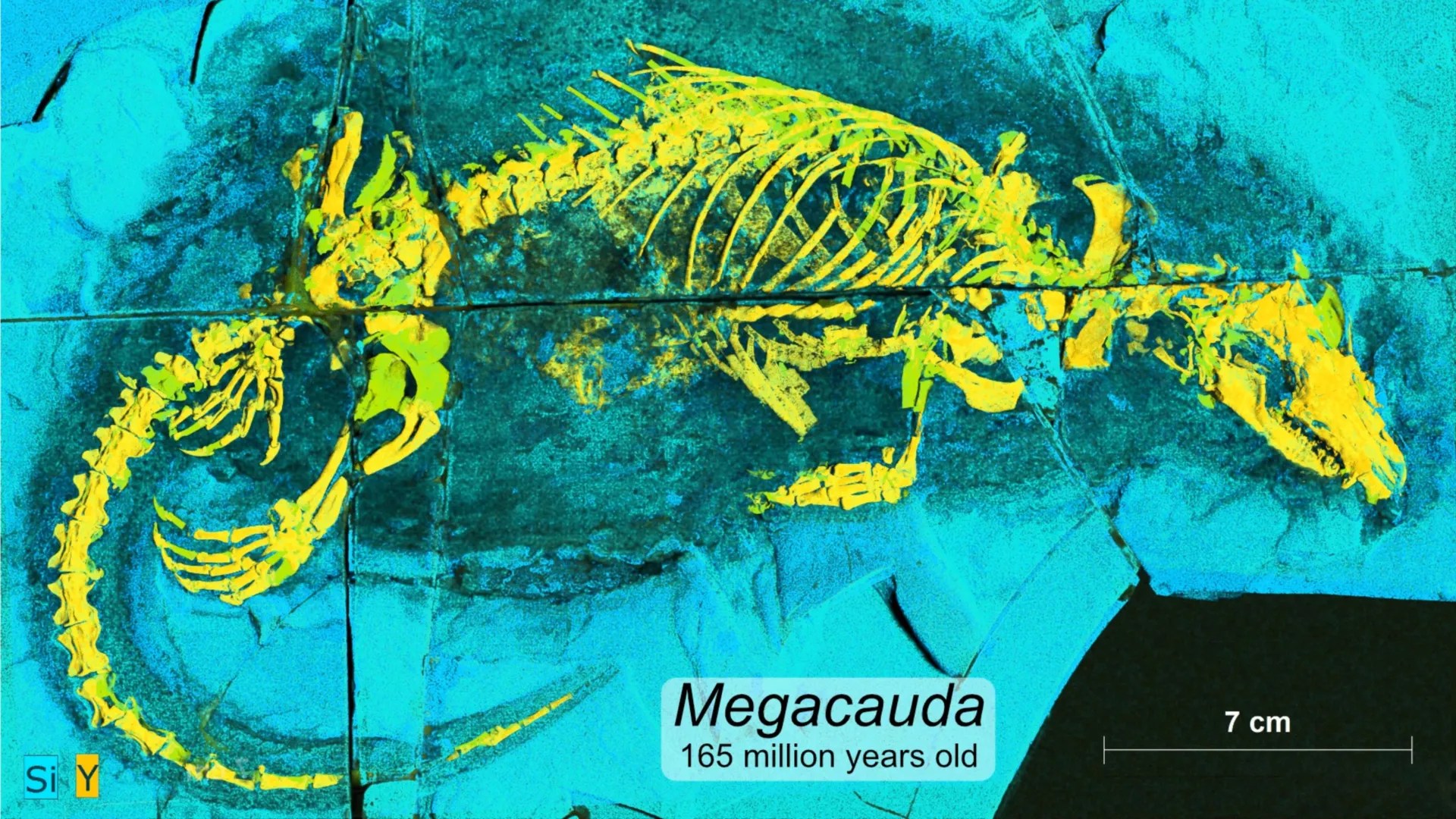
Fossil evidence from a 165-million-year-old jurassic mammaliaform named Megacauda sungei shows the earliest known development of a mammalian soft palate. This anatomical structure separated the mouth from the pharynx, allowing the animal to breathe and swallow simultaneously. CT scans of the half-meter-long fossil revealed it lived an otter-like aquatic lifestyle in what is now Inner Mongolia.

The evolution of the soft palate was a critical step that enabled young mammals to nurse safely without choking, providing the reliable nutrition required to support heavy brain development over millions of years. While researchers have linked this adaptation to the broader arc of mammalian evolution, soft tissue preservation in fossils remains rare, leaving details about its exact evolutionary staging open to ongoing debate among paleontologists.

more: https://www.sciencedaily.com/releases/2026/10/261012185005.htm

my other side: ivo.blogspot.com


AQuA Provides Automated Production Evaluation for Agent Systems

13 10 2026
AQuA Provides Automated Production Evaluation for Agent Systems

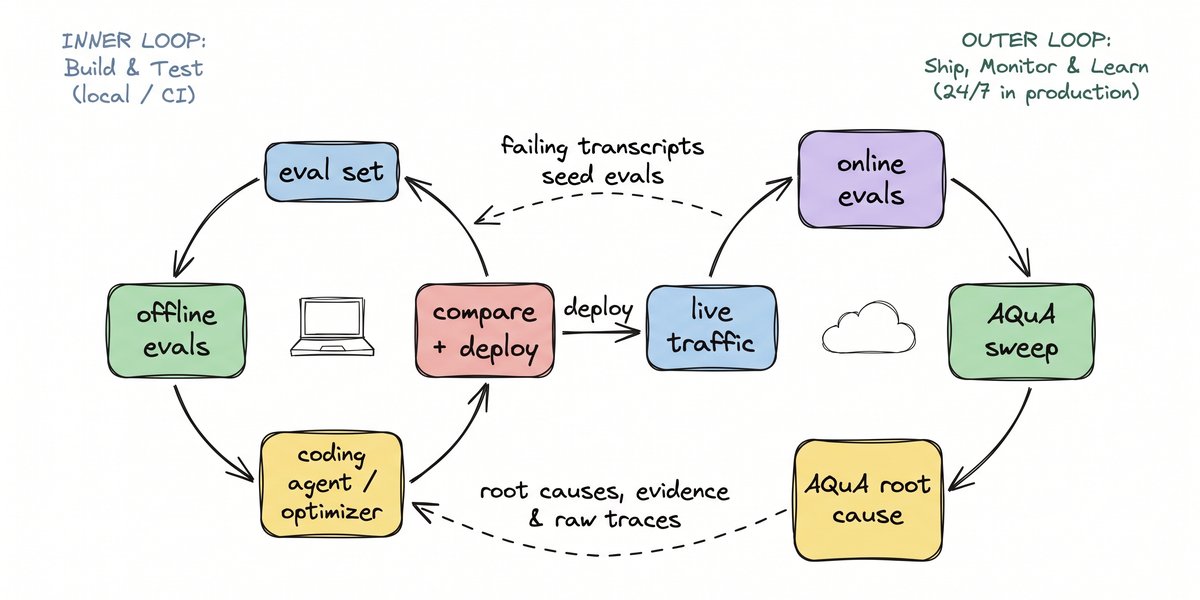
AQuA is a framework for diagnosing agent behavior by analyzing production telemetry via Cloud Trace, Logging, or BigQuery. It functions as an ambient quality agent that monitors live sessions to identify silent failure patterns and attribute them to specific code revisions or upstream data sources. The system operates outside the request path and generates actionable, code-anchored insights for human review.

This is worth implementing if you are struggling to manage the drift between your static evaluation datasets and live user traffic. It is not a silver bullet for deployment, as it requires you to write domain-specific goal files and deterministic metrics to be effective. Expect to spend significant time tuning the evaluation prompts before the insights become truly reliable.

more: https://developers.googleblog.com/the-outer-loop-insights-first-an-ambient-quality-agent-that-diagnoses-your-production-agent/

my other side: ivo.blogspot.com


The exhausting invisible labor of ADHD masking

12 10 2026
The exhausting invisible labor of ADHD masking

More than nine out of ten adults with ADHD consciously suppress their natural behaviors in social settings to appear neurotypical. This ongoing effort, known as masking, requires intense cognitive monitoring that drains executive function and triggers chronic emotional exhaustion.

While masking often serves as a survival mechanism against misunderstanding or stigma, the toll it takes on mental health suggests the cost usually outweighs the social benefit. We still understand relatively little about how to dismantle the environments that make this constant self-monitoring feel necessary in the first place.

more: https://theconversation.com/menyamarkan-gejala-adhd-demi-terlihat-normal-memicu-rasa-cemas-dan-lelah-kronis-293255

my other side: ivo.blogspot.com


Making stronger magnesium alloys using powdered eggshells

12 10 2026
Making stronger magnesium alloys using powdered eggshells

Researchers at North Carolina State have demonstrated that ground eggshells can replace mined calcium when manufacturing magnesium alloys. By using a technique called friction stir extrusion, they packed powdered eggshells into a magnesium block and rotated it under high pressure. The friction converts the calcium carbonate in the shells directly into calcium oxide and nascent calcium, creating a stronger, harder composite without the energy-intensive step of processing ore.

It is a clever bypass of a traditional industrial bottleneck, turning biogenic waste into a useful manufacturing input with fewer processing steps. Whether this can scale economically beyond niche aerospace and electronics applications will depend on the cost of collecting and sterilizing enough eggshells to feed a foundry. Still, finding structural uses for agricultural waste is a quiet kind of progress worth tracking.

more: https://www.futurity.org/eggshells-stronger-lighter-metal-alloys-3348262/?utm_source=rss&utm_medium=rss&utm_campaign=eggshells-stronger-lighter-metal-alloys-3348262

my other side: ivo.blogspot.com


ShellRS: A Native Rust SSH Client and SFTP Tool

12 10 2026
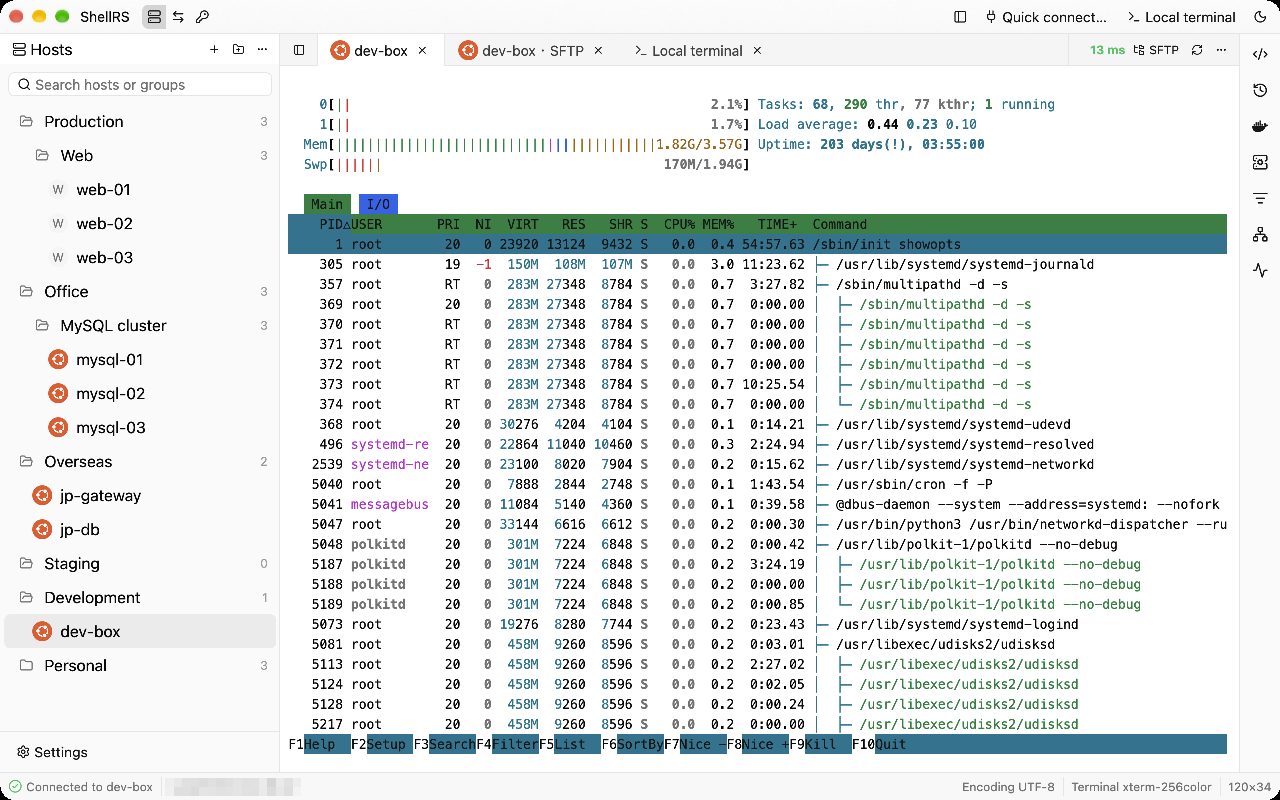
ShellRS: A Native Rust SSH Client and SFTP Tool

ShellRS is a cross-platform SSH client written in Rust that combines terminal access, WinSCP-style dual-pane SFTP, and port forwarding into a single GPU-rendered window using Zed's GPUI framework. It stores host configurations in a local SQLite database while keeping passphrases in the system keychain, and includes a CLI to let AI agents run commands on saved hosts without exposing credentials. The app replaces setups that previously required separate tools like Xshell and WinSCP, and it can be launched directly from bastion hosts.

It is worth trying if you manage multiple remote machines daily and want a fast native binary instead of an Electron app. The catch is that several of the more advanced right-sidebar inspection tools are limited to Linux hosts, and it is still a young project compared to established terminal multiplexers. Skip it if you rely heavily on tmux workflows or need a web-based interface.

more: https://github.com/since2006/shell-rs

my other side: ivo.blogspot.com


Agent Lightning v1.0 trains agents via proxies

12 10 2026
Agent Lightning v1.0 trains agents via proxies

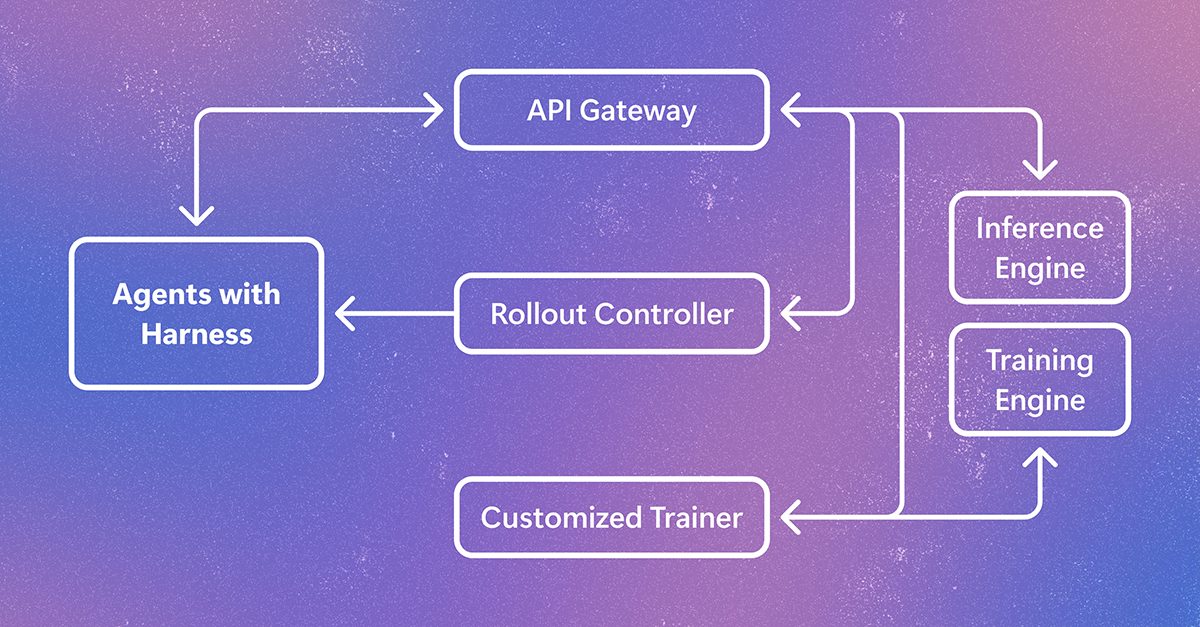
Agent Lightning v1.0 is a 3,500-line open-source framework from Microsoft Research for applying reinforcement learning to existing agent harnesses. Instead of forcing you to rewrite your agent's execution loop inside the training framework, it sits between your agent and the LLM API as an OpenAI-compatible proxy. It records model calls and handles collocated asynchronous training on a shared pool of GPUs.

It is worth a look if you are already maintaining a custom harness like OpenHands or mini-SWE-agent and want to tune it without rewriting your stack. The catch is that splitting rollouts into variable training samples introduces complex data alignment challenges, and it assumes you have the compute infrastructure to run heavy concurrent agent loops. Skip it if you are looking for an out-of-the-box training environment with zero systems overhead.

more: https://www.microsoft.com/en-us/research/blog/agent-lightning-v1-0-a-3500-line-lightweight-agentic-rl-framework-for-training-agents-with-real-harnesses/

my other side: ivo.blogspot.com


Water costs of the Zankore AI factory

11 10 2026
Water costs of the Zankore AI factory

The Conversation Indonesia examines the planned 1-gigawatt Zankore AI factory in Central Java, noting its first 200-megawatt phase could evaporate up to 9.1 million liters of freshwater daily. At full capacity, the facility's projected water demand would exceed the entire daily output of the local government's newly built raw-water infrastructure. This consumption rate rivals the volume of emergency clean water distributed during the region's recent drought crises.

The project exposes a familiar local tension where foreign shareholders capture the economic upside while nearby communities absorb the environmental externalities of sinking land and scarce water. Because data centers generate few permanent local jobs, the promised investments require much stricter scrutiny regarding resource allocation. We need to question whether industrial growth strategies are accounting for ecological limits before dry regions are forced to subsidize digital infrastructure.

more: https://theconversation.com/zankores-ai-factory-can-central-java-afford-the-water-cost-293547

my other side: ivo.blogspot.com


Researchers discover a hidden drainage pathway in the eye

11 10 2026
Researchers discover a hidden drainage pathway in the eye

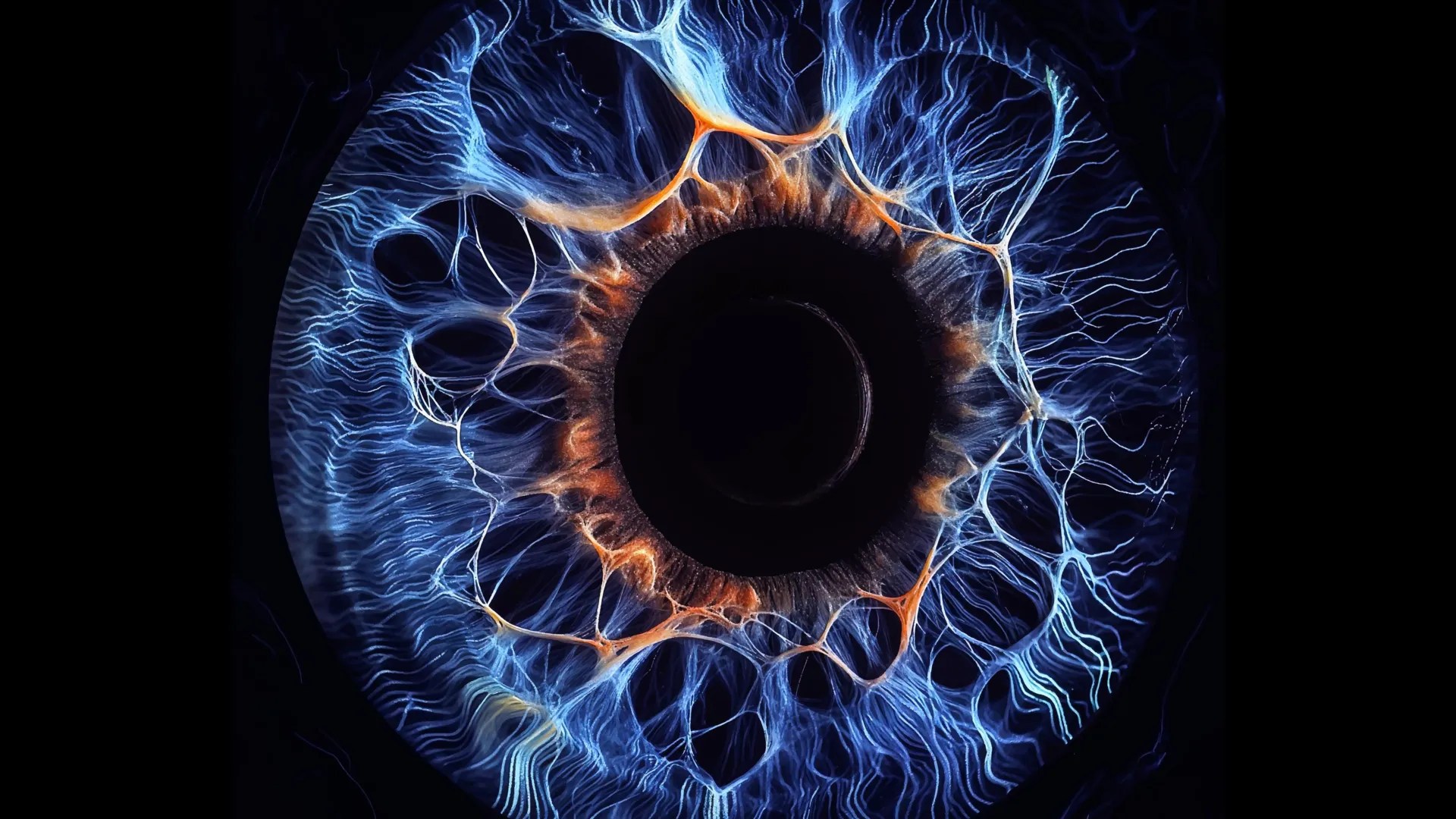
Scientists at the University of British Columbia and the University of Toronto have identified a previously unknown fluid drainage system at the back of the eye in mice. Named the posterior ocular lymphatic outflow, or POLO pathway, this network routes metabolic waste and fluid from the retina directly into the body's lymphatic system. For over a century, standard anatomy held that the eye lacked lymphatic connections in this region, making it difficult to explain how dense cellular waste was cleared from such a metabolically active tissue.

This discovery provides a concrete physical mechanism to investigate in relation to conditions like glaucoma and macular degeneration, where waste accumulation is a central factor. However, the work was demonstrated in mice, and translating these findings into human therapies will take years of additional study. It is a promising anatomical correction, but we are a long way from knowing whether this pathway can be safely targeted or enhanced in patients.

more: https://www.sciencedaily.com/releases/2026/10/261008005254.htm

my other side: ivo.blogspot.com


How the Venetian foundry became the word ghetto

11 10 2026
How the Venetian foundry became the word ghetto

In March 1516, the Venetian Senate ordered the city's Jews to move to an island in Cannaregio that had previously housed a copper foundry. In the local dialect, the foundry was called a geto, derived from the verb to cast. When the segregated quarter took that name, it became the first time a specific place name transitioned into a general term for segregation itself.

It is a reminder of how casual linguistic accidents can attach themselves to profound historical horrors, outliving their original contexts by centuries. Words that start as local administrative compromises eventually travel across languages and continents, accumulating meanings their originators could never have anticipated. Tracing these etymologies does not simplify history, but it clarifies how our current vocabulary was built from old debris.

more: https://aeon.co/essays/the-making-of-the-ghetto-on-a-venetian-island-in-1516

my other side: ivo.blogspot.com



Pinvou Agent brings local AI workflows to the desktop

11 10 2026
Pinvou Agent brings local AI workflows to the desktop

Pinvou Agent is an open-source desktop workspace that combines document chat, vector knowledge bases, and design generation into a single Electron application. It supports local models via vLLM alongside any OpenAI-compatible endpoint, and lets you hook up CLI tools and MCP servers. The codebase also includes ACP support for plugging in coding agents like Claude Code or Codex against a local project directory.

If you are tired of juggling CLI windows and browser tabs for different AI tasks, this consolidates them neatly under ~/.pinvou3/ with persistent sessions and local voice input. However, it is a heavy desktop wrapper that still requires managing your own model backends and API keys for cloud endpoints. Skip it if you prefer keeping your workflow strictly inside a terminal or your existing text editor.

more: https://github.com/Pinvou/pinvou-agent

my other side: ivo.blogspot.com