Zeabur: a self-hosted open-source Kubernetes PaaS

29 10 2026
Zeabur: a self-hosted open-source Kubernetes PaaS

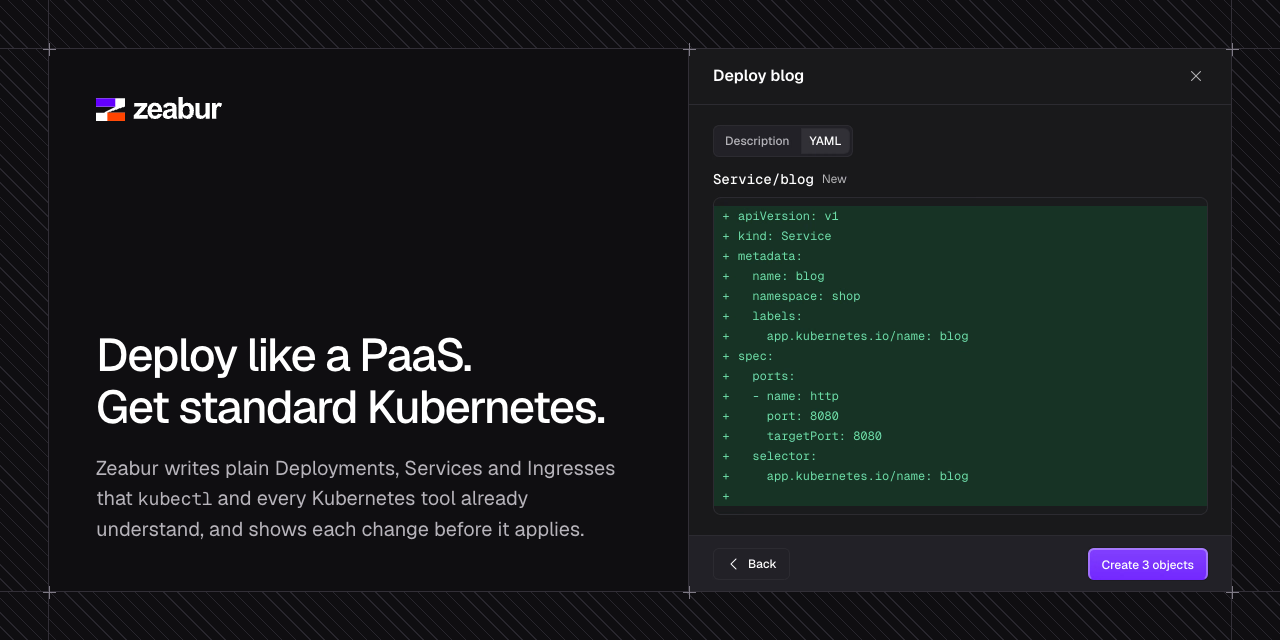
Zeabur is an open-source, self-hosted control panel for Kubernetes that stores no internal state or custom resources. Running at version 0.1.1, it can be deployed via a single-node installer, a Helm chart on an existing cluster, or run locally on your machine using your existing kubeconfig via zeaburctl ui. It exposes cluster objects as projects and services while translating cluster errors into plain-language diagnostics.

It is worth a look if you want a simpler dashboard over raw kubectl without adding another database to your infrastructure. However, it is currently pre-alpha software with a fluid API, meaning you should avoid pointing it at any production cluster you cannot afford to break. Skip it if you need enterprise multi-tenancy or a fully supported stable platform today.

more: https://github.com/zeabur-oss/zeabur

my other side: ivo.blogspot.com


HatchZip extracts archives in place by shrinking them

24 10 2026
HatchZip extracts archives in place by shrinking them

HatchZip is a cross-platform desktop utility and CLI tool that unpacks ZIP, 7z, tar, and gzip archives without requiring double the disk space. Instead of keeping the archive and output simultaneously, it consumes the archive from the end and truncates the file as it goes. It runs on Windows, macOS, and Linux, checking if extraction will fit before modifying any data.

It is worth installing if you frequently deal with large game assets or datasets on constrained drives and want to avoid freeing hundreds of gigabytes just to unpack a payload. The catch is that solid 7z archives cannot be freed until an entire block completes, meaning highly compressed single-file blocks will still demand their full uncompressed size in free space. Skip it if your filesystem or workflow doesn't regularly push you against disk capacity limits.

more: https://github.com/xevrion/hatchzip

my other side: ivo.blogspot.com



Gately: A self-hosted network gateway and reverse proxy toolkit

24 10 2026
Gately: A self-hosted network gateway and reverse proxy toolkit

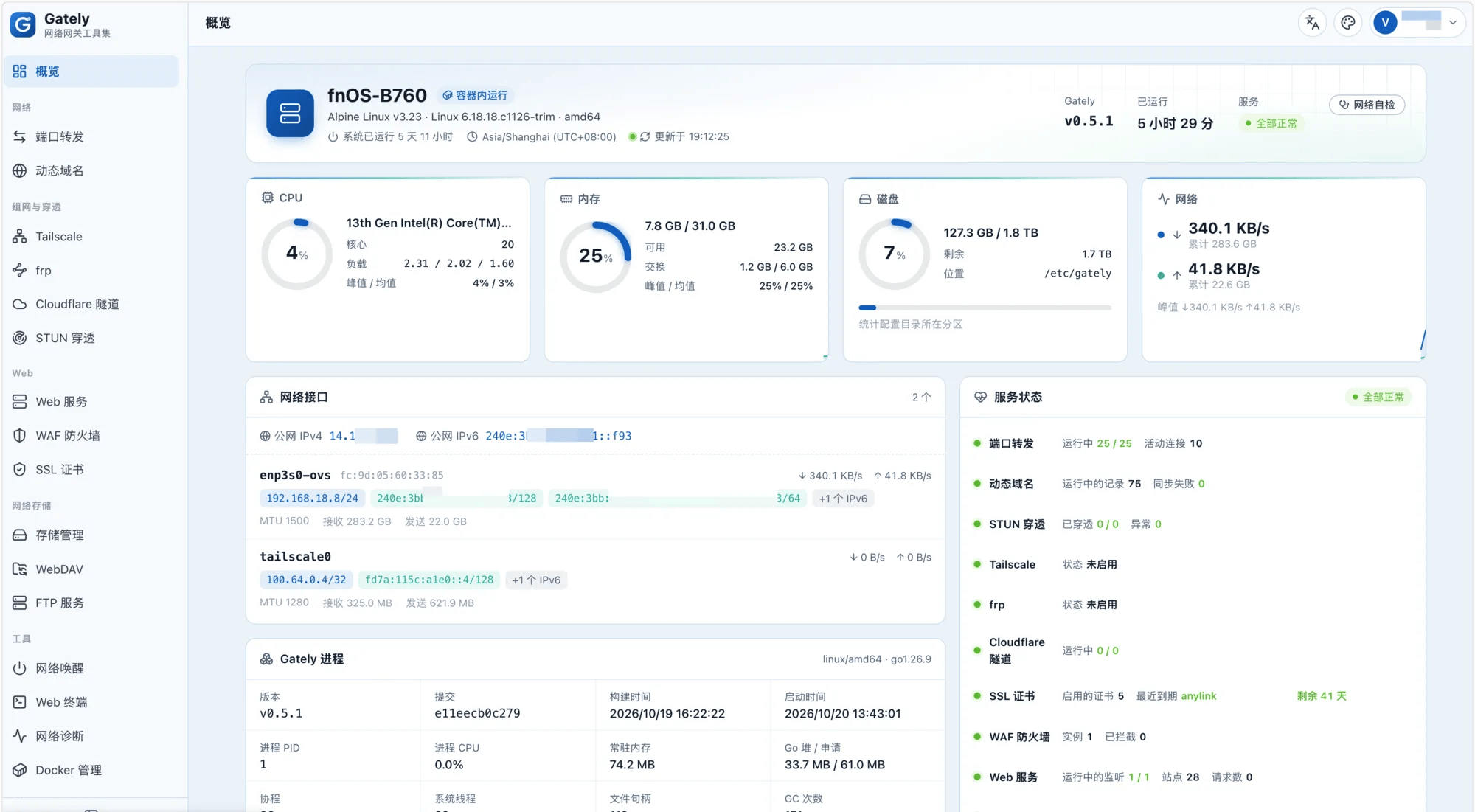
Gately is an open-source, auditable network gateway toolkit packaged as a single 32 MB binary that runs on home networks, NAS boxes, and cloud servers. Written under the Apache-2.0 license, it combines DDNS, STUN traversal, port forwarding, reverse proxying, SSL certificate automation, Tailscale integration, a Coraza-backed WAF, and fail2ban-style intrusion prevention into one interface with plain-text JSON configuration. It also includes an importer for existing Lucky configurations and ships as a native app for fnOS.

It is worth a look if you want to consolidate reverse proxies, tunnel management, and firewall rules without trusting an opaque binary or heavy control plane. The catch is that configuring every subsystem by hand takes time, and if you are already comfortable maintaining a stack of separate tools like Nginx, Certbot, and frp, Gately offers little functional advantage. It is not for teams needing distributed, enterprise-grade edge routing with complex multi-tenant control planes.

more: https://github.com/wangwanjie/gately

my other side: ivo.blogspot.com


Kept: A Self-Hosted Inventory for Your Things

23 10 2026
Kept: A Self-Hosted Inventory for Your Things

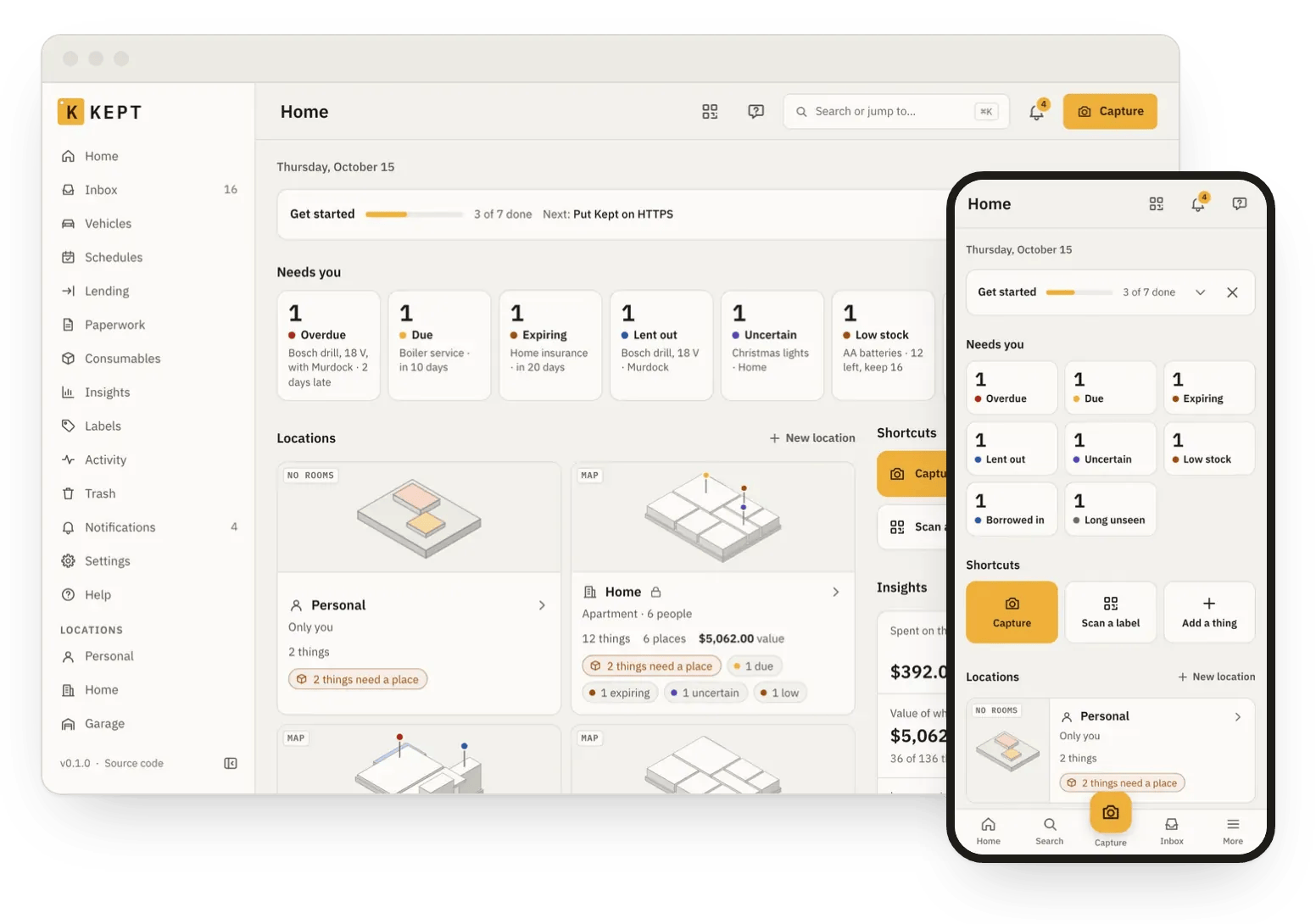
Kept is an open-source, Docker-hosted inventory system that tracks your physical items, receipts, and warranties down to the specific box and shelf. Written for homelabs needing at least two CPU cores and 2 GB of RAM, it includes optional AI-assisted capture via your own API key, QR label generation, and nightly restic backups. You can try the whole app with sample data in your browser before committing to an installation.

It is worth setting up if you have genuine organizational sprawl across a house, garage, or storage unit and want your data kept strictly local. The catch is that managing physical locations, printing QR labels, and photographing receipts requires real maintenance discipline to actually stay useful. If you are not going to scan the boxes when you pack them, the software will not help you.

more: https://github.com/keptinventory/kept

my other side: ivo.blogspot.com


Peach: self-hosted media manager for adult collections

23 10 2026
Peach: self-hosted media manager for adult collections

Peach is an open-source, local-first application designed to organize adult video collections scattered across local disks and mounted cloud storage like 115, PikPak, or OneDrive. It combines a grid-based browser, metadata scrapers, and subtitle search into a single interface that runs on Windows, macOS, or Docker. The software reads existing NFO files and folder structures without modifying your original files while pulling in missing covers, tags, and creator updates from supported platforms.

It is worth a look if you are tired of manual sorting and want a unified local UI with browser extension integration for cloud downloads. The catch is that it remains an immature desktop tool with unsigned binaries, no official mobile app beyond web access, and requires you to bring your own cloud accounts and storage. Skip it if you just want a standard media server like Plex or Jellyfin for mainstream video.

more: https://github.com/peach-mitao/peach

my other side: ivo.blogspot.com


Doory: A self-hosted browser-based design editor

23 10 2026
Doory: A self-hosted browser-based design editor

Doory is a Dockerized, open-source design tool built on Django and FabricJS that replaces cloud-based options like Canva. It runs on your own hardware and handles everything from basic image cropping and PDF exports to animations, video generation, and real-time co-editing. The project also includes an optional Model Context Protocol server so AI assistants like Claude can directly generate and modify your designs.

It is worth setting up if you need an internal graphic editor without third-party data sharing, but the current template library is tiny at just ten starter items. You will have to seed your own fonts, icons, and templates before it is genuinely useful for a team. Skip it if you are looking for a drop-in replacement with a massive pre-existing asset library.

more: https://github.com/shaongitbd/doory

my other side: ivo.blogspot.com


pgrundev/pgx: Multi-tenant Postgres runtime for short-lived databases

22 10 2026
pgrundev/pgx: Multi-tenant Postgres runtime for short-lived databases

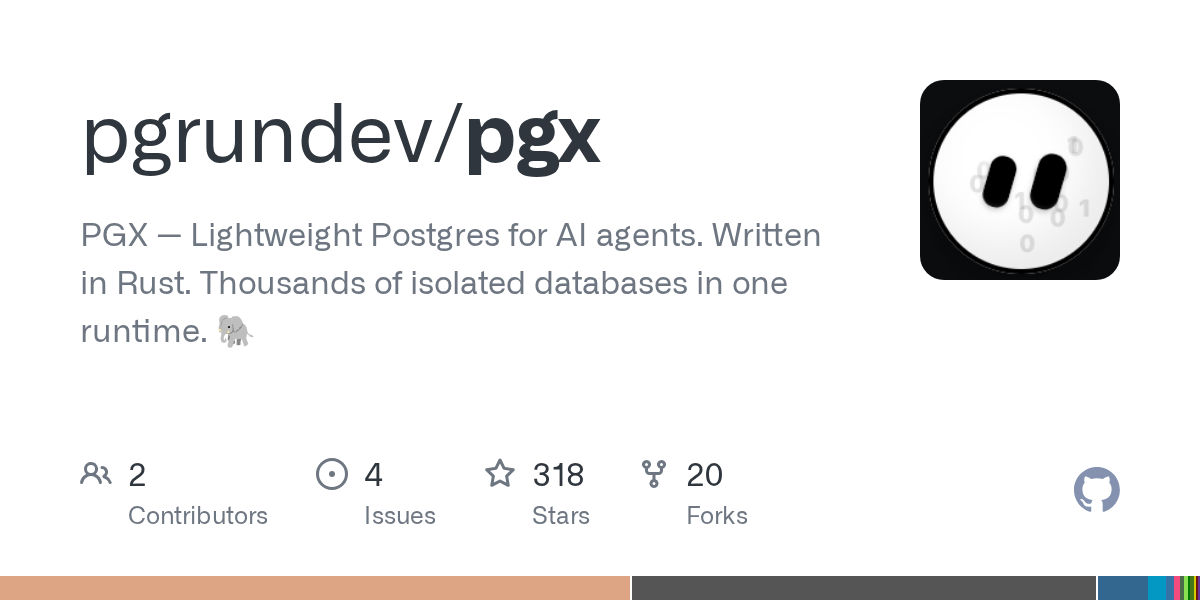
pgx is a v0.1.0 Rust runtime that packs a thousand isolated PostgreSQL-compatible databases into roughly 150 megabytes of memory on a single machine. It mints warm databases in about six milliseconds and uses ZFS copy-on-write to branch a ten-gigabyte template in under a second. It replaces the pattern of spinning up separate Docker containers or server processes for test suites, CI jobs, and agent sandboxes.

It is worth testing if your workflow creates and destroys databases constantly, though it requires ZFS on Linux to get the fast copy-on-write storage cloning. It is built strictly for ephemeral development environments and agent workloads rather than long-running production primaries. You should skip it if your stack relies on database extensions or specific PostgreSQL features that fall outside its core wire protocol and regression test coverage.

more: https://github.com/pgrundev/pgx

my other side: ivo.blogspot.com


KiviDB: A Fast Multi-Threaded Rust Redis Alternative

20 10 2026
KiviDB: A Fast Multi-Threaded Rust Redis Alternative

KiviDB is a sharded, multi-threaded in-memory key-value store written in Rust that speaks the RESP2 and RESP3 protocols. On a 32-core AWS Graviton3 setup, it delivers over 21 million pipelined GETs per second with built-in full-text and vector search matching Redis Stack syntax. It listens on port 6380 by default so it can run directly alongside an existing Redis instance for drop-in testing.

If you are hitting single-core CPU bottlenecks in Redis or Valkey and want native HNSW vector search without paying for proprietary enterprise licenses, it is worth spinning up the Docker container to benchmark against your own workload. However, the project uses the AGPL-3.0 license and relies on optional cargo features for Lua scripting and TLS, meaning teams with strict licensing requirements or heavy legacy scripting dependencies should look elsewhere.

more: https://github.com/kividbio/kividb

my other side: ivo.blogspot.com


Yarrtube synchronizes YouTube channels and playlists locally

17 10 2026
Yarrtube synchronizes YouTube channels and playlists locally

Yarrtube is a lightweight Docker container built on yt-dlp that automatically downloads new videos from tracked YouTube channels and playlists. It runs on a NAS or local machine, includes a minimal web interface for mobile and desktop, and integrates with Plex, Jellyfin, and Kodi. The author built it during a career sabbatical to provide an ad-free, algorithm-free way to feed specific content to children without relying on the native app.

If you already maintain a local media server and want a simpler alternative to heavy tools like TubeArchivist, this is worth deploying in an afternoon. It is deliberately narrow in scope, meaning it lacks advanced archiving features and complex metadata management. Skip it if you need a full-featured YouTube management suite rather than a straightforward download bridge.

more: https://github.com/sergigp/yarrtube

my other side: ivo.blogspot.com


MailCheap: Self-Hosted Newsletter App With SES

17 10 2026
MailCheap: Self-Hosted Newsletter App With SES

MailCheap is an open-source newsletter application designed to run on your own infrastructure using Amazon SES or PostShiba. It handles writing, subscriber imports from platforms like Substack and Beehiiv, and automated deliverability protections like warm-ups and list hygiene. You can operate the entire app via a web dashboard, REST API, or an MCP server for AI agents.

It is worth setting up if you want to stop paying subscription fees for dormant subscribers and prefer managing your own sending infrastructure. The main catch is that self-hosting requires configuring DNS, DKIM records, and dealing with SES production access yourself, with zero support issues tracked if something breaks.

more: https://github.com/marclou/mailcheap

my other side: ivo.blogspot.com