AnyLanguageModel 1.0 brings unified inference to Swift

20 10 2026
AnyLanguageModel 1.0 brings unified inference to Swift

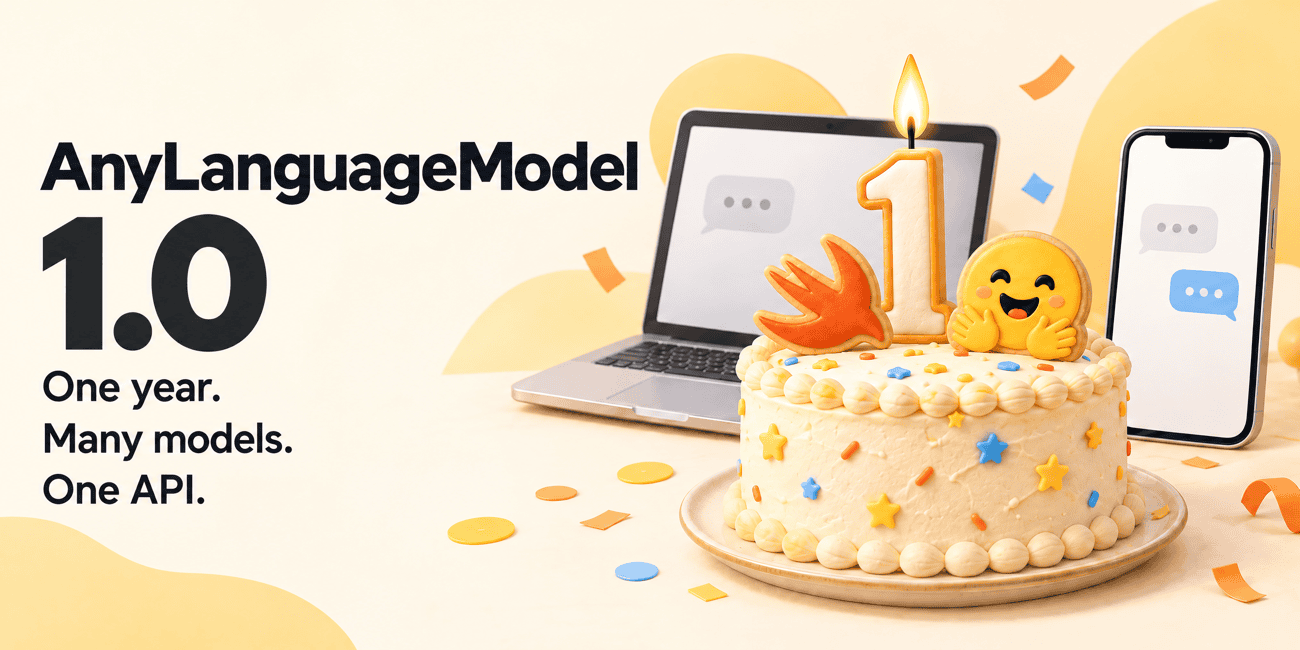
Mattt and the team at Hugging Face have released version 1.0 of AnyLanguageModel, a Swift library that acts as a drop-in replacement for Apple's Foundation Models framework. By changing a single import statement, you can swap between the on-device system model, local runtimes like MLX and llama.cpp, and hosted APIs using identical session code. It also includes support for guided generation, streaming tool calls, and model downloads via companion packages.

If you are already writing Swift apps and want to experiment with local weights or abstract away multiple inference backends without rewriting your session logic, this saves you real boilerplate. The catch is that managing memory for open-weight models on user hardware remains messy, and relying on a third-party wrapper means you are coupling your inference layer directly to Hugging Face's ecosystem.

more: https://huggingface.co/blog/anylanguagemodel-1-0

my other side: ivo.blogspot.com


PyTorch 2.15 MPS optimizations for Apple Silicon

20 10 2026
PyTorch 2.15 MPS optimizations for Apple Silicon

Hugging Face's work on the PyTorch 2.15 MPS backend brings FP8 support, native grouped matmuls, and dedicated Metal kernels to Apple Silicon Macs running macOS 15. Mixture-of-experts models see decoding speedups up to 6.5 times faster on hardware like the M3 Ultra, while memory peaks for video VAE decoding drop from gigabytes of overhead to manageable footprints. The release replaces various MPSGraph bottlenecks with direct Metal execution for single-row linear layers, softmax, and common linear algebra operations.

It is worth adopting if you are actively running local inference or fine-tuning models on a modern Mac and hitting previous memory or fallback walls. However, the catch is the strict hardware floor requiring macOS 15 and Python 3.11, meaning older setups get left behind without an upgrade path. Skip this if you are strictly bound to CUDA infrastructure, as parity with NVIDIA hardware is still incomplete.

more: https://huggingface.co/blog/mps-pytorch-2-15

my other side: ivo.blogspot.com



KiviDB: A Fast Multi-Threaded Rust Redis Alternative

20 10 2026
KiviDB: A Fast Multi-Threaded Rust Redis Alternative

KiviDB is a sharded, multi-threaded in-memory key-value store written in Rust that speaks the RESP2 and RESP3 protocols. On a 32-core AWS Graviton3 setup, it delivers over 21 million pipelined GETs per second with built-in full-text and vector search matching Redis Stack syntax. It listens on port 6380 by default so it can run directly alongside an existing Redis instance for drop-in testing.

If you are hitting single-core CPU bottlenecks in Redis or Valkey and want native HNSW vector search without paying for proprietary enterprise licenses, it is worth spinning up the Docker container to benchmark against your own workload. However, the project uses the AGPL-3.0 license and relies on optional cargo features for Lua scripting and TLS, meaning teams with strict licensing requirements or heavy legacy scripting dependencies should look elsewhere.

more: https://github.com/kividbio/kividb

my other side: ivo.blogspot.com


DigUp: local multimodal file search using EmbeddingGemma 2

20 10 2026
DigUp: local multimodal file search using EmbeddingGemma 2

DigUp is an open-source desktop app for macOS, Windows, and Linux that indexes local files for semantic search using Google DeepMind's EmbeddingGemma 2 model. It runs entirely on your hardware, processing text, images, audio, and video into a 740M parameter embedding space so you can query files using natural language. The initial run downloads an 865 MB model and indexes your selected directories locally without sending data to external servers.

It is worth installing if you regularly hunt through unindexed mixed-media directories and want something faster than grep or Spotlight for conceptual queries. The catch is that it requires a modern machine to index smoothly and relies on external players to jump directly to specific timestamps in media files. Skip it if you only need exact-match text searches or refuse to run local ML models in the background.

more: https://github.com/ARahim3/DigUp

my other side: ivo.blogspot.com


Harvil1 codeAgent brings Claude Code features to the terminal

19 10 2026
Harvil1 codeAgent brings Claude Code features to the terminal

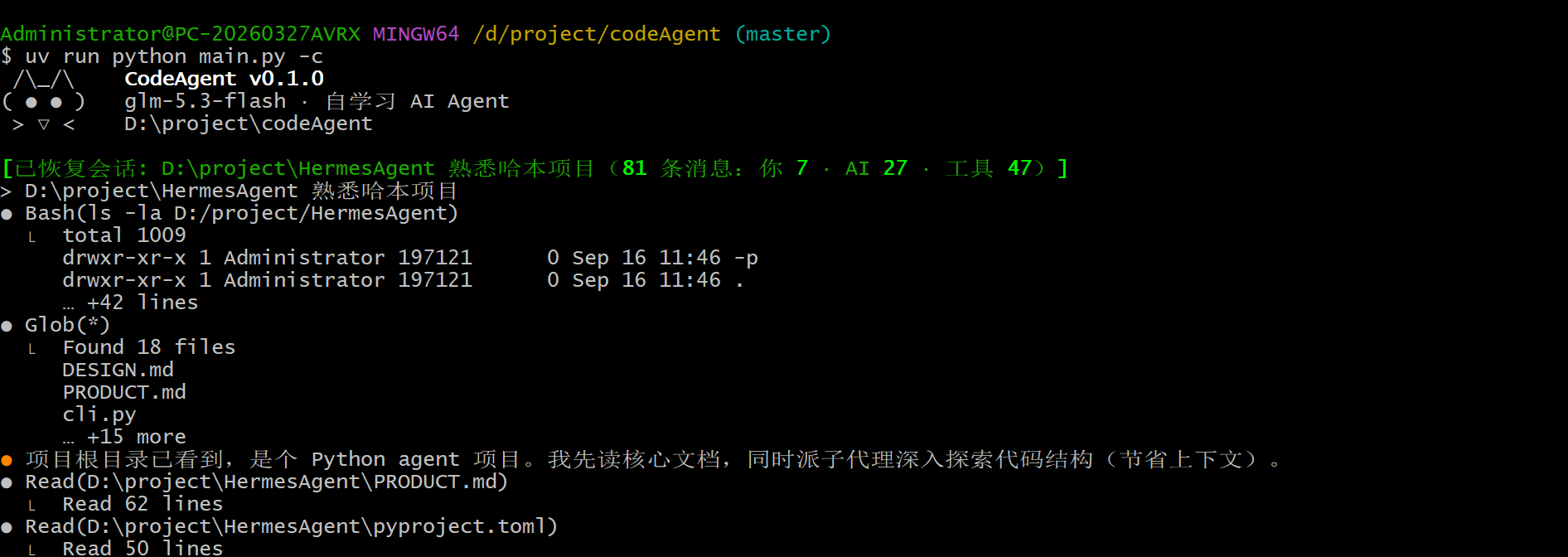
CodeAgent is an open-source, terminal-based AI programming assistant written in Python 3.11 with extensive Chinese commenting. It handles natural language instructions by reading files, executing commands, searching codebases, and running multi-model loops via OpenAI-compatible or Anthropic endpoints. The tool features a built-in session store, hierarchical context compression, permission panels, and a self-learning skill system stored locally under ~/.codeAgent.

It is worth checking out if you want a local, hackable alternative to proprietary CLI tools with built-in DeepSeek support and clear module architecture. However, Windows is the primary development target with Linux support trailing, while macOS remains largely unverified. Skip this if you need out-of-the-box cross-platform stability without configuring sandbox environments or API keys manually.

more: https://github.com/Harvil1/codeAgent

my other side: ivo.blogspot.com


ARTEX: Autonomous Penetration Testing System in Go

19 10 2026
ARTEX: Autonomous Penetration Testing System in Go

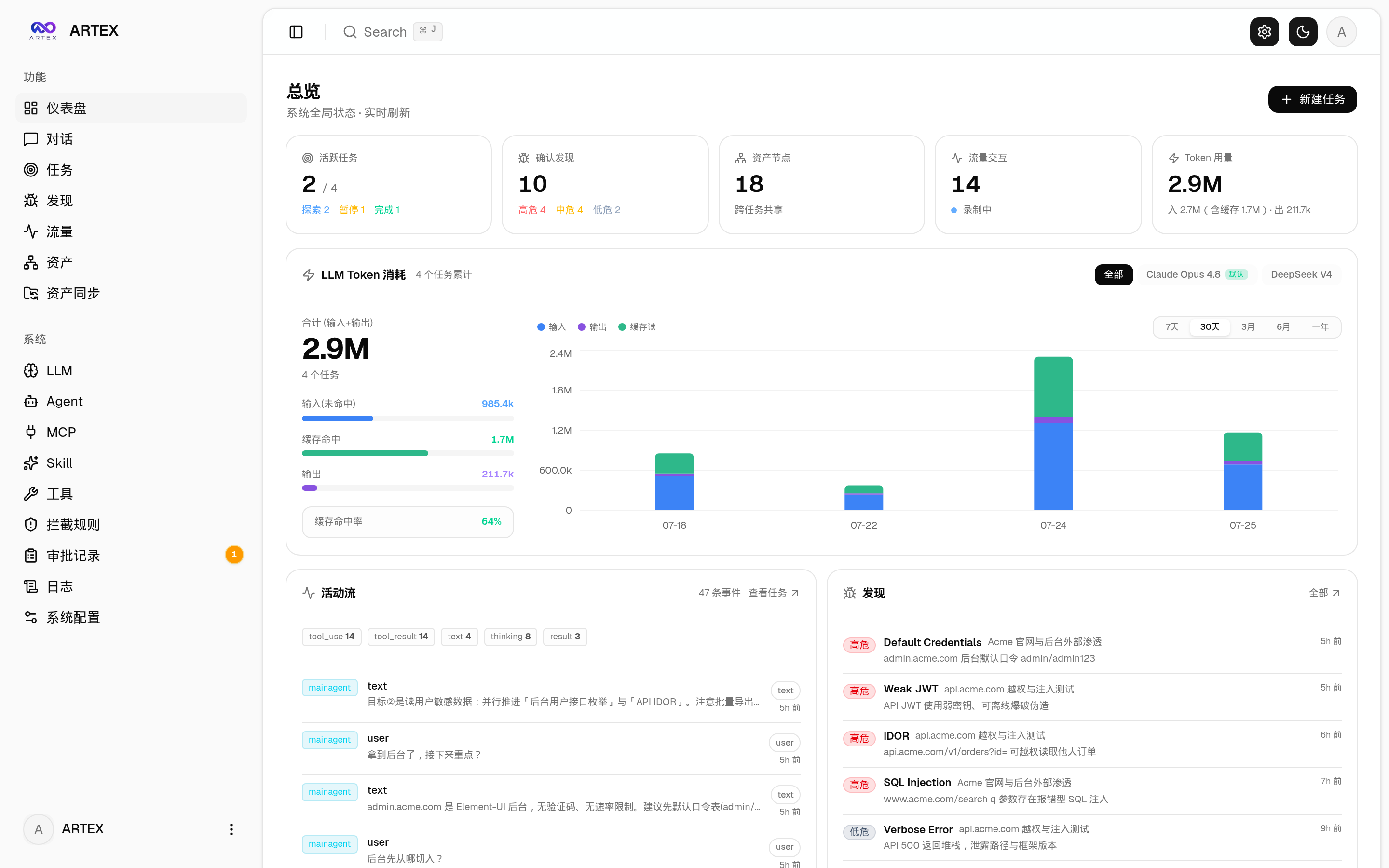
ARTEX is a multi-agent AI system for running autonomous penetration tests inside an isolated lab environment. It pairs a Go backend and Next.js frontend with an asset graph, an exploration graph, and human-in-the-loop approval gates. You can deploy it locally via a single compiled Go binary or through Docker Compose backed by PostgreSQL.

It is worth a look if you want to inspect how agentic loops handle structured network reconnaissance and exploit planning with full traffic recording. However, it requires providing your own LLM keys and setting up a dedicated testing sandbox to be of any real use. Skip this if you are looking for a turnkey vulnerability scanner that runs safely against production environments out of the box.

more: https://github.com/trhhubsd/ARTEX

my other side: ivo.blogspot.com


StartLux Decision open inference engine and models

18 10 2026
StartLux Decision open inference engine and models

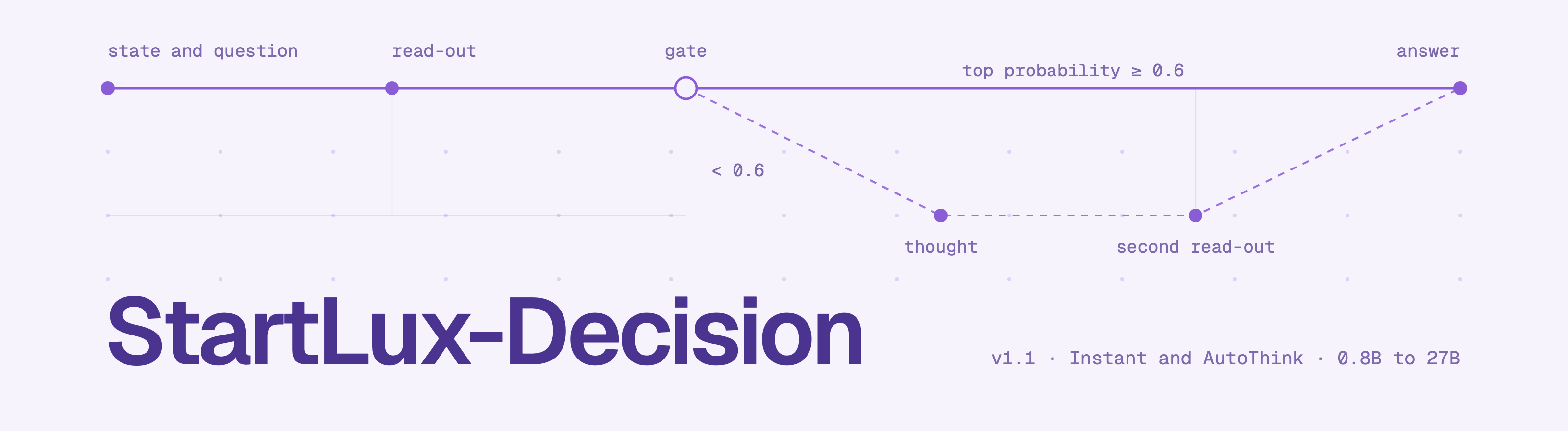
StartLux-Decision provides open models in 4B, 9B, and 27B parameter sizes that output typed probabilities for structured questions rather than open text. The repository includes an HTTP server and inference engine supporting GGUF and MLX formats, with variants that conditionally generate reasoning traces when confidence falls below 0.6. It handles text, JSON, and image inputs in a single forward pass, making it suitable for programmatic control tasks like game bots and video frame analysis.

If you need structured classification or control loops without parsing free-form LLM output, it is worth testing locally via the provided MLX or GGUF weights. However, the specialized API and decision-focused architecture mean it will not replace a general-purpose chat model or handle open-ended text generation. Skip it unless you are actively building deterministic pipelines that require explicit probability scores for discrete options.

more: https://github.com/StartLuxLabs/StartLux-Decision

my other side: ivo.blogspot.com


Yarrtube synchronizes YouTube channels and playlists locally

17 10 2026
Yarrtube synchronizes YouTube channels and playlists locally

Yarrtube is a lightweight Docker container built on yt-dlp that automatically downloads new videos from tracked YouTube channels and playlists. It runs on a NAS or local machine, includes a minimal web interface for mobile and desktop, and integrates with Plex, Jellyfin, and Kodi. The author built it during a career sabbatical to provide an ad-free, algorithm-free way to feed specific content to children without relying on the native app.

If you already maintain a local media server and want a simpler alternative to heavy tools like TubeArchivist, this is worth deploying in an afternoon. It is deliberately narrow in scope, meaning it lacks advanced archiving features and complex metadata management. Skip it if you need a full-featured YouTube management suite rather than a straightforward download bridge.

more: https://github.com/sergigp/yarrtube

my other side: ivo.blogspot.com


MailCheap: Self-Hosted Newsletter App With SES

17 10 2026
MailCheap: Self-Hosted Newsletter App With SES

MailCheap is an open-source newsletter application designed to run on your own infrastructure using Amazon SES or PostShiba. It handles writing, subscriber imports from platforms like Substack and Beehiiv, and automated deliverability protections like warm-ups and list hygiene. You can operate the entire app via a web dashboard, REST API, or an MCP server for AI agents.

It is worth setting up if you want to stop paying subscription fees for dormant subscribers and prefer managing your own sending infrastructure. The main catch is that self-hosting requires configuring DNS, DKIM records, and dealing with SES production access yourself, with zero support issues tracked if something breaks.

more: https://github.com/marclou/mailcheap

my other side: ivo.blogspot.com


@receptron/laya runs Jev decision models in Node.js

17 10 2026
@receptron/laya runs Jev decision models in Node.js

The @receptron/laya npm package runs Convai Innovations' Laya decision model directly in Node.js and TypeScript via ONNX Runtime without needing Python or PyTorch. It takes a JSON state and typed questions, returning calibrated probabilities for choices, scores, and yes-no statements in a single forward pass taking roughly 140 milliseconds per batch on Apple silicon. The 1.7 GB model weights download automatically on first use, and the TypeScript types match the Python implementation to four decimal places.

It is worth testing if you need structured classification or confidence scoring on text inputs without spinning up an LLM API. The catch is strict input limits: states are truncated at 512 tokens and choice questions top out around 20 options. Skip this if you need generative text or inputs longer than a short support ticket.

more: https://github.com/receptron/laya

my other side: ivo.blogspot.com