Lantunnel provides peer-to-peer networking behind NAT

28 09 2026
Lantunnel provides peer-to-peer networking behind NAT

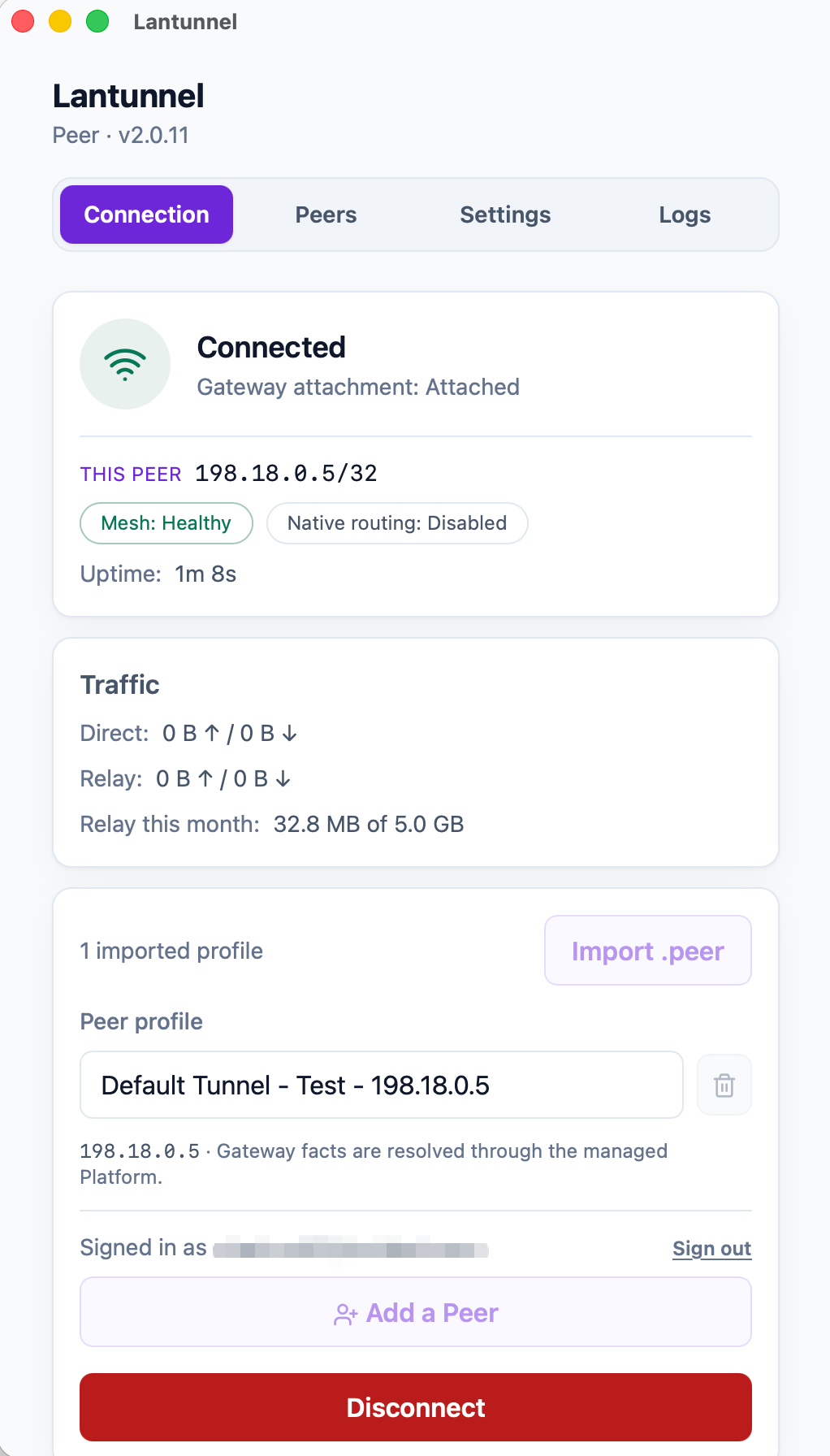
Lantunnel is a self-hosted mesh networking tool that connects remote devices across different LANs without requiring port forwarding or public URLs. It uses an end-to-end encrypted protocol to establish direct peer-to-peer connections, falling back to an encrypted relay only when direct traversal fails. You can use their hosted gateway for a zero-config setup or run the entire stack yourself under an Apache 2.0 license.

It is a practical utility if you frequently need to access home servers or office hardware from external networks. The primary drawback is that the easiest setup route requires creating a platform account, which might be a non-starter if you prefer total infrastructure independence. It is an effective alternative to traditional VPNs for those who value direct connectivity over complex firewall configuration.


more: https://github.com/lantunnel/lantunnel


How jumping genes became essential evolutionary partners

27 09 2026
How jumping genes became essential evolutionary partners

Nearly half of the human genome consists of transposable elements, mobile genetic fragments with viral origins that can clip themselves out and re-root elsewhere in DNA. While long dismissed as genomic junk or disruptive parasites, researchers are finding that these jumping genes supply raw material for new biological adaptations. Their activity has shaped fundamental traits across species, including the evolution of mammalian placentas and gene regulation.

It is easy to slip into teleology here, treating parasitic DNA as a clever architect rather than a persistent infection that hosts eventually learned to harness. We still understand very little about how the host genome manages to co-opt such a vast and potentially destructive internal library without breaking down entirely. Worth reading for anyone interested in how genomic complexity arises from molecular friction rather than clean design.

more: https://www.quantamagazine.org/how-virus-like-jumping-genes-became-our-partners-in-evolution-20260921/

my other side: ivo.blogspot.com


Why rheumatoid arthritis pain persists without inflammation

27 09 2026
Why rheumatoid arthritis pain persists without inflammation

Researchers at Semmelweis University argue that persistent pain in rheumatoid arthritis is often driven by factors beyond active joint inflammation. In papers published in Nature Reviews Rheumatology and The Lancet Rheumatology, the team points to secondary issues like sleep disorders, depression, obesity, and smoking as key maintainers of symptoms. They propose using standard clinical targets as an early warning system, suggesting that ongoing pain and fatigue without inflammation should prompt doctors to look for these underlying drivers rather than simply increasing medication doses.

This diagnostic shift is useful because it separates mechanical and systemic distress from immune activity, which could prevent unnecessary drug escalation. At the same time, lifestyle factors like sleep and weight are notoriously difficult to treat within standard rheumatology visits, meaning the model highlights a clinical gap rather than an easy fix. It is a reminder that complex chronic pain often refuses to resolve through a single targeted pathway.

more: https://www.sciencedaily.com/releases/2026/09/260925093208.htm

my other side: ivo.blogspot.com


Factual videos raise trust in out-of-state elections

27 09 2026
Factual videos raise trust in out-of-state elections

Recent survey experiments involving nearly 15,000 participants found that simple, factual videos about election security increased trust in out-of-state procedures by 10 to 12.5 percentage points. The gains crossed party lines, with Republicans growing more trusting of elections in Democratic states and Democrats doing the same for Republican strongholds. Notably, a researcher recording herself in a car with a cellphone achieved similar trust gains and higher retention than professionally produced agency videos.

It is encouraging that basic, transparent communication can pierce partisan cynicism without sophisticated public relations machinery. Still, lab-measured trust in a survey context may not easily translate into enduring resilience against coordinated disinformation campaigns in the wild. Officials would do well to keep explaining the nuts and bolts, but we should not mistake a well-received video for a permanent fix to institutional distrust.

more: https://www.futurity.org/trust-elections-3346712/?utm_source=rss&utm_medium=rss&utm_campaign=trust-elections-3346712

my other side: ivo.blogspot.com


Pooled: Run Open Models Across Browser Tabs

27 09 2026
Pooled: Run Open Models Across Browser Tabs

Pooled is an open-source JavaScript library that distributes large language model inference across multiple devices using WebGPU and WebRTC. By splitting model layers across a laptop, phone, and desktop on the same Wi-Fi, it allows you to run models like Qwen 27B that exceed single-device memory limits. There is no server or installation required, with devices communicating directly to pass hidden states between browser tabs.

It is worth cloning if you want to experiment with distributed browser compute or need a local multi-device setup without managing a Python backend. The catch is that WebGPU performance varies heavily by hardware, and syncing token states over local WebRTC adds latency that makes it impractical for production workloads. Skip this if you just need a standard local runner like Ollama.

more: https://github.com/Nehanth/pooled

my other side: ivo.blogspot.com


Evangelos Vlachos’s .NET 10 Microservices Flight-Booking Reference System

27 09 2026
Evangelos Vlachos's .NET 10 Microservices Flight-Booking Reference System

This repository by Evangelos Vlachos implements a complete flight-booking system using .NET 10 microservices, Vertical Slice Architecture, and Domain-Driven Design. It combines PostgreSQL and MongoDB stores with EventStoreDB, using RabbitMQ and Wolverine for durable messaging alongside gRPC for synchronous calls. The entire stack includes YARP as an API gateway, Duende IdentityServer, and full observability tooling orchestrated through .NET Aspire or Kubernetes.

It is worth cloning if you need a concrete blueprint for implementing CQRS, event sourcing, and inbox-outbox patterns in modern .NET without resorting to toy examples. The catch is that the architectural overhead is massive for simple applications, making it entirely unsuitable for anything smaller than an enterprise-scale distributed system.

more: https://github.com/evangelosvlachos96-dotcom/booking-microservices

my other side: ivo.blogspot.com


Jevgrep: semantic code search for LLM agents

27 09 2026
Jevgrep: semantic code search for LLM agents

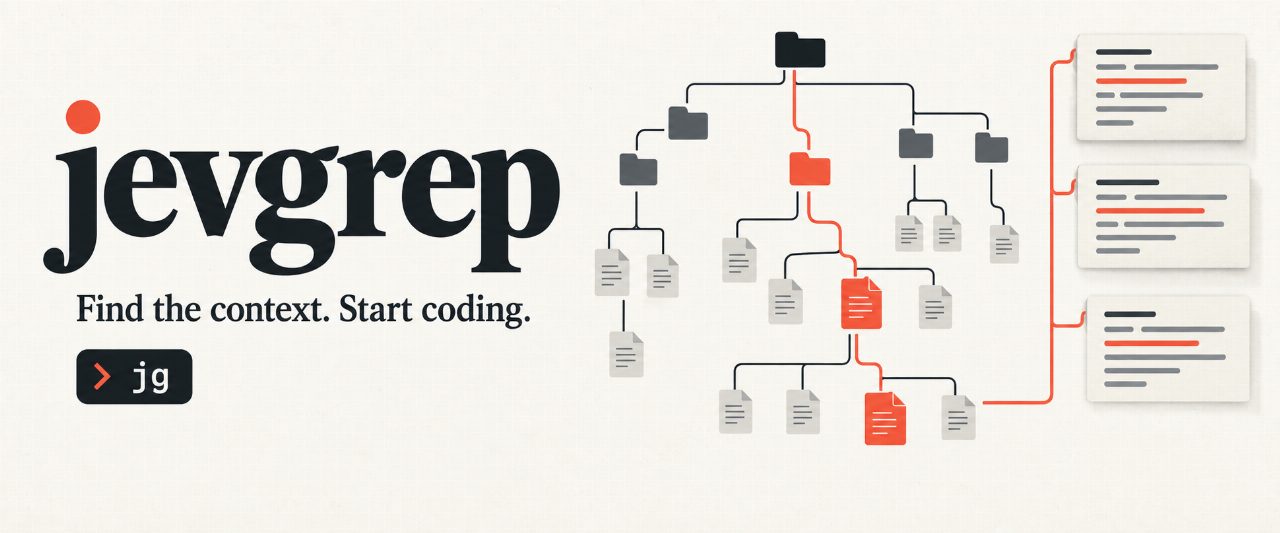
Jevgrep is a command-line tool that lets coding agents search codebases using natural language queries instead of exact string matches. Requiring Node.js 22 and an API key for Vercel AI Gateway, OpenRouter, or similar providers, it indexes local repositories and outputs relevant file paths and source excerpts. In a ten-task SWE-bench repeat, using it cut agent token costs from about $7.62 to $4.52 per run.

It is worth installing if you regularly watch agents burn tokens wandering through unfamiliar directory trees. The catch is that it trades a small drop in solve rate for those savings, and you have to manually install the agent skill configuration per project. Skip it if you already rely on ripgrep and know your codebase layout.

more: https://github.com/dzhng/jevgrep

my other side: ivo.blogspot.com


geo-score: CLI tool for AI search engine crawlability

27 09 2026
geo-score: CLI tool for AI search engine crawlability

geo-score is a Python script that evaluates a web site's readiness for AI search engine citations, outputting a zero to one hundred score based on an open rubric. Running it requires only Python 3.8 and the standard library, executing a single check via a piped curl command without local installation. It inspects robots.txt, sitemaps, structured data, and content formatting to identify mechanical gaps preventing retrieval.

The script is worth running for a quick baseline on how LLMs and answer engines see your static markup, but the higher tiers require your own API keys to query actual citation behavior. It separates the static score from dynamic query checks because a high technical score does not guarantee you will actually get cited against competitors. Skip it if you are not actively trying to optimize for generative search engines like Perplexity or Gemini.

more: https://github.com/jianruntech/geo-score

my other side: ivo.blogspot.com


MemoraX Code Adds Memory Layers to Coding Agents

27 09 2026
MemoraX Code Adds Memory Layers to Coding Agents

MemoraX Code is a Node.js 20+ package that provides a persistent memory layer for various LLM coding agents including Claude Code, Cursor, and DeepSeek Harness. It runs locally as a background process to store repository rules, architectural history, and past engineering decisions across different sessions. The tool requires libsecret on Linux and specifically manages plugin integration for supported CLI and editor-based coding tools.

This is worth installing if you are tired of re-explaining project constraints to your AI assistant every time you open a new terminal window. It is not for users who want zero external dependencies, as it relies on a cloud-based backend for synchronization and requires careful management of API keys. If you frequently context-switch between projects, the overhead of setup is minimal compared to the time saved on redundant prompting.

more: https://github.com/memorax-ai/memorax-code

my other side: ivo.blogspot.com


Energy consumption patterns in the dreaming brain

26 09 2026
Energy consumption patterns in the dreaming brain

Researchers at Tohoku University have identified a metabolic paradox during REM sleep where blood volume and fuel supply increase even as neuronal ATP levels decline. By observing transparent mouse skulls, they found that the brain undergoes a large-scale energy shift starting roughly 50 seconds before the onset of dreaming. This suggests the brain prioritizes specific metabolic pathways to power high-demand activities like memory consolidation.

This study offers a concrete look at how biological systems balance tight energy budgets during complex internal processing. However, it remains unclear whether this ATP depletion is a necessary cost of synaptic reorganization or a byproduct of inefficiency. Further research is needed to determine if this pattern in rodents directly mirrors the energy economy of human sleep.

more: https://www.sciencedaily.com/releases/2026/09/260925093206.htm

my other side: ivo.blogspot.com