Google Cloud API Gateway adds Model Context Protocol support

30 09 2026
Google Cloud API Gateway adds Model Context Protocol support

Google Cloud API Gateway can now transcode standard OpenAPI specifications into remote Model Context Protocol servers. By adding a few annotation lines to an existing YAML config, your REST endpoints are exposed directly as agent tools at an /mcp endpoint. This eliminates the need to build, host, and secure a separate translation server since auth, quotas, and logging are handled by the gateway.

It is worth setting up if you already run your services behind Cloud Run and Google's API Gateway and want to connect Gemini agents without adding infrastructure. The catch is that API keys cannot protect the tool discovery endpoint in production, requiring you to configure JWT authentication instead. It is also limited to API Gateway and Apigee, so teams using custom NGINX or Envoy setups get no direct help here.

more: https://developers.googleblog.com/turn-your-rest-apis-into-mcp-tools-with-google-cloud-api-gateway/

my other side: ivo.blogspot.com


The Outbox Pattern: When a Database Table Replaces Your Message Queue

30 09 2026

Most services eventually need to do two things at once: save data and tell another system about it. A patient registers → store the visit and notify an external health API. A payment clears → write the record and push an event. The naive way is a “dual write”: write to the database, then publish to a message queue. That seam is where data quietly goes missing.

The outbox pattern removes the seam — and for a lot of systems it means you don’t need RabbitMQ, Kafka, or Redis at all.

The dual-write problem

Picture the unreliable version:

saveVisit(visit)        // committed to Postgres
publishToQueue(event)   // ...network blips here

If the process crashes between those two lines, or the queue is briefly unreachable, you now have a visit with no event. Or you reorder them and get an event for a visit that was never saved. There is no transaction spanning “my database” and “someone else’s broker”, so something can always slip through the gap.

What the outbox actually is

Instead of publishing to an external broker, you write the intent-to-send as a row in a table in the same database, inside the same transaction as your business data. Then a separate worker polls that table and does the actual sending.

CREATE TABLE outbox_event (
  id          text PRIMARY KEY DEFAULT gen_random_uuid()::text,
  type        text NOT NULL,          -- 'encounter', 'payment', ...
  payload     jsonb NOT NULL,
  status      text NOT NULL DEFAULT 'pending',   -- pending | sent
  attempts    int  NOT NULL DEFAULT 0,
  created_at  timestamptz NOT NULL DEFAULT now()
);
CREATE INDEX idx_outbox_pending ON outbox_event (created_at) WHERE status = 'pending';

The write path — one transaction, nothing to desynchronize:

BEGIN;
  INSERT INTO visit (...) VALUES (...);
  INSERT INTO outbox_event (type, payload) VALUES ('encounter', $1);
COMMIT;

And a worker that drains it, on a timer:

for (const e of await listPending()) {
  try {
    await sendToExternalApi(e.payload);
    await markSent(e.id);
  } catch (err) {
    await markFailed(e.id, err);   // stays pending, retried next tick
  }
}

That’s the whole thing. A to-do list living in the same ledger as your real data, plus a janitor that works through it.

Why this replaces a message queue and Redis

For this job, a broker really only provides one essential service: hold messages that haven’t been processed yet, without losing them. A database table does that too.

  1. Durability. Rows are on disk in Postgres. Restart the container, redeploy, crash — the pending rows are still there, same as Redis persistence or a durable MQ.
  2. Consistency — this is where outbox actually wins. The business row and the “send this” row commit together, atomically. There is no window where one exists without the other. With a separate broker you are back to dual-write: the DB commit can succeed while the publish fails (or vice-versa), and now your systems disagree.
  3. One less moving part. No extra server to install, secure, monitor, and back up. The database you already run stores both your data and your queue.

When a real broker still wins

Need Outbox table MQ / Redis
Durable, no message loss Yes Yes
Atomic with your data Yes (its edge) No — dual write
Low–moderate throughput Yes Yes
Very high throughput (thousands/sec) No — polling taxes the DB Yes
Millisecond, push-based latency No — you wait for the poll tick Yes
Rich backoff, dead-letter, fan-out to many consumers Roll it yourself Built in

Takeaway

If your volume is modest and what you truly care about is “never lose or duplicate the event,” the outbox pattern gives you durability and transactional consistency with zero extra infrastructure. Reach for Kafka/RabbitMQ/Redis when you outgrow it — high throughput, real-time latency, or sophisticated retry semantics — not before.

The mental model: an outbox is a to-do list in the same notebook as your transactions. A message queue is a separate post office — more powerful, but now you’re keeping two books in sync, and that’s exactly where the bugs live.




Concat: A Local Open-Source Video Editor

30 09 2026
Concat: A Local Open-Source Video Editor

Concat is a cross-platform video editor written in Rust with a GPU compositor, built as a free alternative to CapCut. It runs entirely local on macOS, Windows, Linux, and Android, handling auto-captions, keyframes, background removal, and 4K export without an account or cloud upload. It also exposes JSON-RPC, gRPC, and MCP APIs so scripts and AI agents can automate cutting.

It is worth testing if you want offline captioning or programmatic editing without subscription software. The project is currently in beta, meaning you will run into rough edges and unsigned binary warnings on first launch. It is not for anyone who expects a polished, premiere-level NLE out of the box.

more: https://github.com/jub0t/Concat

my other side: ivo.blogspot.com


Glucosamine use linked to faster dementia progression

29 09 2026
Glucosamine use linked to faster dementia progression

A retrospective analysis of patient health records at the University of Florida found that glucosamine use was associated with a 25 percent higher likelihood that mild cognitive impairment would progress to dementia. Researchers also observed a 25 percent higher mortality risk among patients who already had Alzheimer's or related dementias and took the supplement. Laboratory work using human brain tissue and mouse models suggests glucosamine may influence a metabolic pathway involving sugar structures attached to proteins that becomes excessively active in neurodegeneration.

Because this was an observational study using electronic health records, it establishes an association rather than direct causality. People who take over-the-counter joint supplements may differ from non-users in ways that affect disease progression independently of the supplement. Still, given how widely glucosamine is used by older adults, the biological mechanism warrants formal testing in human clinical trials.

more: https://www.sciencedaily.com/releases/2026/09/260927033754.htm

my other side: ivo.blogspot.com


The psychological cost of strict blood sugar stability

29 09 2026
The psychological cost of strict blood sugar stability

Data from a 14-day study of 400 people with diabetes found a counterintuitive pattern: while more time in the normal glucose range predicted better well-being the next day, higher daily glucose variability did too. Researchers suggest that attempting to completely eliminate natural blood sugar fluctuations requires heavy daily restrictions that actively diminish a person's quality of life. The findings come from the PRO-MENTAL study, which paired continuous glucose monitoring with daily psychological assessments.

It is a useful reminder that medical optimization always carries a behavioral cost, even when the physiological metrics look correct on a chart. The study doesn't argue for poor control, but rather highlights the silent tax of hyper-vigilance in chronic disease management. When the tools designed to help us live longer start preventing us from living at all, the math gets complicated.

more: https://www.sciencedaily.com/releases/2026/09/260927225019.htm

my other side: ivo.blogspot.com


AIHOT self-hosted news aggregator and clustering framework

29 09 2026
AIHOT self-hosted news aggregator and clustering framework

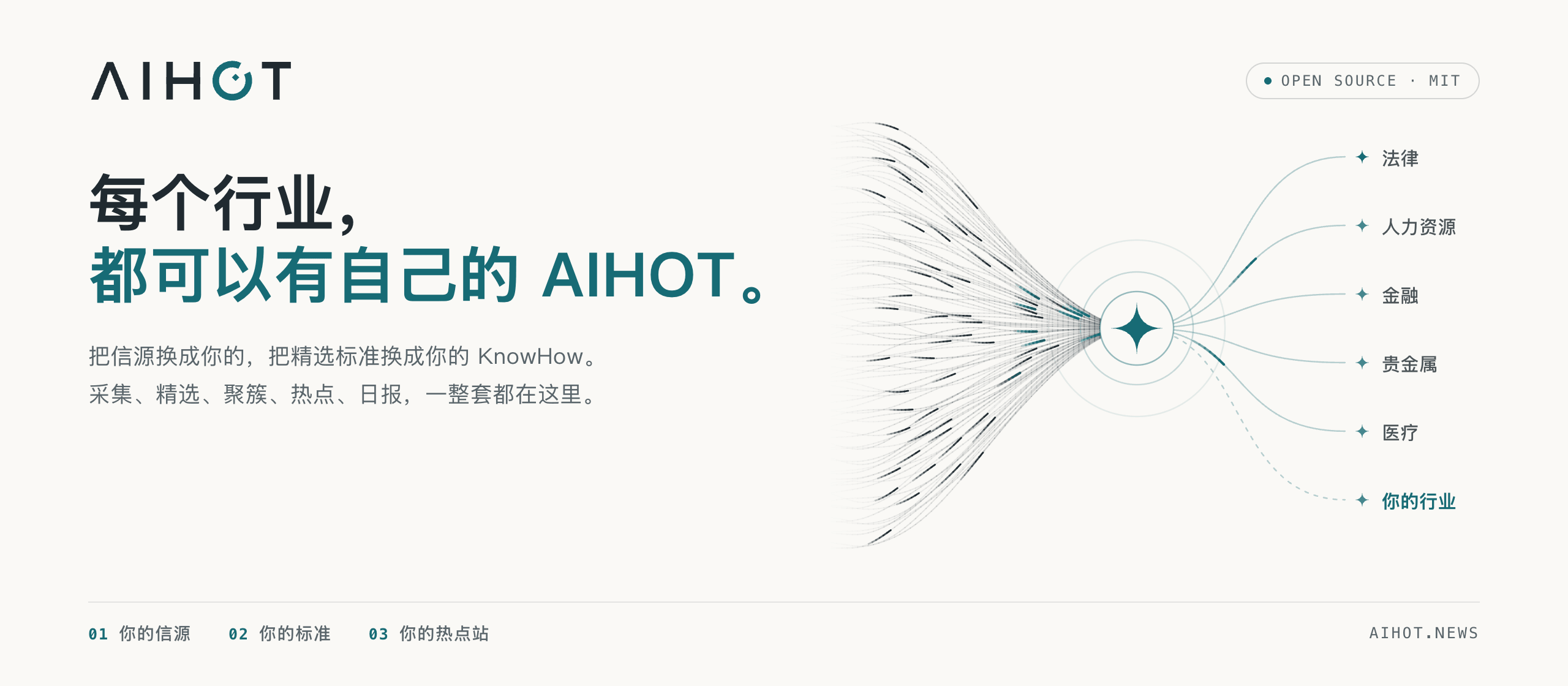
AIHOT is a Docker-ready, self-hosted framework that runs on Node.js and PostgreSQL to aggregate, filter, and cluster industry news. It takes inputs from RSS, web pages, and APIs, runs them through an LLM to score relevance and deduplicate stories, and generates daily briefings and event timelines. The repository includes all core source code, the complete prompt library, and built-in support for multiple upstream providers.

It is worth setting up if you want to replace manual curation with an automated pipeline tailored to a specific domain, provided you have a compatible LLM API key and are comfortable editing prompts. However, the system requires significant tuning of its selection thresholds and source lists to produce clean output for non-AI fields, and the documentation is currently only in Chinese. It is not a turn-key consumer product, but rather a snapshot of a working production codebase meant for developers willing to maintain it.

more: https://github.com/KKKKhazix/AIHOT

my other side: ivo.blogspot.com


Piik peer-to-peer screen sharing server

29 09 2026
Piik peer-to-peer screen sharing server

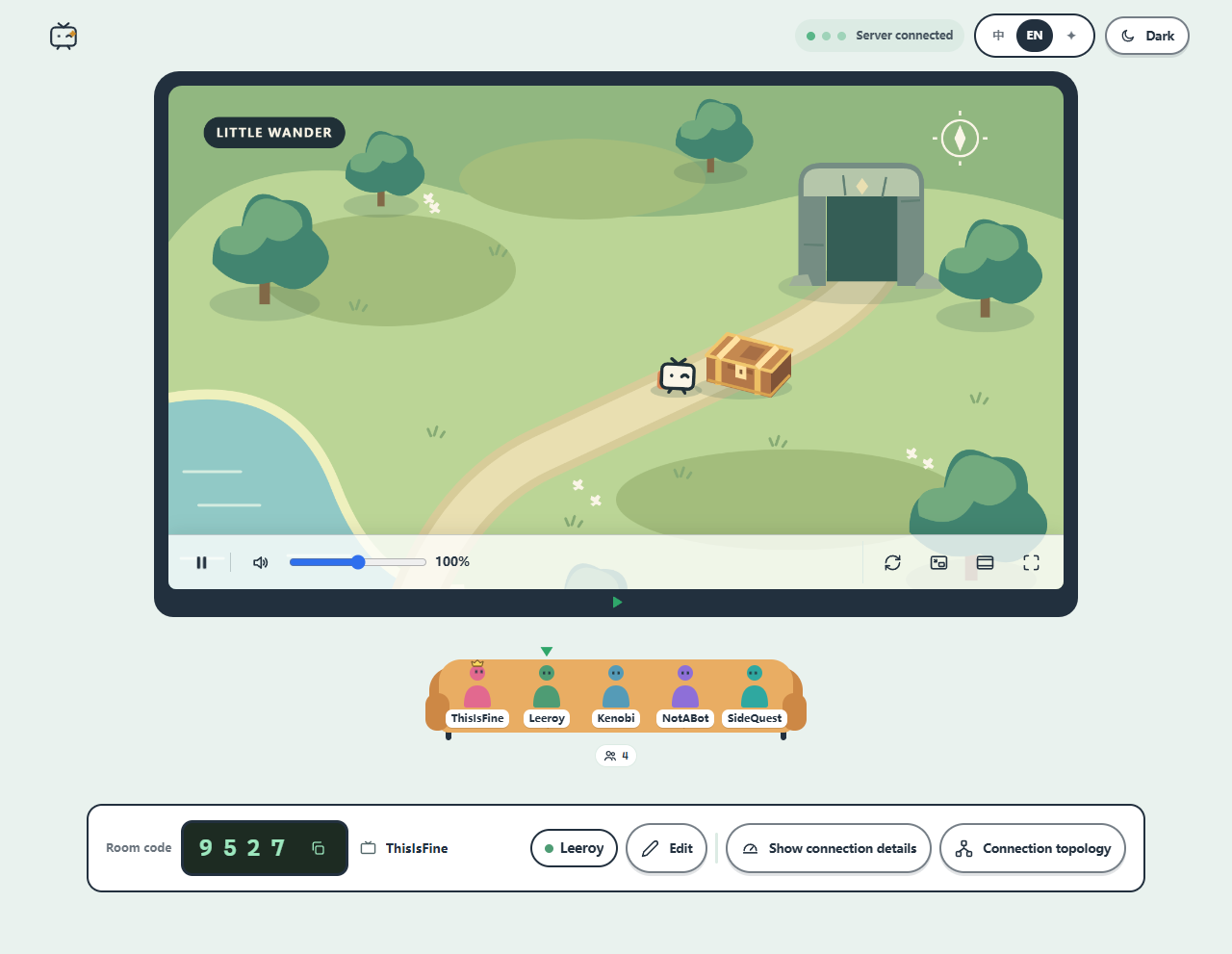
Piik is an open-source, self-hosted WebRTC tool for sharing screens and audio with up to 20 people. It packages the web UI, room management, and an optional media forwarding server into a single binary that stores data in SQLite. Viewers join directly through a desktop or mobile browser without installing anything.

It is worth setting up if you want a private alternative to commercial streaming tools for small groups. The catch is that direct P2P connections will fail on restrictive networks unless you configure a separate STUN or SFU fallback server. Mac and Linux desktop apps are also largely untested, so expect to run it on Windows or Linux x64 for now.

more: https://github.com/TNTcraftHIM/Piik

my other side: ivo.blogspot.com


Resurrecting ancient proteins to fight modern superbugs

28 09 2026
Resurrecting ancient proteins to fight modern superbugs

Researchers have reconstructed antimicrobial peptides from mammals that lived 160 million years ago, testing them against modern drug-resistant bacteria. Several of these ancient resurrected proteins proved significantly more potent than human versions currently in use. The work demonstrates that deep evolutionary history holds functional chemistry we might borrow.

It is a neat trick, but lab potency does not guarantee a safe and effective drug inside a living organism. Toxicity, stability, and delivery mechanisms remain untested hurdles. Still, mining the past for molecular tools is a sensible direction when current antibiotics are losing ground.

more: https://www.sciencedaily.com/news/top/

my other side: ivo.blogspot.com


Hepatitis B Pada Lutung Jawa Lewat Pasar Satwa

28 09 2026
Hepatitis B Pada Lutung Jawa Lewat Pasar Satwa

Riset terbaru menemukan DNA virus hepatitis B pada lutung jawa, primata yang sebelumnya dianggap kebal terhadap infeksi tersebut. Dari pemeriksaan terhadap ratusan primata, virus juga terdeteksi pada banyak owa dan orangutan, dengan kemiripan genetik yang mengindikasikan terjadinya limpahan virus antarspesies.

Penularan ini hampir pasti terjadi akibat aktivitas manusia, khususnya perdagangan satwa liar yang memaksa spesies berbeda berdekatan di kandang atau pasar. Meski demikian, mekanisme pasti penularan di alam liar maupun penangkaran masih menyisakan teka-teki yang belum sepenuhnya terjawab.

more: https://theconversation.com/virus-hepatitis-b-ditemukan-pada-orangutan-owa-dan-kini-lutung-jawa-pasar-hewan-penyebabnya-292368

my other side: ivo.blogspot.com


How coffee changes the gut and mood

28 09 2026
How coffee changes the gut and mood

Researchers at APC Microbiome Ireland followed 62 participants to see how a moderate daily intake of three to five cups affects the gut-brain axis. They found that both caffeinated and decaffeinated coffee altered gut microbiome composition, increased specific bacteria like Eggertella, and correlated with lower reported stress and depression. Interestingly, decaf drinkers showed better memory and learning scores, while the caffeinated group saw sharper attention and reduced anxiety markers.

It is a small sample size, so we cannot definitively say coffee caused these shifts rather than merely correlating with them. Still, it points to polyphenols and non-caffeine compounds doing heavier lifting than we usually give them credit for. Worth keeping in mind next time you wonder whether your afternoon decaf is actually doing anything.

more: https://www.sciencedaily.com/releases/2026/09/260927034331.htm

my other side: ivo.blogspot.com