Rune IDE/Tmux Clone – GPU‑Accelerated Native Editor

22 09 2026
Rune IDE/Tmux Clone – GPU‑Accelerated Native Editor

Rune is a native, GPU‑accelerated IDE and terminal multiplexer written in Go. It bundles a terminal multiplexer, an editor, and language intelligence into a single binary for Linux and macOS, using OpenGL or Metal for rendering. The first public release ships with a zero‑dependency installer that pulls a single binary from the internet.

For developers who want a lightweight alternative to Vim or VS Code that can run inside a tmux‑style session, Rune is worth a try. It requires a recent GPU to get the best performance and has no Windows support yet, so teams that need cross‑platform tooling may find it lacking. Also, the plugin ecosystem is still small, so advanced language features may be limited until the community grows.

more: https://github.com/unstablebuild/rune

my other side: ivo.blogspot.com


Reverify CLI: Verify AI Claims in Binary

22 09 2026
Reverify CLI: Verify AI Claims in Binary

Reverify is a pure‑Python CLI that checks every hypothesis an AI makes against the actual bytes of a binary. On a benchmark of 71 Windows system files it caught 97 % of hallucinated claims, never accepting a false one. It works on PE, ELF and Mach‑O, supports x86, x64, ARM and ARM64, and can be installed with pip or run directly from source.

If you need to keep an AI honest while reverse‑engineering malware, CTFs or proprietary software, Reverify is worth trying. It requires Python 3.10+ and runs only on Linux, macOS, or Windows with a recent pip; it doesn’t provide a GUI and is not suitable for production code verification.

more: https://github.com/2akouwu/reverify

my other side: ivo.blogspot.com


Autoprompt cuts coding agent failures by 45 percent

22 09 2026
Autoprompt cuts coding agent failures by 45 percent

Autoprompt is a CLI that wraps coding agents like Claude Code and Codex to review and fix their output. In a reported OpenCode benchmark, it reduced failures from 29 to 16, a 45% drop in error rate. It requires Node 20 and Python 3.11, and integrates with eleven different agent providers.

The trade-off is significant: expect roughly three times the execution time and double the token usage. If you are running small, quick tasks, the overhead likely outweighs the benefit. Use this for complex workflows where a second pass is worth the cost.

more: https://github.com/Spielewoy/autoprompt-skill

my other side: ivo.blogspot.com


DeepSeek Balance Whale Widget Plugin

21 09 2026
DeepSeek Balance Whale Widget Plugin

The DeepSeek Balance Whale Widget is a DSH bundle plugin that adds a persistent bubble in the lower‑right corner of the DSH Web interface. It shows the DeepSeek API balance, today's consumption, and per‑round cost, refreshing every 60 seconds and offering full customisation of the bubble content. Installation is a single `dsh plugin` command and it works without any session token. The same repository also provides a separate Codex‑desktop branch that ships as a standalone plugin.

If you already use DSH and want an on‑screen, programmable view of your DeepSeek quota, the widget is a handy addition. The main drawbacks are the two mutually exclusive branches – you must pick either the web or Codex version – and the setup can be fiddly if you need custom API providers. It’s overkill for anyone not embedded in the DSH ecosystem.

more: https://github.com/MeteorNOX/DeepSeek-Balance-Whale-Widget

my other side: ivo.blogspot.com


Phone Harness Controls Real Phones via CLI

21 09 2026
Phone Harness Controls Real Phones via CLI

Phone Harness is a command‑line tool that lets you control iPhone and Android devices from macOS, Linux, or Windows. It captures the device screen via iPhone mirroring or adb, OCRs the UI with Vision or the accessibility tree, and simulates taps and typing. No jailbreak, no Xcode, and nothing installed on the phone.

It is worth trying if you need automated UI testing or agent‑driven phone interaction, but it cannot handle multi‑touch, camera, or Face ID flows. The user must pair the device each time, and the tool is best suited for single‑device use cases, not production‑level persistent automation.

more: https://github.com/ShawnPana/phone-harness

my other side: ivo.blogspot.com


FuXi: A Static Binary Terminal Coding Agent

21 09 2026
FuXi: A Static Binary Terminal Coding Agent

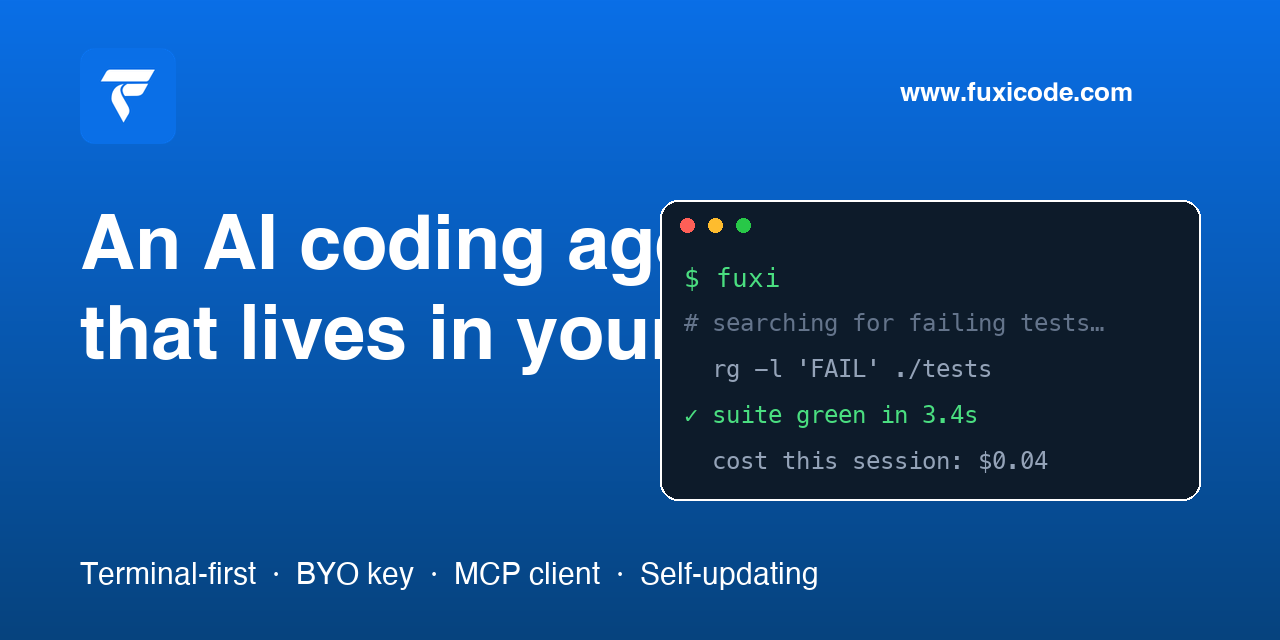
FuXi is a terminal AI coding agent written in Go that ships as a single static binary with no runtime dependencies. It reads code, edits files, and runs commands from a rich TUI, supporting cost-aware routing across multiple LLM providers.

The code is proprietary, so you cannot audit or modify the engine while the docs and installer are open. You need an account to start, though you can bring your own API keys to avoid managed model transmission.

more: https://github.com/fuxicodex/Fuxi

my other side: ivo.blogspot.com


Reef enables self-improving AI agent loops

21 09 2026
Reef enables self-improving AI agent loops

Reef is an open-source infrastructure for continual learning in self-improving agents. It connects inference, feedback, and versioned delivery to allow training via Slime and SGLang or optimizing agent harnesses like prompts and rules. It acts as middleware between inference engines and RL frameworks to manage live updates without downtime.

It is worth exploring if you need an agent that improves from interaction logs rather than static retraining. The catch is that model weight training requires a trainable model and a supported GPU stack, which is a significant hardware commitment. It is not a drop-in replacement for simple API wrappers but a full deployment layer for evolving systems.

more: https://github.com/Human-Agent-Society/reef

my other side: ivo.blogspot.com


TurboFieldfare runs Gemma 4 on low RAM Macs

21 09 2026
TurboFieldfare runs Gemma 4 on low RAM Macs

TurboFieldfare is a Swift and Metal runtime that runs Gemma 4 26B-A4B using roughly two gigabytes of RAM. It streams expert weights from the SSD to keep the model in memory, allowing it to run on an eight gigabyte M2 MacBook Air. The project includes a native Mac app, a CLI, and an OpenAI-compatible server, all built specifically for Apple Silicon.

It is worth trying if you need local inference on low-memory hardware and want to avoid the overhead of general-purpose wrappers. The catch is that decode speed on base M2 hardware is slow, ranging from five to six tokens per second. This tool is not suitable for high-throughput tasks or older Intel Macs.

more: https://github.com/drumih/turbo-fieldfare

my other side: ivo.blogspot.com



C99 engine runs 2.78T parameter model on CPU

21 09 2026
C99 engine runs 2.78T parameter model on CPU

This is a portable C99 inference engine for the Kimi K3 2.78-trillion-parameter model. It runs on a standard CPU with 8 GB of RAM, using no BLAS, framework, or GPU. The entire engine is 176 KB, and it streams the 1.56 TB checkpoint from disk to keep peak memory usage low.

It is worth looking at if you want to understand how to run massive models without heavy dependencies, but do not expect interactive speed. On an 8 GB laptop, generation takes 26.5 seconds per token because the model streams from disk every step. It is a proof of concept for resource-constrained environments, not a replacement for GPU-accelerated inference.

more: https://github.com/FareedKhan-dev/kimi-k3-in-c

my other side: ivo.blogspot.com



Graft builds local code graphs for coding agents

21 09 2026
Graft builds local code graphs for coding agents

Graft is a CLI that generates a folder of linked markdown files to bridge coding agents to your codebase. It claims to reduce tool calls by 46 percent and token usage by 42 percent compared to cold starts. The graph acts as a local, regenerable cache that updates against the working tree in milliseconds.

It is worth trying if you use Claude Code and want to cut latency without adding a database dependency. The catch is that it relies on LLMs for summaries, so you need a compatible API key. It is not for teams that refuse to run external tools in their dev environment.

more: https://github.com/trailhq/Graft

my other side: ivo.blogspot.com