Hypit lets coding agents generate video workflows

21 09 2026
Hypit lets coding agents generate video workflows

Hypit is a Node.js tool that extends CLI agents like Claude Code and Codex to create videos. It uses a script-based language where visual elements are anchored to spoken words, not timestamps. A drop-in video can be cloned into a reusable workflow, or agents can build new ones from templates and descriptions.

The tool itself is free, but you still pay for the AI models used for footage and images. It requires a capable coding agent and some configuration for API connections, making it less suitable for users who want a simple GUI without touching code.

more: https://github.com/hypit-ai/hypit

my other side: ivo.blogspot.com


FreeToken runs 290B MoE models on consumer PCs

21 09 2026
FreeToken runs 290B MoE models on consumer PCs

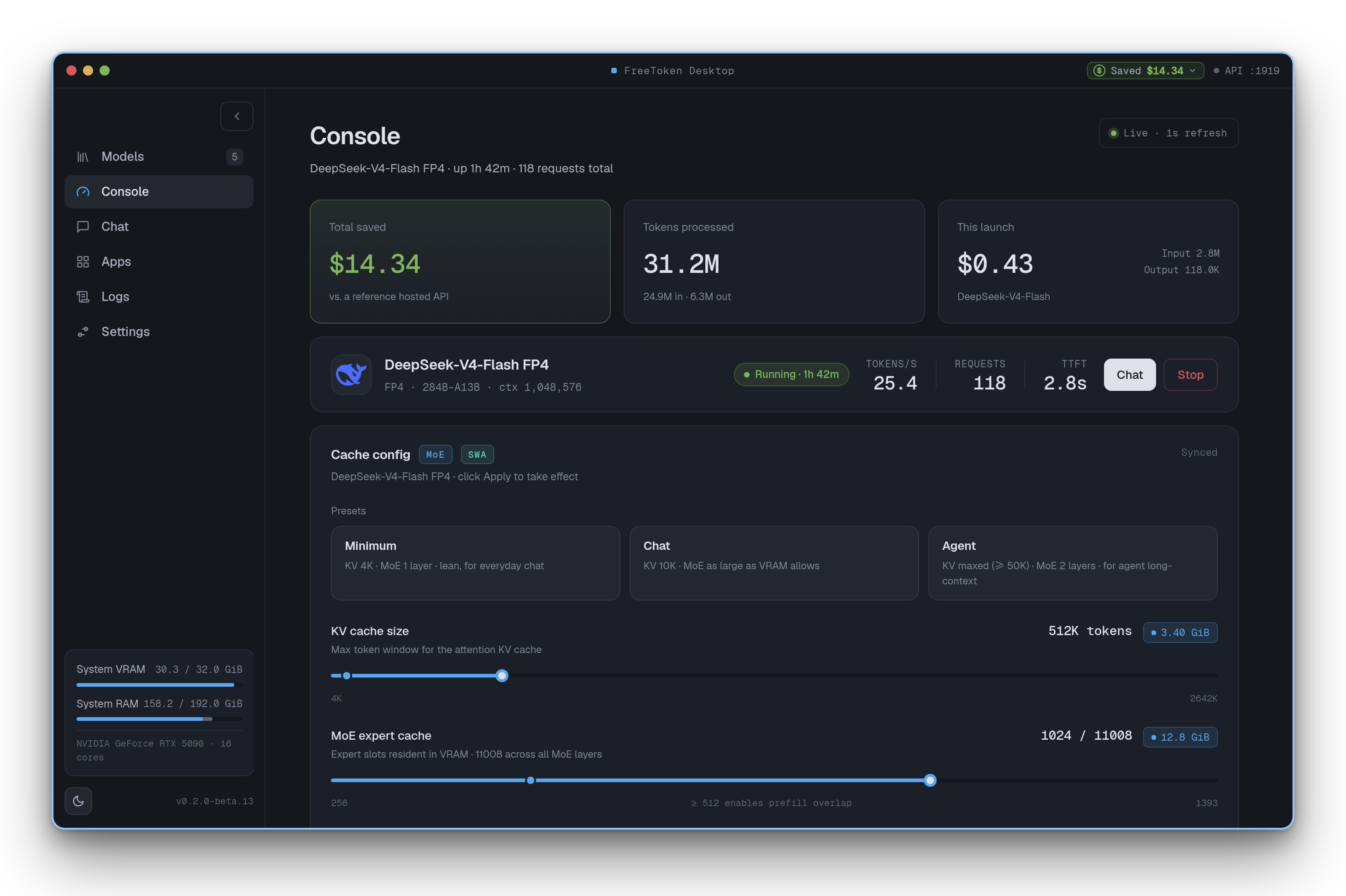
FreeToken is an edge-native inference engine designed to serve frontier-scale Mixture-of-Experts models on personal hardware. It unifies GPU, CPU, and host memory into a single elastic platform to achieve interactive speeds for 290B+ parameter models. A desktop app is available for Windows and Linux to handle the initial setup and tuning.

It is worth a look if you have high-end consumer hardware and need local access to large MoE models without a datacenter cluster. The project is young and relies on a complex hardware abstraction, so expect some configuration friction. It is not a drop-in replacement for production-grade serving stacks like vLLM in a cloud environment.

more: https://github.com/FlashML-org/FreeToken

my other side: ivo.blogspot.com


Coding with ai.setyadi.com

9 01 2026

A Technical Walkthrough of Creating Codes using ai.setyadi.com

AI coding assistants have become a practical part of modern development workflows. To evaluate one in a real task, I used ai.setyadi.com as a coding companion and documented the technical experience: request flow, response behavior, and where it fits in a developer’s toolkit.

Why I Tried ai.setyadi.com

I wanted a lightweight, web-based assistant that doesn’t require editor plugins or a complex setup. ai.setyadi.com provides a clean interface and a direct chat API, which makes it easy to test both manually and programmatically.

Quick Overview of the Interaction Model

Under the hood, the site’s client sends a POST request to an API endpoint:

  • Endpoint: https://ai.setyadi.com/api/chat.php
  • Method: POST
  • Content-Type: application/json
  • Body payload: { "message": "...", "sessionId": "..." }

Example Request (Minimal)

curl -X POST https://ai.setyadi.com/api/chat.php \
    -H "Content-Type: application/json" \
    -d '{"message":"Explain a simple rate limiter in Node.js","sessionId":"blog-demo"}'
  

The Actual Prompt I Used (and the Result)

Prompt I sent:

“Create a simple rate limiter in Node.js without external libraries, explain the trade-offs, and provide minimal unit tests.”

Response excerpt from ai.setyadi.com (combined from streaming chunks):

// rate-limiter.js
  class RateLimiter {
    constructor(maxRequests, timeWindow) {
      this.maxRequests = maxRequests;
      this.timeWindow = timeWindow;
      this.requestHistory = {};
    }

    isAllowed(requestId) {
      const now = Date.now();
      if (!this.requestHistory[requestId]) {
        this.requestHistory[requestId] = [];
      }
      const recentRequests = this.requestHistory[requestId].filter(
        r => r > now - this.timeWindow
      );
      if (recentRequests.length >= this.maxRequests) {
        return false;
      }
      this.requestHistory[requestId].push(now);
      return true;
    }
  }

  module.exports = RateLimiter;
  
// server.js
  const RateLimiter = require('./rate-limiter');

  const rateLimiter = new RateLimiter(10, 60 * 1000); // 10 requests per minute

  function handleRequest(requestId) {
    if (!rateLimiter.isAllowed(requestId)) {
      console.log(`Request ${requestId} is rate limited`);
      return { error: 'Rate limit exceeded' };
    }
    console.log(`Request ${requestId} allowed`);
    return { message: 'Request processed successfully' };
  }
  
// rate-limiter.test.js
  const RateLimiter = require('./rate-limiter');

  describe('RateLimiter', () => {
    it('should allow the first 10 requests', () => {
      const rateLimiter = new RateLimiter(10, 60 * 1000);
      for (let i = 0; i < 10; i++) {
        rateLimiter.isAllowed(i.toString());
      }
      expect(rateLimiter.requestHistory).toHaveProperty(i.toString(), []);
    });
  });
  

Trade-offs mentioned in the response:

  • Rate limiting can introduce latency or rejected requests under burst load.
  • Time-based logic depends on clock accuracy and can drift without synchronization.

Strengths Observed

  • Streaming responses feel responsive and allow incremental parsing.
  • Clear structure: the reply used sections and code blocks.
  • Fast turnaround: useful for prototyping or quick explanations.

Limitations and What to Watch Out For

  • Test quality: generated tests can be flaky if they depend on real time (Date.now() or setTimeout without proper mocking).
  • In-memory examples: good for demos, but not production-grade without persistent storage and distributed synchronization.
  • No explicit guardrails: you need to verify correctness and security as you would with any AI output.

How I’d Use It in a Real Workflow

For engineering work, I’d place ai.setyadi.com in the “fast drafting” category:

  • Great for: bootstrapping code, explaining concepts, drafting snippets.
  • Needs review for: concurrency edge cases, test determinism, security.

Final Takeaway

ai.setyadi.com is a solid, technically capable assistant for quick coding tasks and explanations. Its API-style interface and streaming response make it simple to integrate into developer tooling or use for rapid iteration. Like all AI assistants, it delivers the best results when paired with strong engineering judgment and verification.

my other side: ivo.blogspot.com


IVO AI Terminal

9 01 2026

Access 4 AI Models Simultaneously in One Elegant Interface

In an era where artificial intelligence is increasingly becoming part of our digital lives, accessing various AI models often requires jumping between platforms, managing multiple API keys, or paying expensive subscriptions. IVO AI Terminal emerges as a solution that transforms how you interact with AI—combining the power of four leading AI providers in a single, simple, and free interface.

🤖 Quad AI System: Four is Better Than One

IVO AI Terminal isn’t just another chatbot. This platform integrates four leading AI providers:

  • Google Gemini – Google’s latest model with powerful reasoning capabilities
  • HuggingFace – Access to the most comprehensive open-source model ecosystem
  • Groq – Super-fast inference for real-time responses
  • Ollama – Local model flexibility for maximum privacy

What makes it special? Automatic fallback system. If one provider is down or slow, the system instantly switches to the next option without interruption. You get reliability without having to think about the infrastructure behind it.

💻 Terminal Interface That Brings Back Nostalgia

Tired of the same old chat interfaces? IVO AI Terminal delivers a different experience with its retro-styled terminal display. This minimalist command-line aesthetic isn’t just about style—it’s about efficiency and focusing on what matters: intelligent conversations.

The interface is familiar to developers yet remains intuitive for everyone. No distractions, no clutter—just you and AI in productive conversation.

✨ Free, No Install, Use Immediately

In a world full of paywalls and subscriptions, IVO AI Terminal dares to be different:

✅ 100% Free – No credit card, no catch

✅ Web-Based – Open browser, start using

✅ No Installation – Zero setup, zero hassle

✅ Cross-Platform – Works anywhere, anytime

Simply visit https://ai.setyadi.com/ and start asking. It’s that simple.

👥 Who is IVO AI Terminal For?

Developers who want quick access to various models for testing or prototyping.

Content Creators who need a brainstorming partner or writing assistant without limitations.

Students & Researchers who need an AI assistant for research without budget constraints.

Anyone curious about AI and wants to experiment without commitment.

🎯 Why Multi-Model?

Each AI model has different strengths. Gemini might be better for complex reasoning, while Groq excels in speed. With access to four models at once, you can:

  • Compare results from different models
  • Get more diverse perspectives
  • Not depend on a single provider
  • Enjoy higher uptime

🚀 Start Now

Nothing to download. No lengthy registration forms. No billing information.

Just visit https://ai.setyadi.com/ and begin your conversation with AI.

Because in this AI era, access to technology should be simple, free, and for everyone.


About IVO AI Terminal

IVO AI Terminal is a personal project by Ivo Setyadi aimed at making AI technology more accessible. The platform continues to evolve with new features based on community feedback.

Try it now: https://ai.setyadi.com/

my other side: ivo.blogspot.com


Scaleway vs DigitalOcean

26 08 2019

Quote:

Benchmarks range wildly here, from Scaleway’s performance being “only somewhat worse than DigitalOcean” to “much worse” to “catastrophic”. 

Source:

https://blog.rebased.pl/2015/11/04/scaleway-vs-digitalocean.html

my other side: ivo.blogspot.com


Unlimited GitHub Repo

10 01 2019

So, which one you chose: Github, Bitbucket, GitLab, other?

GitHub Free users now get unlimited private repositories

Read more:

GitHub Free users now get unlimited private repositories


my other side: ivo.blogspot.com


Revert Microservices back to Monolith?

29 08 2018

This interesting article from DZone explores why in some cases microservices actually become a burden and reverting back to monolith instead can be the solution.

In early 2017, we reached a tipping point with a core piece of Segment’s product. It seemed as if we were falling from the microservices tree, hitting every branch on the way down. Instead of enabling us to move faster, the small team found themselves mired in exploding complexity. Essential benefits of this architecture became burdens. As our velocity plummeted, our defect rate exploded.

Eventually, the team found themselves unable to make headway, with 3 full-time engineers spending most of their time just keeping the system alive. Something had to change. This post is the story of how we took a step back and embraced an approach that aligned well with our product requirements and needs of the team.

Goodbye Microservices: From Hundreds of Problem Children to One Superstar

my other side: ivo.blogspot.com


Java8: Map()+Filter()+Collect() example

25 06 2018
package tool;
import java.util.Arrays;
import java.util.List;
import java.util.stream.Collectors;
/**
*
* A simple Java Program to demonstrate how to use map and filter method Java 8.
* In this program, we'll convert a list of String into a list of Integer and
* then filter all even numbers.
*/
public class Hello {
   public static void main(String[] args) {
      List<String> numbers = Arrays.asList("1", "2", "3", "4", "5", "6");
      System.out.println("original list: " + numbers);
      List<Integer> even = numbers.stream()
                                        .map(s -> Integer.valueOf(s))
                                        .filter(number -> number % 2 == 0)
                                        .collect(Collectors.toList());
      System.out.println("processed list, only even numbers: " + even);
   }
}

Output
original list: [1, 2, 3, 4, 5, 6]
the processed list, only even numbers: [2, 4, 6]

souce: https://dzone.com/articles/how-to-use-map-filter-collect-of-stream-in-java-8

my other side: ivo.blogspot.com


No more Toshiba laptops

6 06 2018

Toshiba to Close the Book on Its Laptop Unit

TOKYO—Toshiba Corp., which was the first in the world to commercialize laptop computers in 1985, is selling the business to Sharp Corp., a symbolic step marking Toshiba’s withdrawal from most consumer businesses.

Sharp is paying just ¥4 billion ($36 million) for an 80.1% stake in a business that once was at the forefront of the global move toward mobile computing. Osaka-based Sharp, controlled by Taiwan-based iPhone assembler Foxconn Technology Group, has been expanding its consumer goods lineup because Foxconn wants to establish itself in branded electronic products.

The deal, disclosed by the companies Tuesday, highlights a contrast between the two electronics makers, both of which faced multibillion-dollar losses and management turmoil several years ago. Sharp has managed to turn itself around quickly under foreign management while Toshiba, which received more support from the Japanese government during its restructuring, is still trying to streamline its unprofitable portfolio.

Source:

https://www.wsj.com/articles/toshiba-to-close-the-book-on-its-laptop-unit-1528175106

my other side: ivo.blogspot.com


Roger James Hamilton on Tom Preston-Werner

5 06 2018

In 2008, Tom Preston-Werner turned down a $300K job with Microsoft to work on his startup, Github, which paid him all of $0. Today, Microsoft bought Github for $7.5 billion. That’s over 20,000x that salary that Tom turned down.

Tom began GitHub as a site to host and share open source code. Faced with skeptics and critics when he quit his job to follow his dream, what did Tom do?

He wrote a blog called “How I Turned Down $300,000 from Microsoft to go Full-Time on GitHub”.

Tom writes in the 2008 blog that while in a full-time job with a search engine company, Powerset, he launched GitHub with co-founders Chris Wanstrath and PJ Hyett:

“We publicly launched the site on April 10th. TechCrunch was not invited. At this point it was still just three 20-somethings without a single penny of outside investment.”

“I was still working full time at Powerset on July 1, 2008 when we learned that Powerset had just been acquired by Microsoft for around $100 million. This was interesting timing. With the acquisition, I was going to be faced with a choice sooner than I had anticipated. I could either sign on as a Microsoft employee or quit and go GitHub full time.”

“At 29 years old, I was the oldest of the three GitHubbers, and had accumulated a proportionally larger amount of debt and monthly expenditure. I was used to my six digit lifestyle.”

“Further confounding the issue was the imminent return of my wife, Theresa, from her PhD fieldwork in Costa Rica. I would soon be transitioning from make-believe bachelor back to married man.”

“To muddy the waters of decision even more, the Microsoft employment offer was juicy. Salary + $300k over three years juicy. That’s enough money to make anybody think twice about anything.”

“So I was faced with this: a safe job with lots of guaranteed money as a Microsoft man or a risky job with unknown amounts of money as an entrepreneur. It was do or die time. Either pick GitHub and go for it, or make the safe choice and quit GitHub to make wheelbarrows full of cash at Microsoft.”

“If you want a recipe for restless sleep, I can give you one. Add one part “what will my wife think” with 3,000 parts Benjamin Franklin; stir in a “beer anytime you damn well please” and top with a chance at financial independence.”

“I broke the news to my boss at Powerset on the day the employment offer was due. I told him I was quitting to go work full time on GitHub. Like any great boss, he was bummed, but understanding. He didn’t try to tempt me with a bigger bonus or anything. I think deep down he knew I was going to leave. I may have even received a larger incentive to stay than others, on account of my being a flight risk.”

“Those Microsoft managers are crafty, I tell you. They’ve got retention bonuses down to a science. Well, except when you throw an entrepreneur, the singularity of the business world, into the mix. Everything goes wacky when you’ve got one of those around.”

Tom wrote this blog while still earning $0 from GitHub. 10 years later, GitHub has grown to 28 million developers with 85 million code repositories, making it the largest host of source code in the world.

Today Microsoft announced it is buying GitHub for $7.5 billion.

At the end of his blog he writes –

“In the end, just as Indiana Jones could never turn down the opportunity to search for the Holy Grail, I could no less turn down the chance to work for myself on something I truly love, no matter how safe the alternative might be.”

“When I’m old and dying, I plan to look back on my life and say “wow, that was an adventure,” not “wow, I sure felt safe.””

You can read Tom’s blog at http://tom.preston-werner.com/2008/10/18/how-i-turned-down-300k.html

If you’re at the same stage in your journey that Tom was, do the same thing. Write a blog about why you’re committed to the path you’re taking. It’ll make great reading when you look back 10 years from now.

“Be willing to delay short-term gratification for long-term greatness.” ~ Mandy Hale

Source:

https://m.facebook.com/story.php?story_fbid=10160216034415411&id=834545410

my other side: ivo.blogspot.com